



The Pitcher Plant
STYLED BY MARÉ BRENNAN
PHOTO BY KELLY MOORE CLARK
Beautiful but a little dangerous, pitcher plants are one of nature’s most fascinating creations. These carnivorous beauties lure unsuspecting insects into their colorful, pitcher-shaped leaves for a meal.
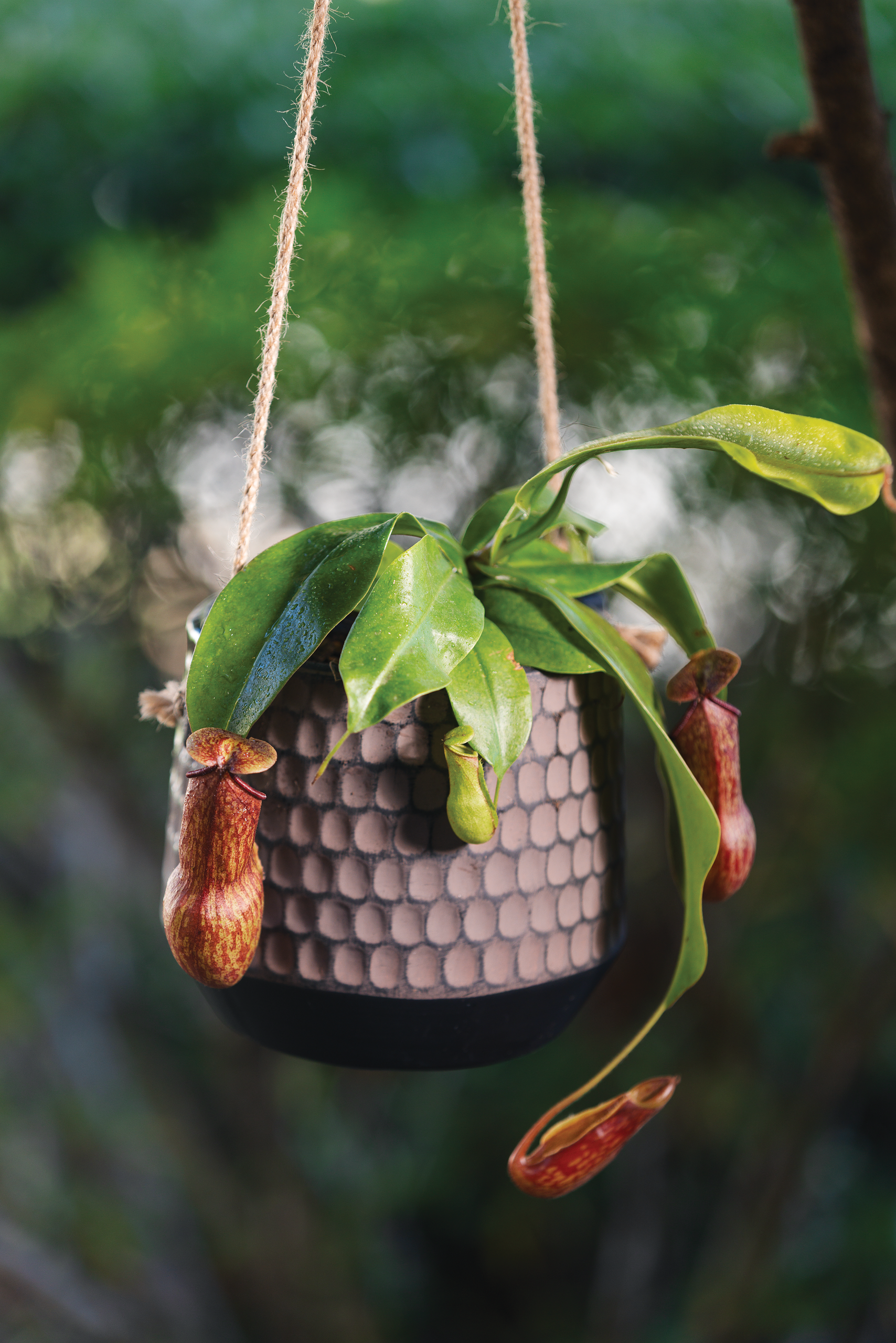
Nepenthes
Halloween may be over, but these little tropical carnivorous pitcher plants (Nepenthes) are the cutest with their elongated and showy cups dangling from leaves. We found this little monster at Carlstedt’s in Monroe and had to find a place for it in our collection. You’ll often see these growing along fences in New Orleans’ tropical climate, and they do great outdoors here in north Louisiana until the temps drop below 55°F.
Tropical pitcher plants are usually grown in hanging pots indoors or out. Pitcher plants grow naturally in nutrient-poor soil. Instead of relying on fertilizer, they trap and digest insects to get the nutrients they need. Because of this, they like low-nutrient growing media and can be harmed by standard fertilizers and chemicals.
No matter where you grow them, pitcher plants of all sorts need lots of water and they should be watered enough to keep the soil evenly moist, but not soggy. During the growing season, you may need to water several times a week. Use rainwater or distilled water if you can, as these plants can be sensitive to the chemicals in tap water, and avoid watering into the plant’s pitchers.
Pitcher plants also need plenty of light, consistent moisture, and high humidity, which is why mimicking their natural environment is key to keeping them healthy. Tropical pitcher plants usually grow best in bright indirect light and can develop sun-scorched leaves if they get too much sun.
If your pitcher plant can catch its own insects, it shouldn’t need any fertilizer. However, if you’re keeping your plants indoors or in an enclosed greenhouse, you may need to supplement their feeding with an organic, seaweed-based fertilizer that’s diluted to ¼ strength. Apply the fertilizer once a month in spring and summer only and avoid using granular fertilizers or pellets, which can burn these delicate plants.
Indoor pitcher plants don’t need much pruning, but you can clip off dead leaves and pitchers when they turn brown and dry.