



Bayou Eats | LIGHTNIN’ ON THE PARK
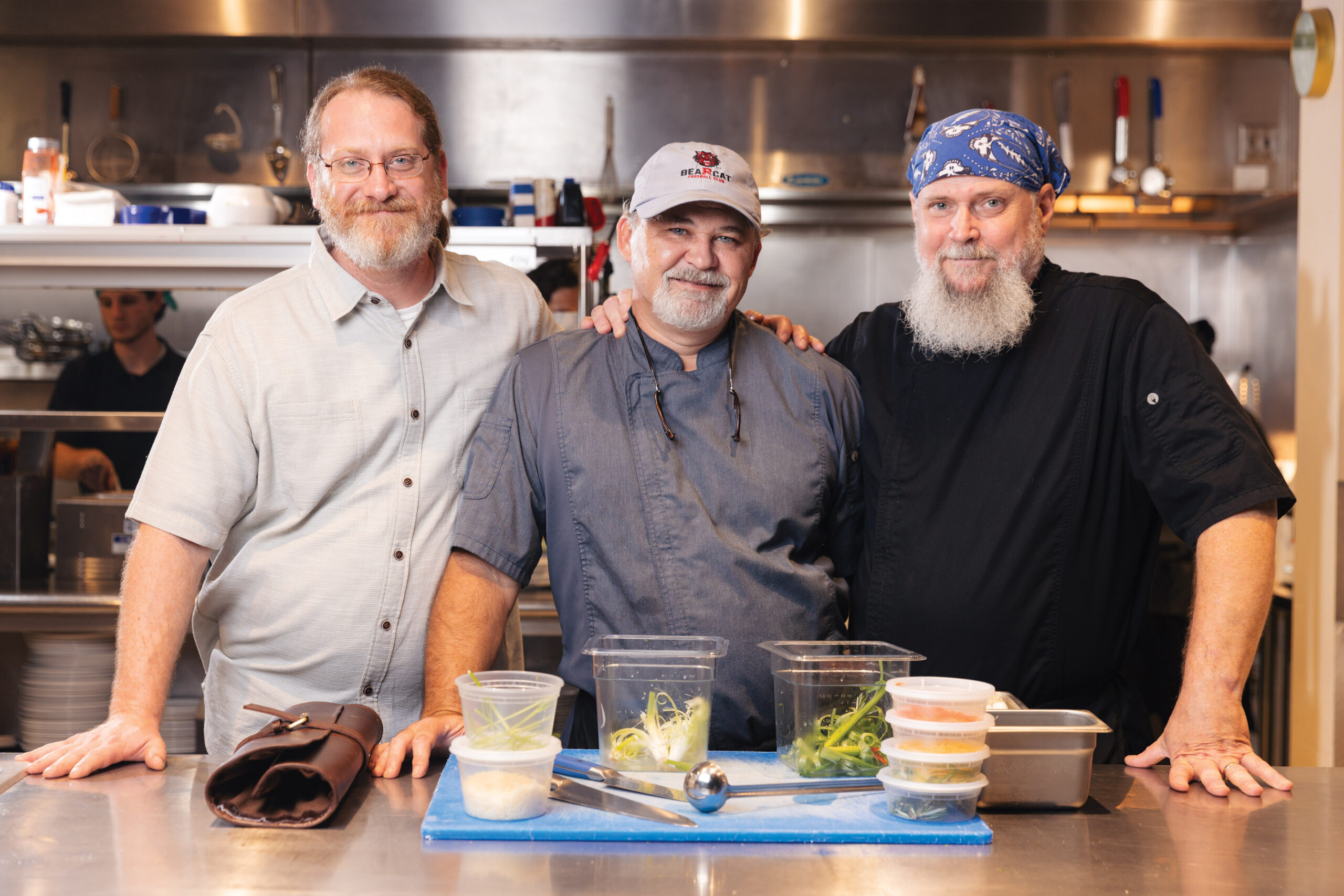
This upscale iteration of Eric Williamson and Sean Welsh’s first restaurant, White Lightnin’ Cocktail and Culinary Company, is playful Louisiana fare with an edge of culinary fusion. Its staying power is a collective effort to curate a restaurant culture that sustains the vital ecosystem between ownership, staff, customer, dining experience, and food. Pictured below: Eric Williamson, Chef Dane Doucet, and Chef Sean Welsh.
The common adage, “You can’t catch lightning in a bottle twice” attempts to warn overzealous achievers that repeating rare success is often widely out of the realm of possibility. Yet, it seems the trick is not trying to achieve the exact feat, but rather aim for a newly inspired vision. Such is the case for Eric Williamson and Sean Welsh, who raised their already electrified bottle toward another stormy sky and caught a second striking flash of light by way of their newly opened restaurant Lightnin’ on the Park, located across from Railroad Park in Ruston. This upscale iteration of their first restaurant, White Lightnin’ Cocktail and Culinary Company, is playful Louisiana fare with an edge of culinary fusion. Its staying power is a collective effort to curate a restaurant culture that sustains the vital ecosystem between ownership, staff, customer, dining experience, and food.
“The place became available some time ago,” says Williamson, referring to the former location of beloved sushi eatery Raw (which moved a block away). While they weren’t ready to conceive of a new culinary endeavor, having always loved the location and wanting to eventually expand to the downtown area, they purchased the space, sitting on it while they optimized their operations at White Lightnin’. “I like to consider it the most expensive storage unit in Ruston for a couple years” jokes Welsh, adding, “but we knew, when this building came available, that you just don’t pass up the opportunity to have some place like this.” With this new space, they hoped to explore the next evolution of their culinary staples, leaning to more elaborate dishes.
The evolution of food began with drafting a cohesive menu, going through approximately two dozen variations before arriving at a final draft. “We’d bring things in, look at them, call them out, try to figure out which angle we were going to attack from,” says Welsh, who pulls ideas from his culinary roots, which span to New Orleans by way of Dickie Brennan’s Steakhouse and Commander’s Palace. Originally, the idea was to centralize the menu around high-end sandwiches and a few entrées that would draw people in. But the closer and closer they experimented, they discovered several ingredients and dishes that further enhanced the flavors they were chasing.
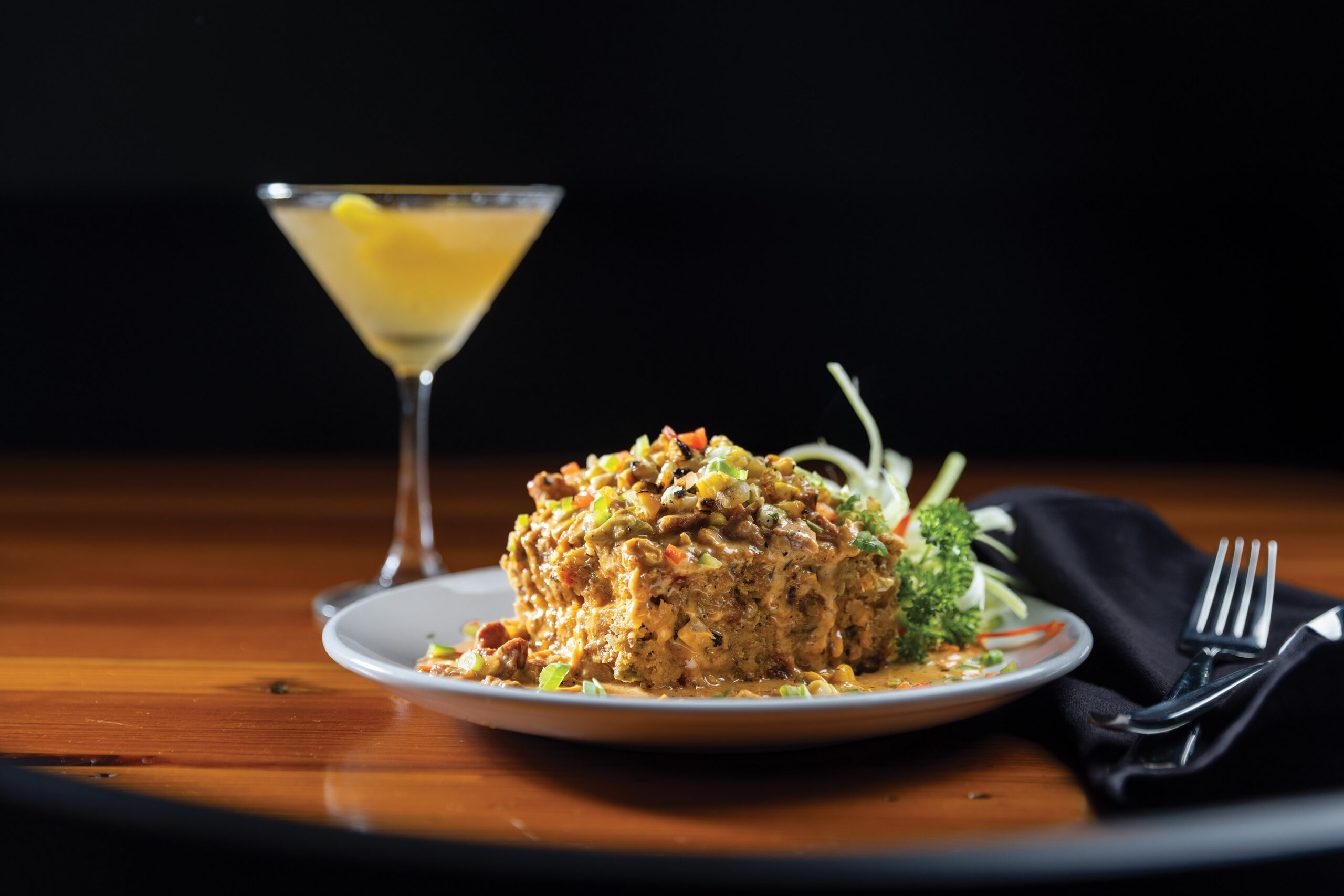
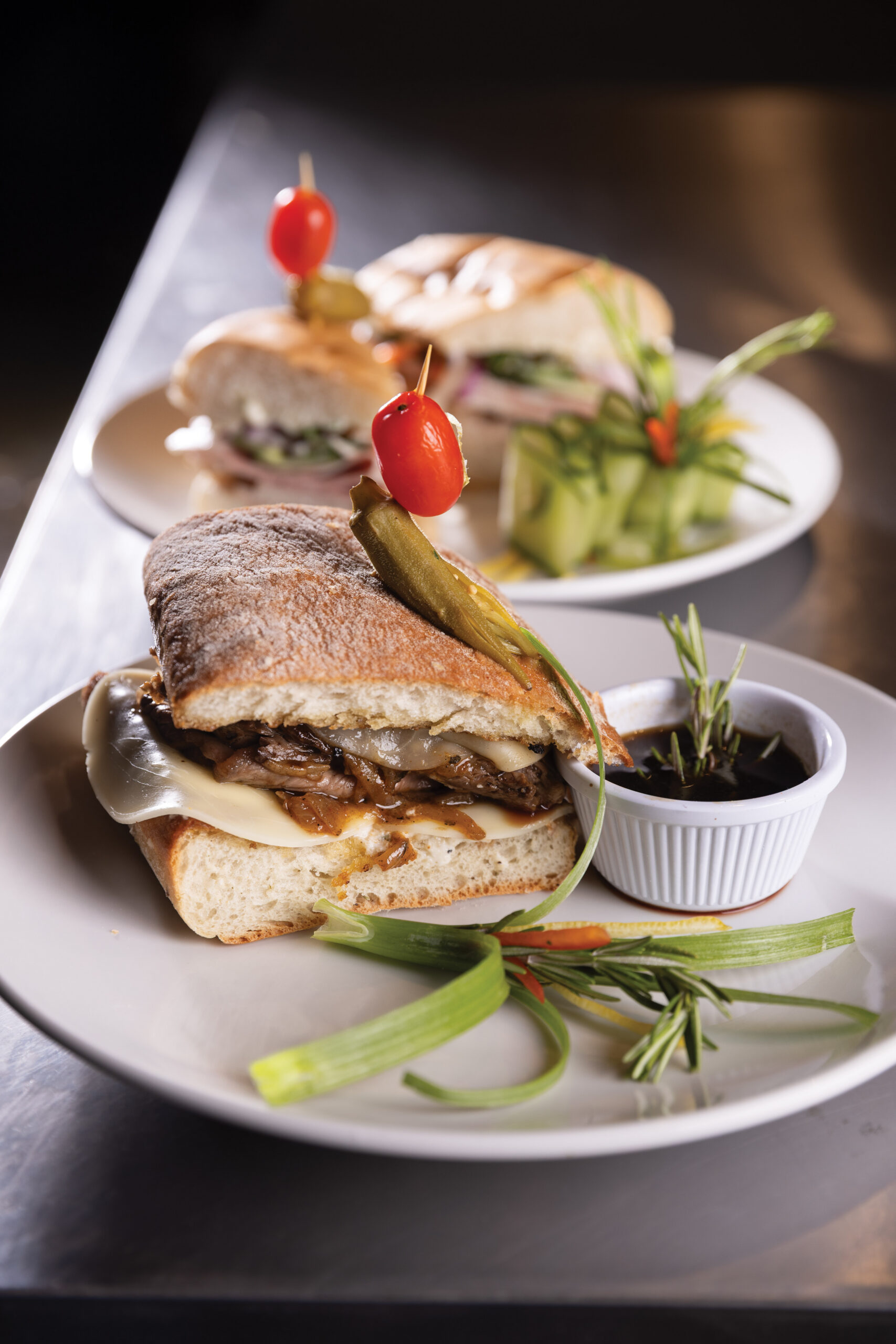
From the “Small Plates” to “Entrees” menu, each dish is plated with exquisite whimsy: bouquets of food punctuated by “swamp blooms,” explosive garnishes made from green onions, slices of red pepper, and pieces of parsley. “That’s kind of the theme that we’re really pushing through,” says Welsh. Their emblem, after all, is an artistically styled alligator standing on its front legs, tail over its head. For Welsh, this South Louisiana lean led him to a particular regional staple. I wanted to feature Boudin,” says Welsh, referring to the “Small Plates” section of the menu. The idea was a boudin corn bread (or Boudin King Cake as he likes to call it), so he started to make his own boudin in-house, enhancing it with a particular nutrient-dense ingredient. “If you cook it without liver, you’re doing it a disservice. That liver just brings that richness,” he says. For the topping, the pair, alongside friend and team member Chef Dane Doucet, tried two different andouille cream sauces. Welsh wrote one and Doucet, the other. “We never even got to mine,” says Welsh.
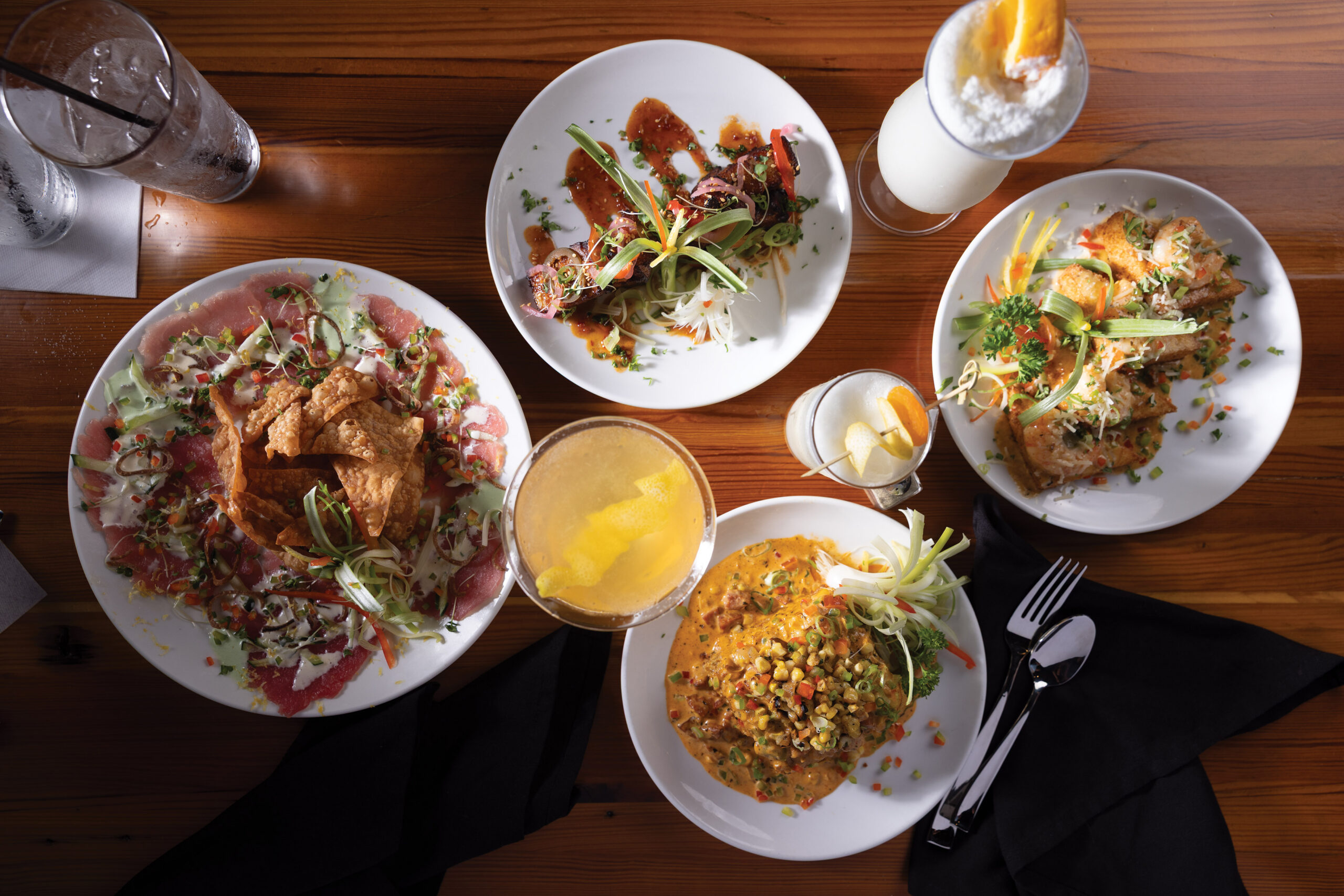
This section of the menu is headlined by a variety of flavors. The Sticky Pork Belly is a stack of flash fried sous vide pork belly tossed in a gochujang-based sauce, and topped with pickled red onion mix, sesame, and green onion. The Deviled Eggs initially caused some contention. “He fought me for five years now to put deviled eggs on,” says Welsh. “And it had to be a certain way. We couldn’t lay them down. They had to be stood up, and had to do this, and had to be that.” But the result is undeniably “gorgeous,” though the kitchen is now charged with boiling close to 60 eggs a day. A nod to Raw is reflected in the Tuna Carpaccio, an elevated dish (literally) of thinly sliced tuna spritzed with ponzu and topped with fried shallots, wasabi aioli, lemon zest, hot peppers, microgreens, yuzu mayo, and cucumber sticks. At the center, a hill of fried wontons. Another seafood thrill is the Shrimp Grit Cake: four garlic cream cheese grit cakes covered in shrimp and tasso cream sauce.
The sandwich selections are primarily the byproducts of Welsh’s own cravings: “There’s no place in town to get a prime rib on a daily basis. We’re gonna cook prime rib every single day, and then we’re gonna make prime rib sandwiches.” The result, prime rib piled high between rosemary focaccia bread, joined by horsey sauce, caramelized onions, provolone, and a side of au jus. Inspired by one of the sandwiches he always grabs when visiting New Orleans, the Banh Mi is spectacularly punchy in flavor. Toasted French bread is spread with pâté and garlic aioli, packed with roast pork and mortadella, and accentuated with cilantro, jalapeños, red onion, pickled jícama, and pickled carrots. Their smokiest sandwich is arguably their BLT, which features Nueske bacon from Wisconsin. “It’s the best bacon I’ve ever had,” says Williamson.
An array of sauces dominate the “Entrees” section. In the Shrimp and Redfish Couvillion, a tomato-based seafood stew is served with jasmine rice, green onion, and lemon forward. The Railroad Redfish can be either a blackened or grilled redfish, topped with beurre blanc sauce, and served with scalloped potatoes. A creamy tasso sauce joins an 8 oz. blackened or grilled chicken in the Crossroads Chicken, and the tuna plate features a marinated, seared tuna steak, balsamic reduction, wasabi aioli, cucumber ribbons, and is served with Spacciato dressing broccoli slaw.
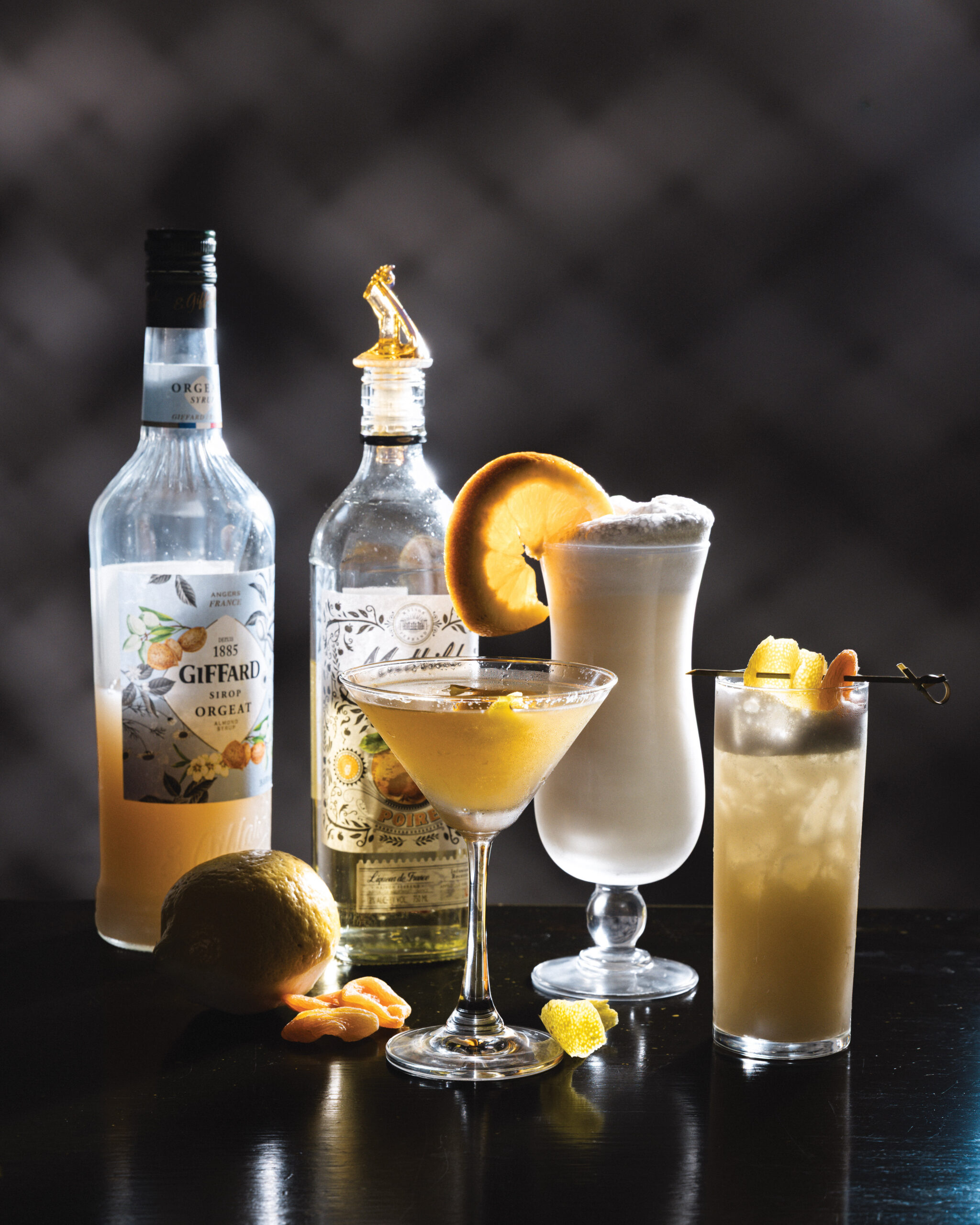
The specialty cocktails are reflective of Williamson’s playful experimentation. He started with the Orgeat and Apricot, a frothy, juicy mix of Reposado tequila, apricot liqueur, Giffard Orgeat Syrup (a French almond syrup), lemon, orange blossom water, and egg white. Another new conception came by way of a specialty cocktail he created for the wedding of a friend’s daughter. The TLC (Tatum-Lucas Cocktail) is a delightful swirl of bourbon, fig liquor, house-made syrup, lemon, and soda. White Lightnin’ regulars will surely be pleased to see some familiar favorites such as the Ramos Gin Fizz (gin, lemon, lime, cane sugar syrup, heavy cream, egg white, orange blossom water, vanilla, and soda) and Peaches n’ Cream Daiquiri (peach rum, light rum fresh peach puree, lime juice, and heavy cream). In the near future, plans of expanding the bar will give way to an expanded cocktail menu.
Monumental to their success has been their staff. “That’s the whole reason that all this works,” says Williamson. The arrival of Doucet has expedited the synergy of the kitchen, which is a significant full circle for Williamson because Doucet helped him land his first fine dining kitchen job in Colorado at Red Rocks Country Club during the late 90s. “We collaborate well together, and his food is top notch, his attitude is top notch,” says Welsh. Thanks to this combined leadership, the kitchen has become a playful and creative space where line cooks are given agency, some of them creating new flavors like the Spicy Honey Ginger dressing or visual art like the “swamp blooms.” Additionally, fostering an in-house community is at the nucleus of their operation. No task is below anyone. In fact, when a dishwasher walks in, everybody says, “All hail to dishy.” A ritual of gratitude and respect for one of the toughest jobs in any restaurant. Ultimately, Welsh has taken the role of cheerleader and he asserts, “I don’t mind being that.”
Lightnin’ in the Park is also a family business. The first Saturday they opened, Welsh’s daughter Susie was hosting, his son Casey was washing dishes, and his wife Dorothy (a graduate of Johnson and Wales as a pastry chef) was greeting people. On Williamson’s end, his life partner Emily Ezell, local artist and Grambling professor, has been working at the restaurant during the summer. And his mother, one of the restaurant partners, frequents the restaurant. As for Welsh and Williamson, they consider themselves participators. “You’ll never see us walk by a table that’s dirty and not pick something up and bring it,” says Welsh, who values interacting with customers.
The extra steps taken to build a long-standing dining experience, from making everything from scratch to promoting an integrated staff, has grown both restaurants a loyal customer-base. “Our regulars are our lifeblood, honestly,” says Welsh. “They are there on a daily, weekly, monthly basis.” Williamson and Welsh hope they do their regulars justice and dedicate not only their success, but also their continued effort to create a unique dining experience to those who have embraced their approach to cuisine and cocktails from day one.