



IN THE GARDEN
with Kerry Heafner
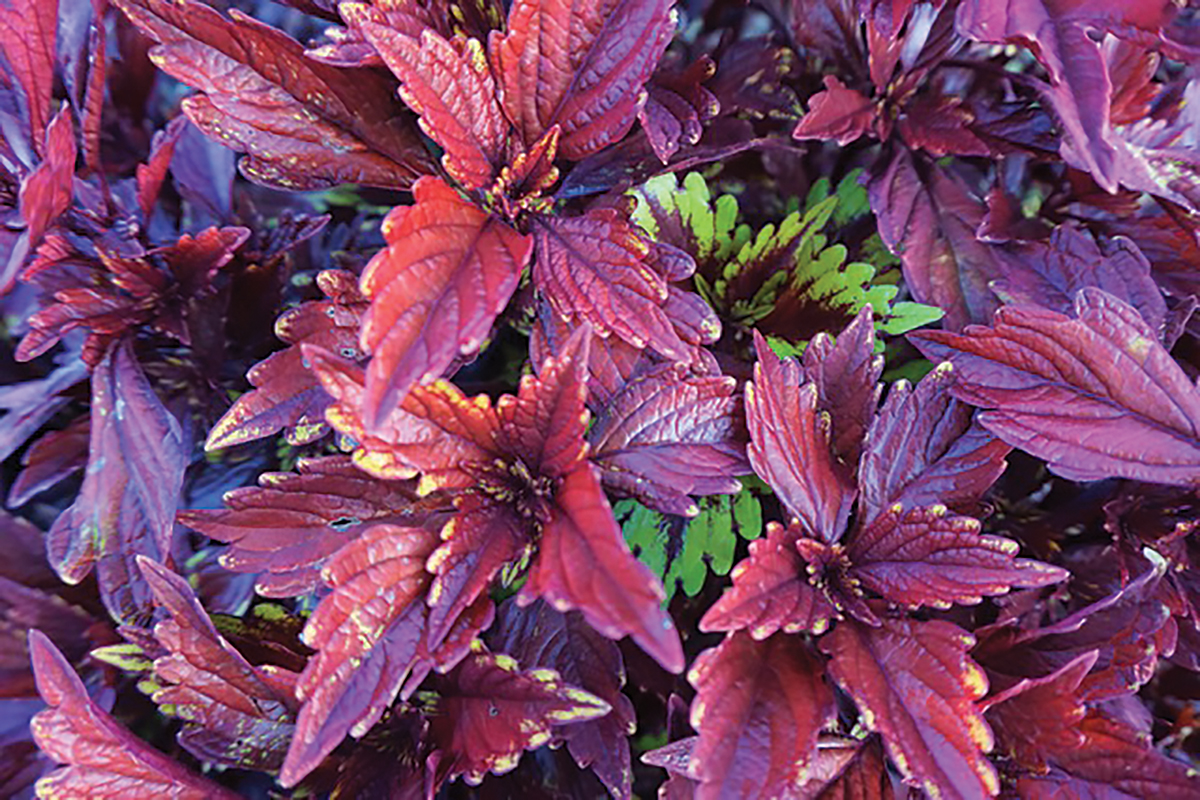
Up in the mountains, the Southern Appalachians, fall always meant cooler temperatures, decreasing daylight hours, near round the clock cricket chirping, and most significantly, brilliant colors. Here in the ArkLaMiss, fall typically means we still sweat to the oldies, but we can still have brilliant colors in our landscapes. With fall landscapes, color combinations and different textures can be achieved with flowers, foliage, and fruit! As always, look no further than Louisiana Super Plant selections!
Coleus is associated more with warm season color, but because of more moderate temperatures in fall, you’ll be amazed at how the ‘Flame Thrower’ series performs as fall foliage. They’ve formed mounds in beds at the LSU AgCenter’s Red River Research Station in Bossier City. Their foliage has brilliant oranges, yellows, and reds which add much more color to the fall displays. “Spicey” might even describe ‘Flame Throwers’ with variety names like ‘Chili Peppers,’ ‘Salsa Roja,’ ‘Serrano,’ and ‘Habanero.’ Warm colors on cool, fall days are what the ‘Flame Thrower’ series of Coleus is all about!
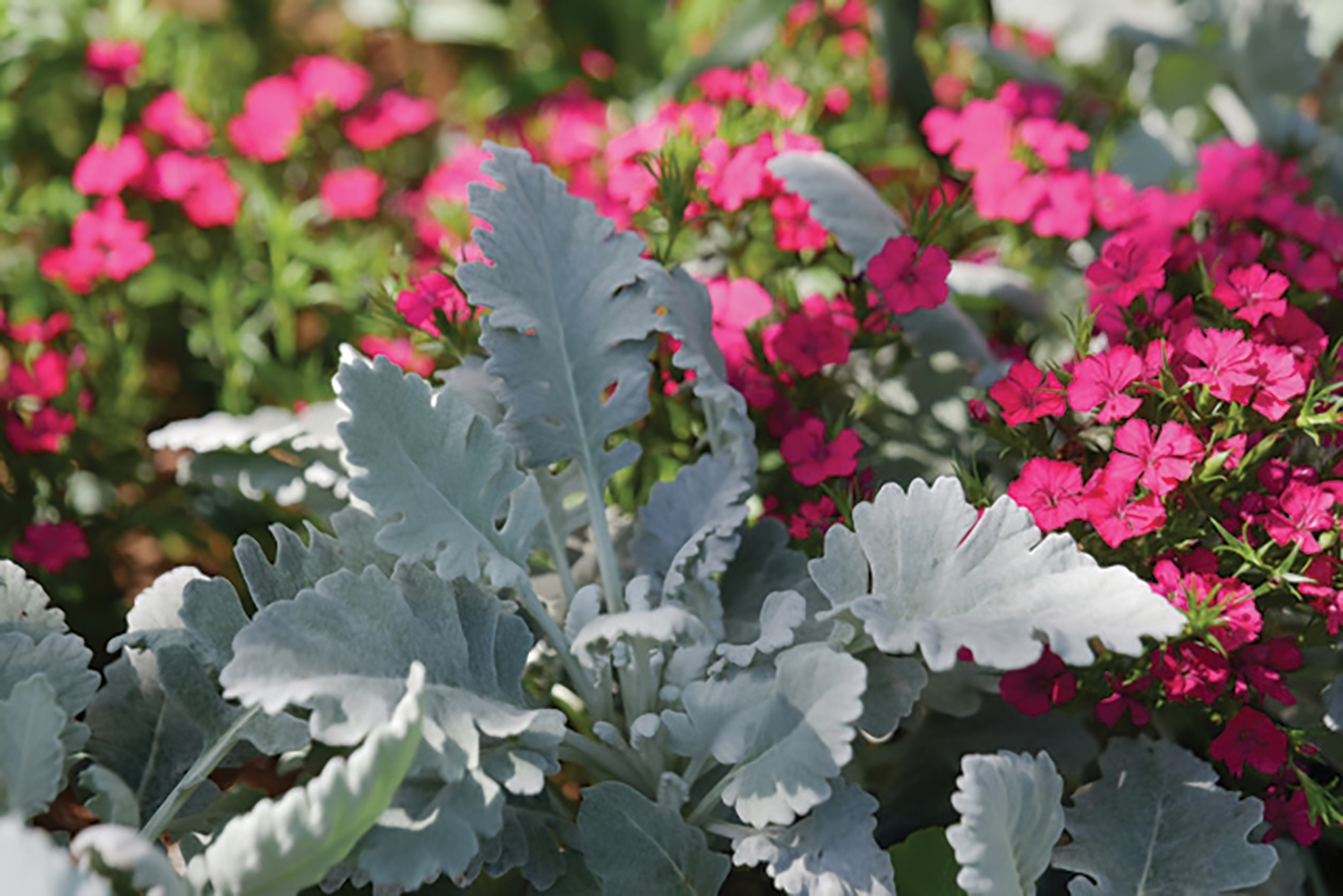
ArkLaMiss autumns are still warm enough for peppers and this includes ornamental peppers! All varieties are Louisiana Super Plants! Ornamental peppers are a fun way to add color using fruit and the variety of sizes and colors is amazing! Ornamental peppers may be too hot for use in the kitchen. But, incorporating a variety of them into your fall décor will brighten up any area. Many varieties are perfect for containers, too! And don’t count ornamental peppers out as a way to add color using foliage. ‘Purple Flash’ is an excellent example of an ornamental pepper that will provide color and texture using foliage and fruit! That’s a lot of bang for the buck….or buck for the bang! For softer texture and contrast, don’t forget about Dusty Miller, which has been around for years but now has Louisiana Super Plant Status. Dusty Miller has versatility as a border plant in beds or as a filler in containers and its versatility is simply a reflection of how variable the foliage can be in terms of size and color! Leaves can be lacy like similar to Wormwood or can be large and rounded like a lamb’s ear. As a bonus, Duty Miller will produce wonderfully yellow flowers on its own to add to the fall blast of color. Some gardeners opt to prune the flowers out so foliage can be the focus. Either way will work just fine for fall!
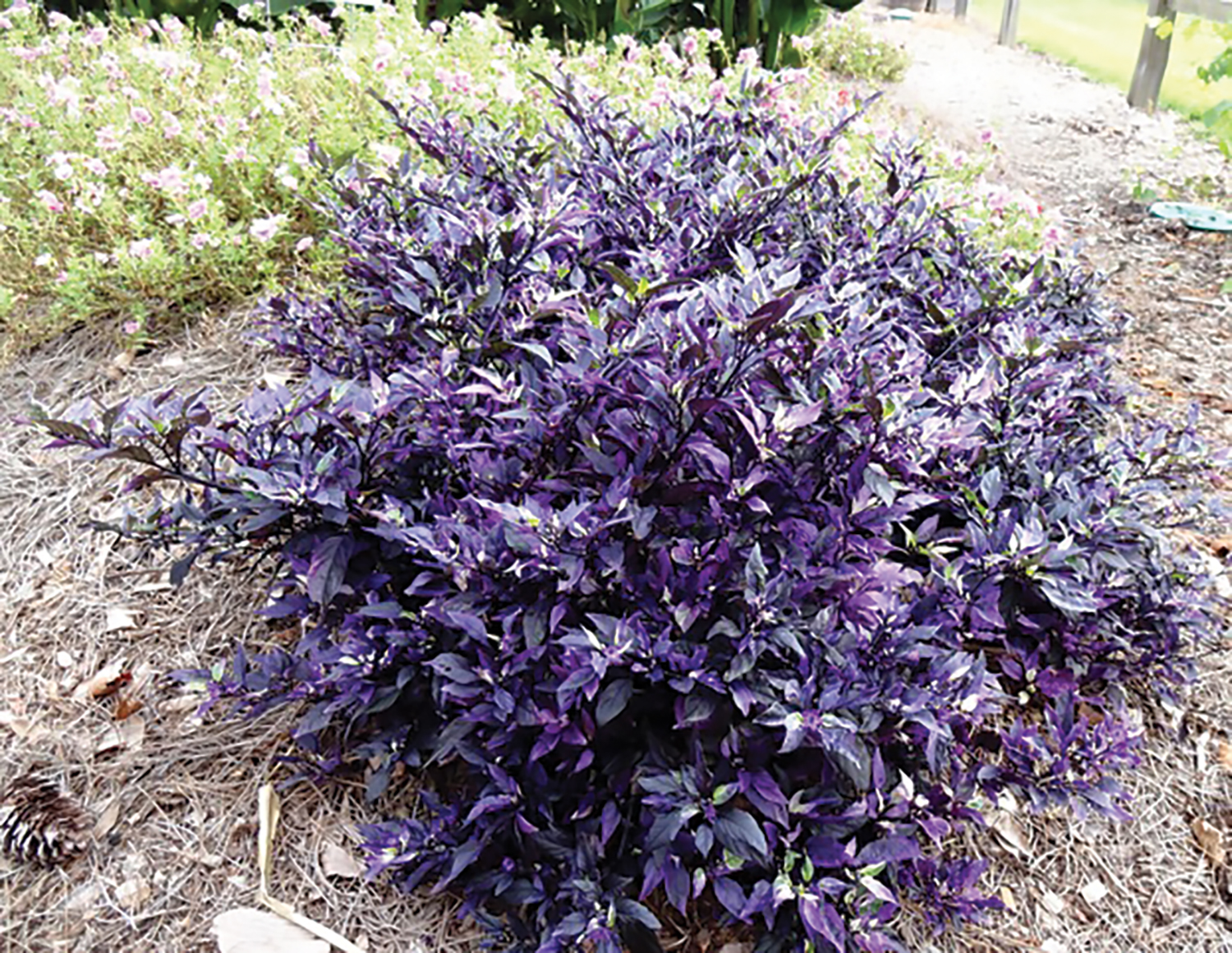
Ornamental Peppers are Louisiana Super Plants. ‘Purple Flash’ is for fall foliage color. Photo by LSU AgCenter.
“There is unrest in the forest. There is trouble with the trees.” – Rush
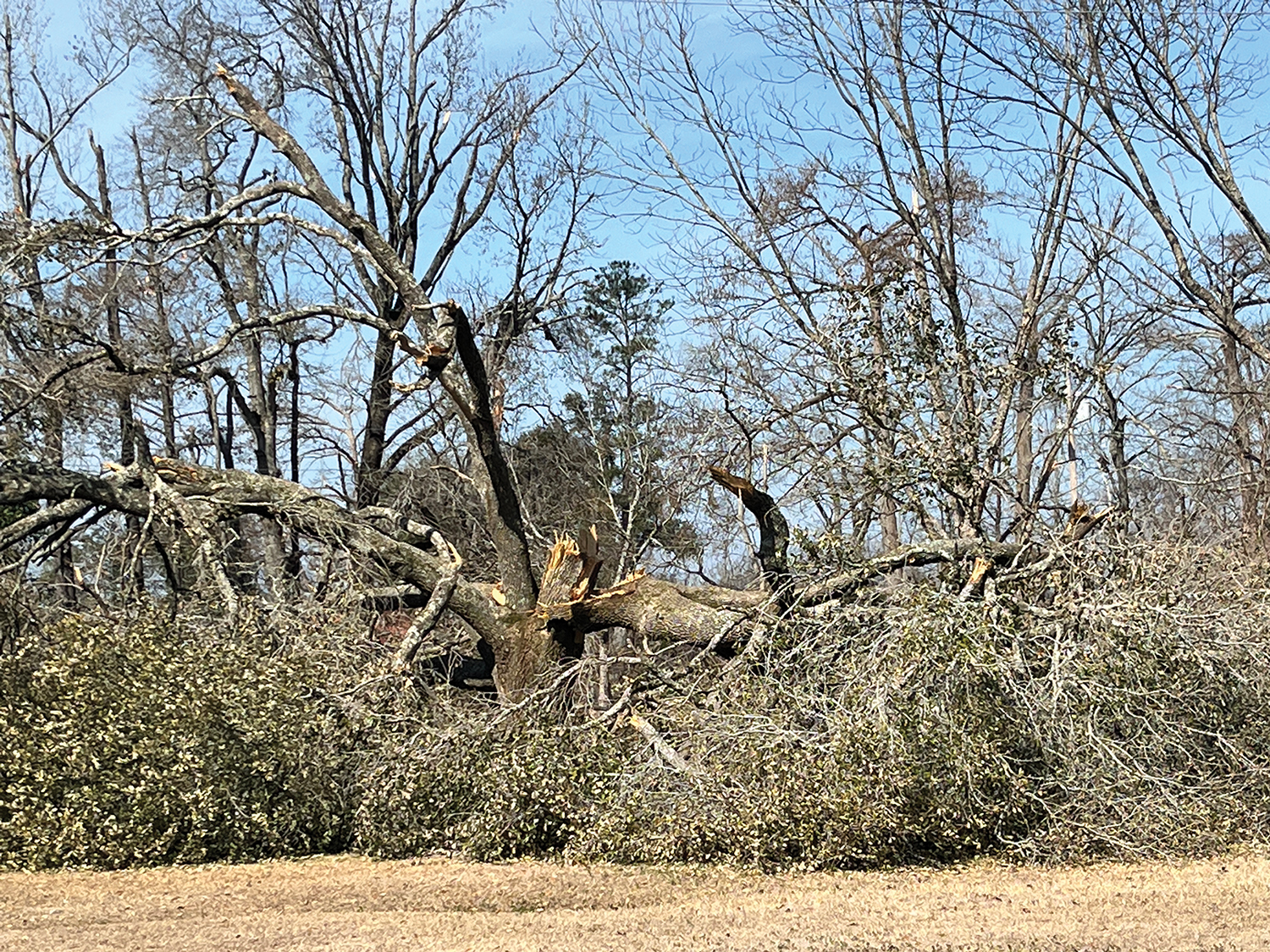
In this post Winter Storm Fern period, trees have been the subject of the majority of phone calls coming into the office and home visits I’ve made since those bleak, frozen days. Back in May’s issue, in the Q & A section of In the Garden, I said we would need to keep an eye on Live Oaks in order to determine how they will survive all the damage Fern caused. The same is true five months later and will be for a while. Before Fern, trees statewide (mostly) were in a period of recovery from weather events going back to the freeze of December 2022. At 1:57 on the afternoon of December 2nd, air temperature was 49.86 degrees F. At 6:57 a.m. the next morning, air temperature was 9.86 degrees F. Couple that with cold snaps during the following spring and record, triple-digit heat, drought, and red flag conditions during the summer of 2023 and the result is stressed landscapes. It’s important to remember that trees are plants, too. And just like with plants in vegetable gardens, stressed trees are more susceptible to pests and pathogens than healthy trees. Unfortunately, it isn’t always obvious to know if a tree is stressed; symptoms may not manifest until the tree is in an irreversible state of decline.
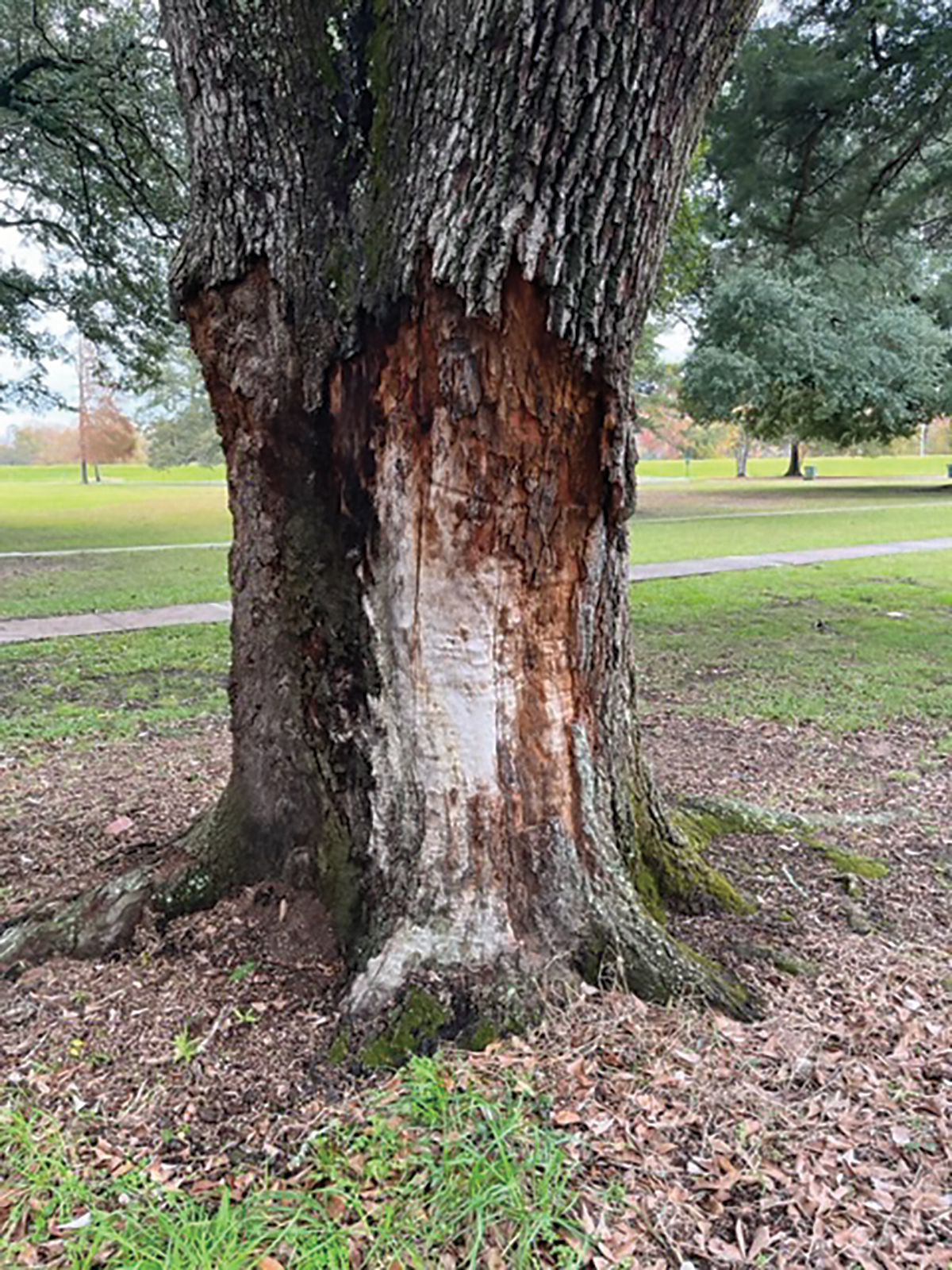
Photo by Kerry Heafner.
If you’re still cleaning up tree debris after Fern or pruning very mature trees to lessen the chances of damage from future Fern-like storms, keep these tips in mind.
- Always use professional tree services who hold the arborist license. The Louisiana Department of Ag and Forestry maintains a list, by parish, of licensed tree cutters on their website.
- Always ask for the license number of supposed tree experts who approach you seeking work and do not use them if they can’t produce one. Again, see the previous tip.
- Just because a tree was damaged during Winter Storm Fern doesn’t mean it’s doomed. Be patient, don’t panic, and watch how the tree goes into dormancy for winter and how it emerges from dormancy in spring.
- A tree struggling will, more often than not, exhibit any combination of these symptoms:
- A thin or sparse canopy long after spring bud break
- Premature and sudden leaf drop or browning needles
- Large pieces of bark sloughing off expos-
ing the heartwood (non-functioning xylem tissue) - Sawdust around the base of the tree (beetle infestation)
Folks, my hunch is we’re going to be seeing the effects of Winter Storm Fern on our trees for years to come.
We’re moving into the time of year (now through February) that is the ideal time to install trees into the home landscape. Trees need growing conditions that are as close to ideal as possible for fast, healthy growth. In the home landscape, this means:
- Full sun
- Workable, fertile soil (clay soil is not “bad” soil)
- Plenty of space to minimize competition and achieve maximum size
- Periodic pruning
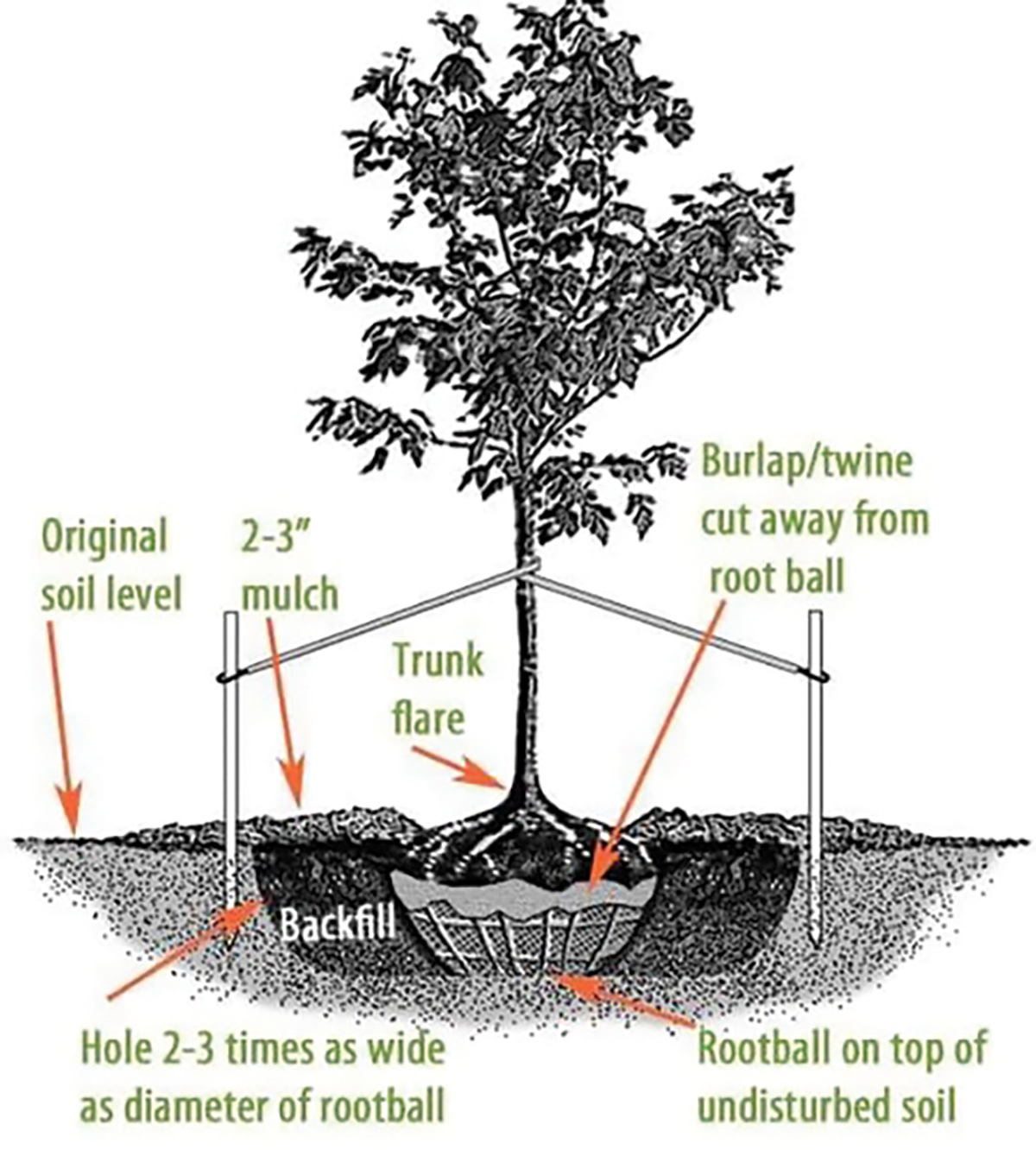
The correct way to install a tree into the landscape. Picture by LSU AgCenter.
Deciduous trees are best planted after they’ve lost their leaves for the winter. The planting hole should be two to three times wider than the root ball or pot. Grafted trees should be planted so the graft union is above ground. The point at the base of the trunk where the root system begins to flare out should be visible just above ground level. Backfill with native soil that has been amended with organic material if necessary. No fertilizer should be put in the planting hole. Water in well to get rid of air pockets. A two-to-three-inch layer of mulch around the tree, spanning the diameter of the planting hole but not in direct contact with the tree’s trunk, will help conserve soil moisture and will break down over time to add organic matter to the soil.
As always, don’t hesitate to contact me at the Ouachita Extension Office, 704 Cypress Street, (318) 323-2251, or kheafner@agcenter.lsu.edu if you have any questions!