



Fishing With Kenny | When All Else Fails
Article by KENNY COVINGTON
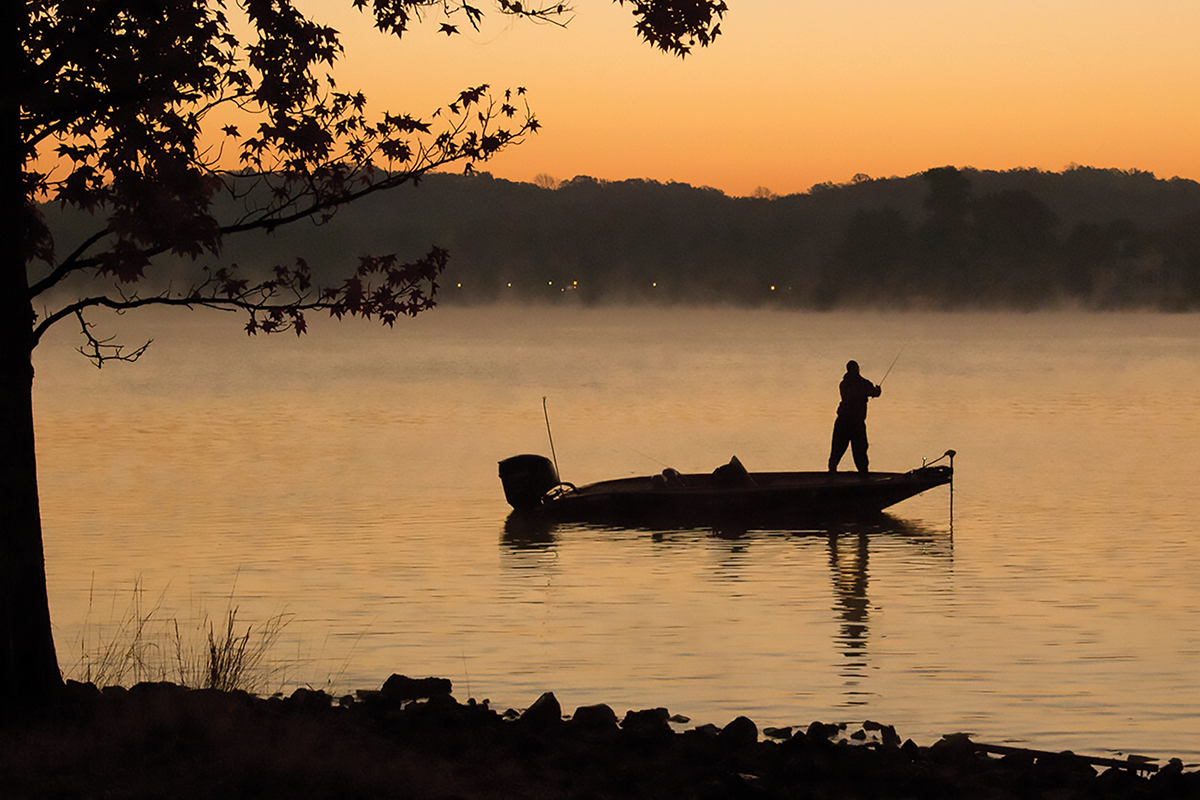
Bass fishing can be and often is a humbling sport. Some days you can do no wrong, no matter what the lure you throw or what the elements throw at you, you have it all figured out. Often however, we leave the lake asking ourselves,“What did I miss or where did I go wrong?” In this month’s Bayou Life “Fishing with Kenny”, let’s look at some things you can try, when all else fails.
I am a shallow water angler by nature. I can fish deeper water, have won events fishing deep water, and while I am comfortable when using deep water techniques, a lot of my career successes have come from water less than five feet deep. I know over the course of a tournament season there will be times when I may have to throw a Carolina rig or crawl a jig on a channel ledge. I can do these things, but I am more comfortable fishing shallow, sticking with my strengths as an angler.
With this mindset in place, let’s look at both shallow and deep-water situations over the course of a year and look for situations where a tweak here or an adjustment there would have made all the difference between a bad day on the water and a good one.
First, let’s look at the winter months of December, January and February. What you want to look for this time of year is stable weather. Notice I didn’t say warmer weather, but stable weather. If the weather is consistently cold or colder, the fish will adapt and will still bite, after all, they must eat to survive.
When I get in this situation, when all else fails, I find stretches of rocky banks with off colored water, and throw a flat sided crankbait, a single bladed Colorado spinnerbait, and a black/blue jig. It would probably surprise you at the tournaments I have won and done well over the years following this simple approach. Even in the dead of winter, shallow water bass are easier to catch, more predictable in their eating habits, and are usually better-quality fish.
Let’s look at the springtime months of March, April and May. I have always found springtime bass fishing to be much more difficult than any other time of year. You know where the fish should be, what they should be doing, and how you are supposed to catch them. All the fish are shallow so how difficult can it be? Take it from me, it can be excoriatingly frustrating.
A few years ago, I was fishing an event on a local lake and my team partner and I bombed. We didn’t even have ten lbs. of bass and placed in the 40’s somewhere. Knowing I totally missed the bite, I overheard a competitor talk about all the bedding fish they had seen and the number of fish they had caught. Fast forward to the tournament I had the next day, which won weighing in almost 23 lbs. catching spawning fish in an area no one else had found.
In the springtime, when all else fails, rig up a Senko, Texas rigged, in your favorite color, slow down and pick your spawning pockets a part. Put your trolling motor on low, be very stealthy, and you will be surprised at the fish you catch, you never knew were even there.
When chasing summertime bass of June, July and August, a lot of people like to focus on creek channels, bends, treetops, ridges, and whatever bottom contour will hold a school of bass. These areas are even more popular with the introduction of modern technology, so the secret spots of yesterday are now today’s community holes. Don’t let this be a deterrent.
When all else fails, I have two different choices I keep in mind, which is especially important during tournament competition. First, I could try to fish these popular areas by using a different technique, or figuring out another way to catch them, or I can switch gears and fish areas that are often overlooked and target less pressured fish. Usually, I will choose the latter. Even though I am fishing for smaller concentrations or even individual isolated fish, I am not having to split fish with my competitors, often giving me a boost in confidence.
Now, for my favorite time of the year, September, October and November, the fall months. I love to put my trolling motor down and cover water this time of year. I throw big topwaters, big squarebill crankbaits, and big spinnerbaits. That is in my wheelhouse. I know if I cover enough water, sooner or later I am going to figure out how to catch a better-quality fish, simply by using bigger lures. By now you may be wondering, “what if that fails,” and yes, I have an answer for you.
Just as easily as I can get hardheaded about the way I like to catch fish in the fall, I also realize there will be times when I must scale down to smaller lures, often due to boat pressure, drastic weather changes, or even lake conditions. When all else fails, I know my horizontal presentations will still work, I just modify them to fit my situation better.
My ¾ ounce spinnerbait becomes a ¼ ounce version. A big topwater, a walking bait like the Zara Spook, becomes a smaller and more subtle choice such as the Yellow Magic popper. My squarebill is usually smaller or I will throw the bigger version but one without rattles. I’m still fishing the same way; I am just using different tools out of my fishing toolbox. Remember, when all else fails, simple changes can mean everything.
Well, it looks like we have run out of space and time again for another month. I hope we have been able to share some information with you that will make your next trip a more memorable experience. Be careful out on the water this month as hunting season ramps up, take care and catch one for me!
See you next month!