



Common Olive Tree
STYLED BY MARÉ BRENNAN
PHOTO BY KELLY MOORE CLARK
The cultivation of olive trees can be traced back to ancient Greece. Distinct silvery leaves, fragrant white flowers in the spring, and gnarled trunks make olive trees a welcome inhabitant of the garden.
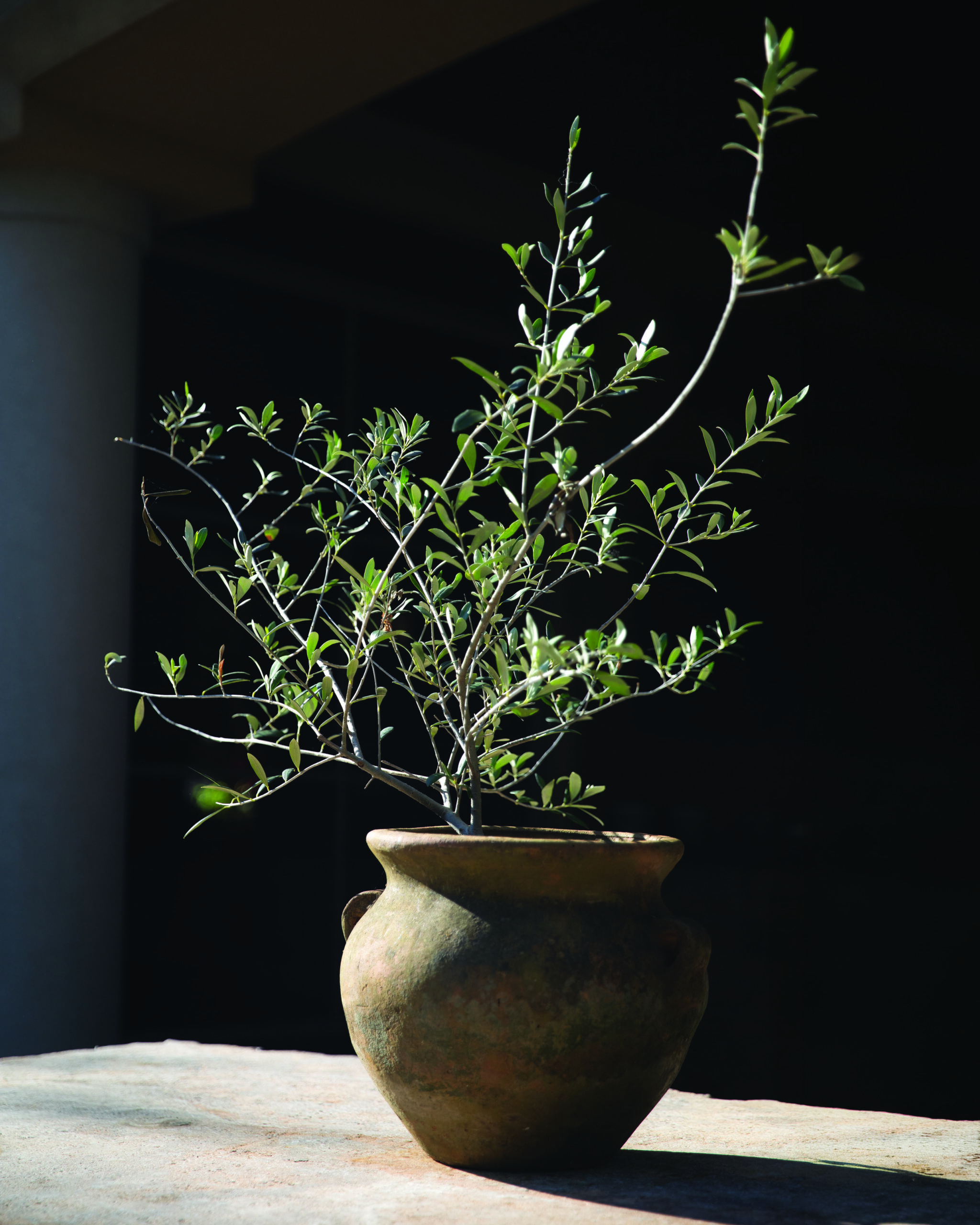
Olea Euraopaea
This is a long-living tree with a lifespan of 150 years or more. Olive trees can also be grown in containers. Look for dwarf varieties that stay under 6-feet tall, if you want to grow in a pot for easy transport inside during freezes.
Olive trees thrive in a Mediterranean climate with hot, dry summers and cool, mild winters. Full sun (a full eight hours) is a requirement for a healthy olive tree, and it is best to plant in the spring after the last frost. Avoid planting in the summer, and plant in a well-drained area (they don’t like to be waterlogged).
In spring and summer, be sure to water newly planted trees deeply two or three times a week. Established trees (5-7 years old) can be watered much less frequently, every few weeks, allowing the soil to dry out between waterings.
In the fall and winter, water less frequently, adjusting for rainfall.
Fruit-bearing olive trees usually don’t produce until they are 4-5 years old. To harvest, you can pick while still green or after they fully ripen in the late fall. Most olives need to be cured with brine or sun drying before eating, as they are very bitter. Olive trees produce fruit on the previous year’s branches, so if fruit is desired, prune lightly to open the canopy for light.