



Bromeliad Kokedama
Article and Styling by Maré Brennan
Photography by Kelly Moore Clark
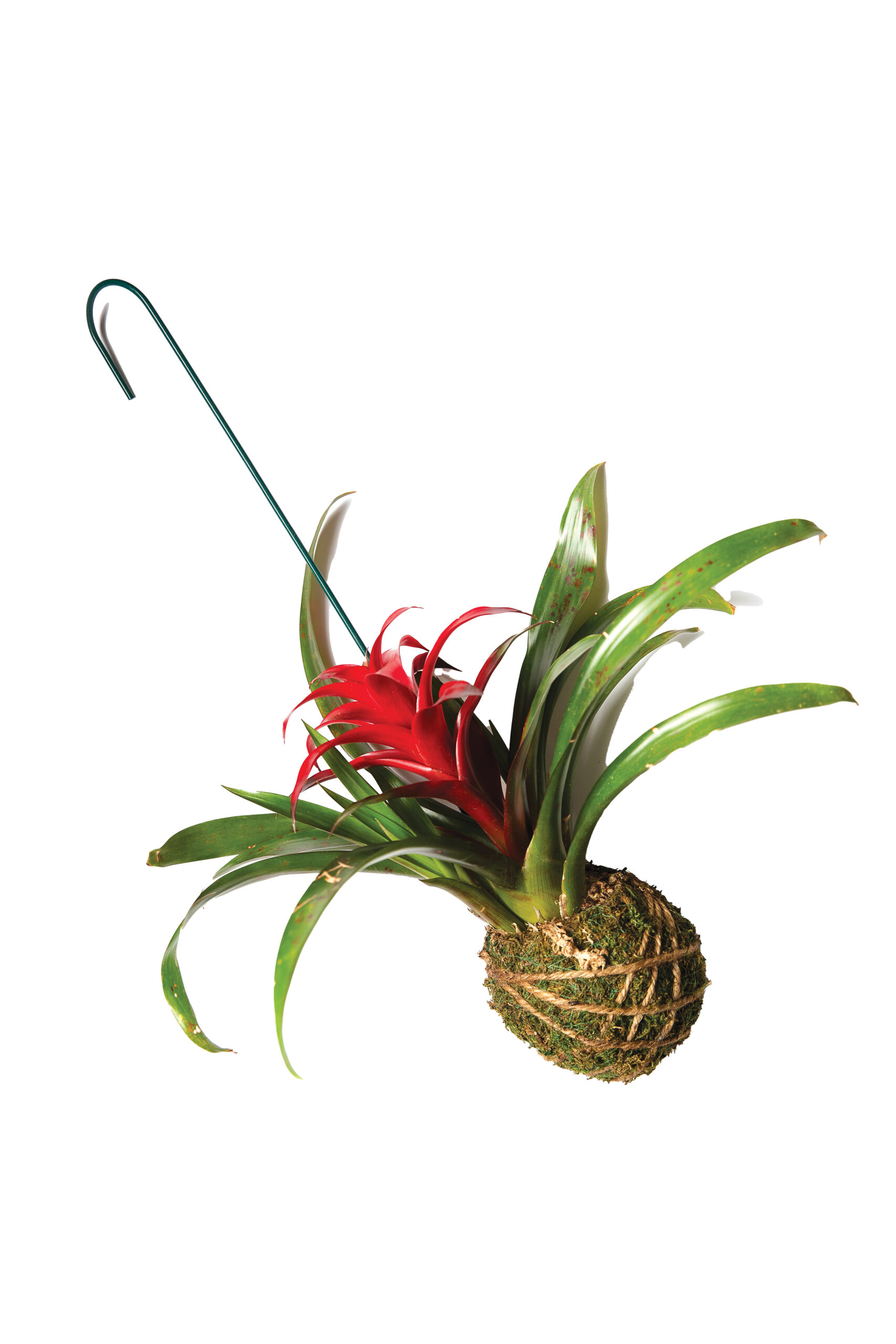
Kokedama is the Japanese art of growing plants in a moss-covered ball of soil wrapped with twine or mono-filament fishing line. Kokedama balls can be displayed by placing in a decorative dish or by hanging by fishing line or a hook. This kokedama, which can be purchased at the Trove, contains a colorful bromeliad, a hardy tropical plant. Bromeliads (Bromeliaceae genera) are easy to care for in average home conditions, are great for beginners, and are safe for pets.
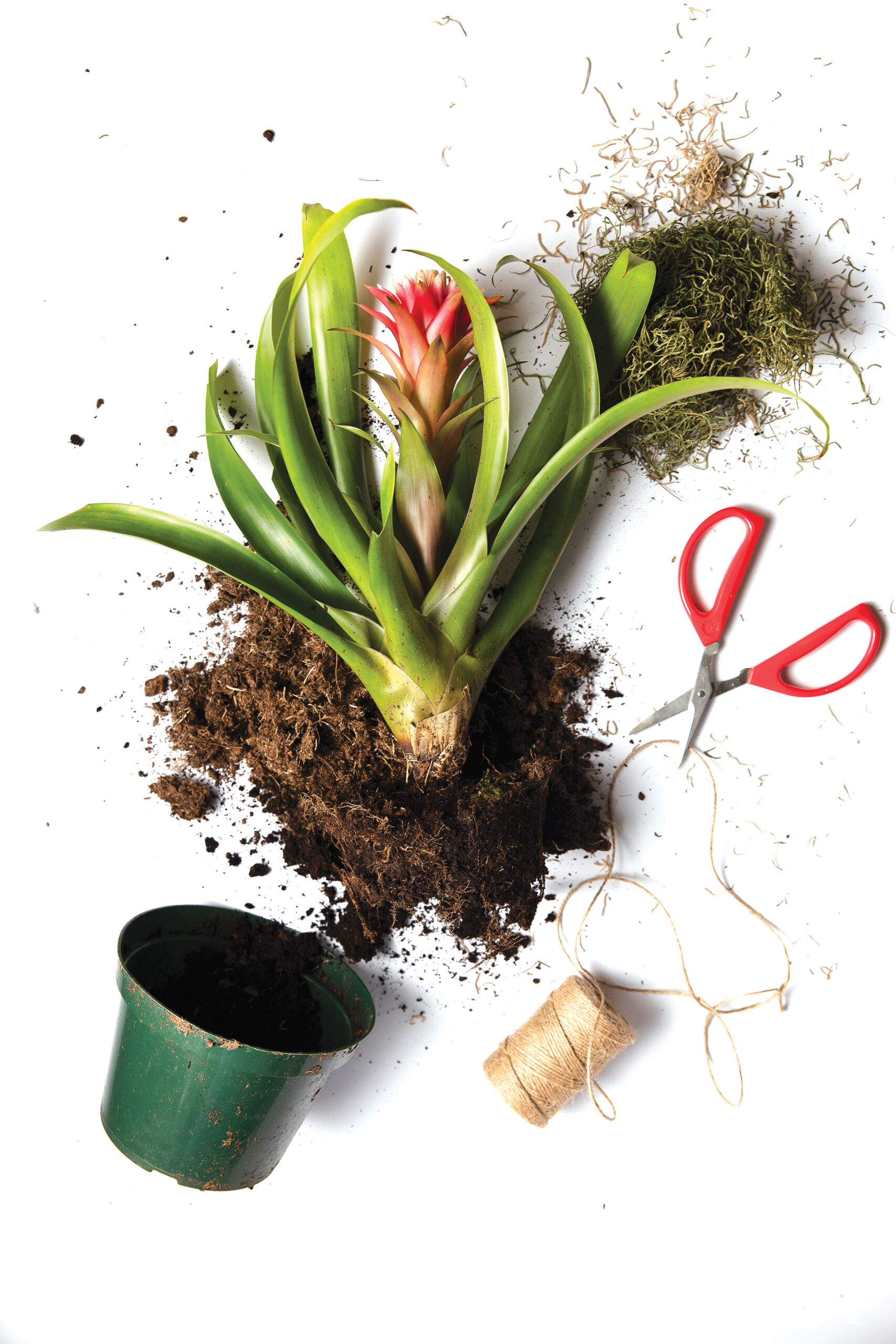
MATERIALS YOU’LL NEED:
Peat moss
Potting soil
Sphagnum sheet moss
Jute twine or mono-filament fishing line
Scissors
Bowl
Gloves
Measuring cup
Prepare Your Soil:
To make a 4-inch kokedama ball, measure two cups potting soil in a bowl or bucket. Slowly add water to the potting soil until it just holds together when pressed firmly; more water can be added later if necessary. Press the soil mixture into a ball, firmly packing in your hands so it stays together. If you toss it into the air a few times, it should hold together and not fall apart.
Planting:
Remove the plant from its pot and gently shake off as much soil as you can from its roots. Split your newly made soil ball in half and lay the plant’s roots in the center. Then, gently pack the ball of soil around the plant.
Prepare The Moss:
Dampen the sheets of sphagnum moss in warm water to make it pliable in order to wrap it around the soil ball. Lay the sheet moss face down, set the soil ball in the center, and gather the moss around the soil ball and up to the stem of the plant. Your moss ball is ready now to be tied.
Wrapping Your Moss Ball:
Secure the moss with string or mono-filament fishing line. Begin by holding the ball in one hand and with the other hand start wrapping the ball leaving a long tail at the bottom to use to tie off when done wrapping. Wrap in all directions. If you want to hang your kokedama, start wrapping the ball at the top, still leaving a long tail, and tying the ends to hang. If you don’t want to hang your Kokedama, you can place it in a shallow dish for display.