



Pages | “Weyward” by Emilia Hart
REVIEW BY MEREDITH MCKINNIE
“We never thought of ourselves as witches, my mother and I. For this was a word invented by men, a word that brings power to those who speak it, not those it describes.”
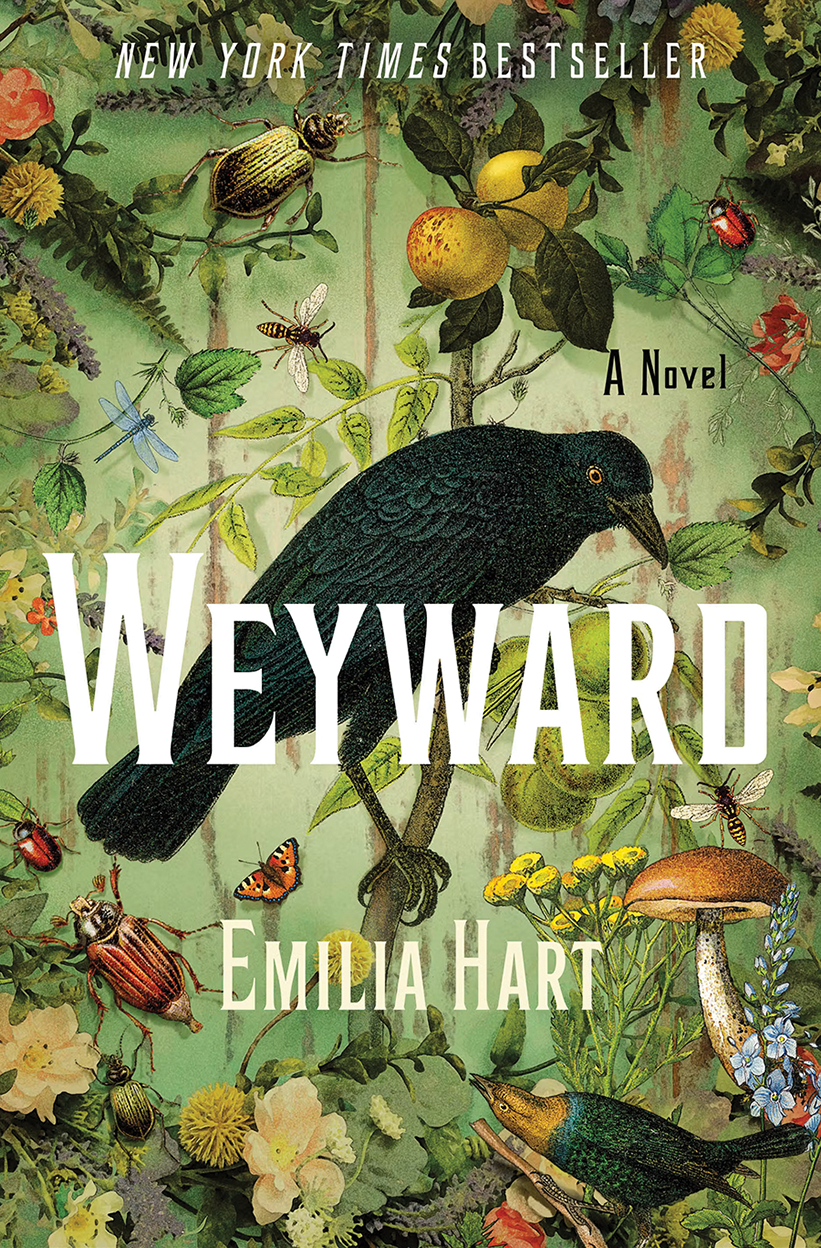
Part historical fiction and part magical realism, Emilia Hart’s debut novel Weyward tracks three generations of women, centuries apart, finding inner strength and asserting power in societies intent on destroying them. We first meet Altha in 1619, standing trial for witchcraft after the death of a local man. After promising her dead mother that she would hide her healing powers from the villagers who would use those powers against her, Altha ventures into the forbidden in service to a friend. Then we meet Violet in 1942, a precocious child obsessed with bugs and plants, and rejecting her father’s insistence on becoming a lady. On a quest to find the identity of her assumed-dead mother, Violet’s inevitable tragedy leads her to the answers she longs for. And finally Kate, in 2019, is running from her London home and abusive partner Simon, escaping to Weyward cottage, left by the great aunt she can’t remember. When Kate rediscovers her ties to the natural world at the cottage, she uncovers a generational strength and story she didn’t know existed.
The fast-paced, polyphonic novel, laced with intrigue and suspense, resounds with women’s resilience. As societal outcasts, the women must lean into themselves, even as events threaten their very existence: “She hadn’t expected that love—if this was what she felt—to be so similar to fear.” As each chapter articulates a different story, Hart transitions between narratives with grace and tension. You will find yourself rooting for these women all while being disappointed in some of their decisions. Hart humanizes the complexities of strong characters, that even the most well-intentioned are often blinded by naivete. Hart writes, “A great many things look different from a distance. Truth is like ugliness: you need to be close to see it.” While absent direct social commentary, Hart illuminates via narrative the dangers for women in a world without rights and bodily autonomy. In a world where women cannot make their own choices, they are forced to find ways to live full lives, often under the scrutiny of shame, the threat of abandonment, and the disappointment of loved ones.
I flew through this book, quick to make connections between the women’s stories and in awe of Hart’s ability to surprise me. The author is willing to show the complexities of the human experience, that for women especially, the lack of choices often makes for unimaginable decisions.
Emilia Hart is a British-Australian novelist. Her most recent work is The Sirens, published in 2025. Fans of Weyward should also try The Briar Club by Kate Quinn and Circe by Madeline Miller, as the texts show stories led by strong female characters fighting against the misogyny of their time.
“Weyward, they called us, when we would not submit, would not bend to their will. But we learned to wear the name with pride.”