



Fishing With Kenny | A Tale of Two Standards
article by KENNY COVINGTON
Fishing, bass fishing especially, is an ever-changing world. Technology, lures, techniques, you name it- everything is a constant revolving door. What is the rage today will be on the discount rack tomorrow. But, like everything else, there are a few things that will stand the test of time and be just as productive today as they were, say, thirty years ago.
In this month’s article, I want to explore with you a couple of lures that I have been using for almost fifty years, and they produce just as effectively now as they did then. We are going to talk about how they still fit into modern bass fishing and the best ways to incorporate them to make you a better angler.
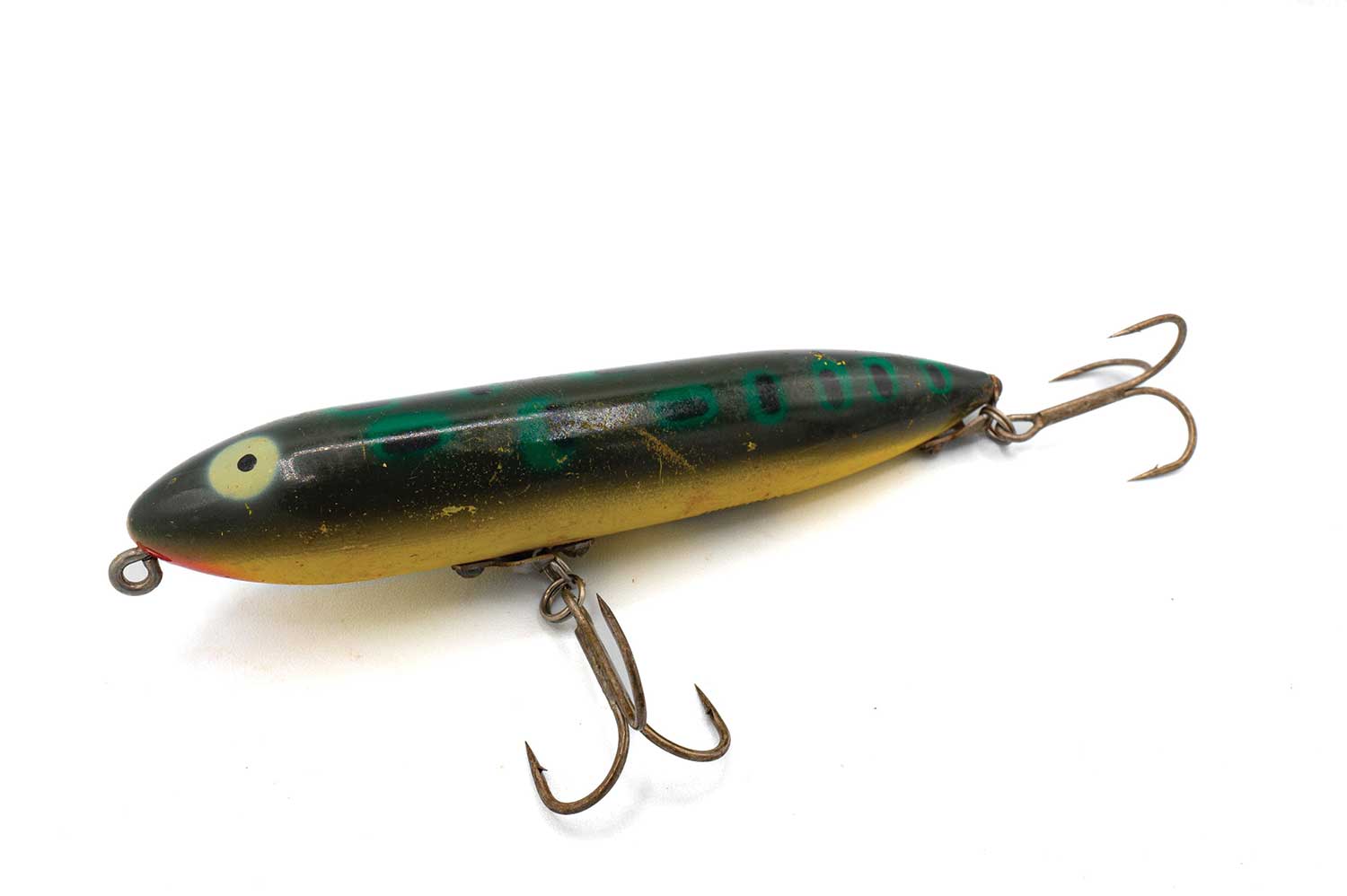
The two lures I am talking about are a Buzz Bait and a Zara Spook. The Zara Spook was introduced in 1939, and although it can be tough to master, it has been a big bass producer ever since. The modern version of the Buzz Bait was introduced in the mid-1970s, and while it has fallen out of favor, it still catches a bigger-than-average fish. Both lures have been staples in my tournament arsenal for well over forty years, and I am not about to change that.
My first introduction to the Buzz Bait was the original Lunker Lure, which is still in production today. I can remember fishing behind my father, casting as far as my small hands could throw an old Ambassador 5000, and being transfixed, listening to the chirp coming across the water. The only thing I knew back then was to keep the bait on the water and hold on!
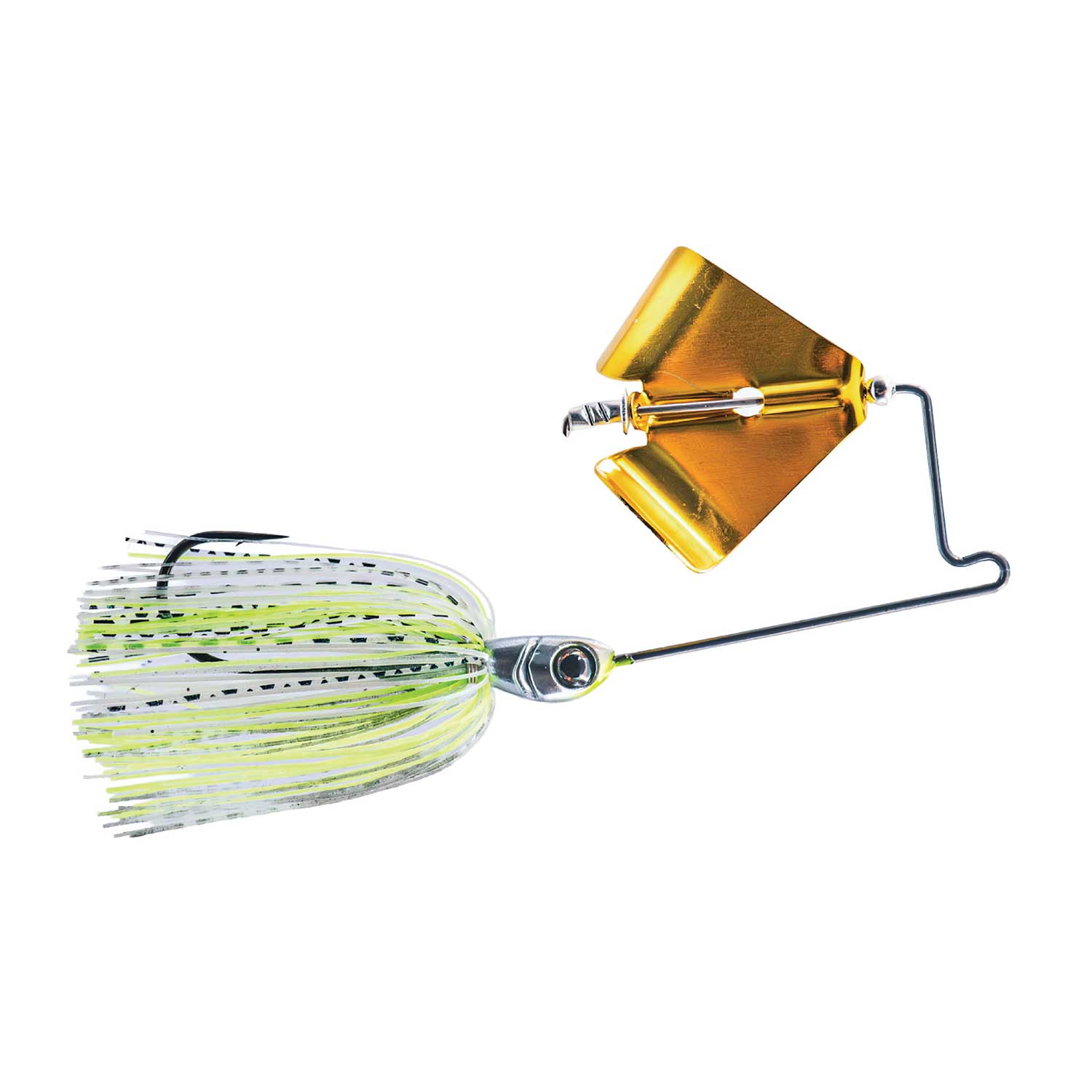
While I have caught bass on a Buzz Bait all months of the year, I have a system in place for when and where to throw the buzzer. My system is based on time of year, the water color, water temperature, and the body of water on which I am fishing. And although there are exceptions to these rules, all play an important role in my lure choices.
Buzz Bait rule #1. The cooler the water, the bigger the buzzer. The hotter the water, the smaller the buzzer. Early spring and late fall are when the ½- bait shines. The bigger lure gives eye appeal, and usually at these times of the year, bigger bass are keying on larger forage. The biggest key is to move the lure slowly enough to keep it on top of the water. This is critical. Once the water gets above 80 degrees, I use a ¼ version 90% of the time.
Buzz Bait rule #2. Keep your color choices simple. I use white, black, and a translucent color called spot remover, but only when the water is clear. That’s it. I don’t throw anything else. In muddy water, I prefer white. In stained or off-colored water, I usually start with black, but I can exchange each one if I need to.
Buzz Bait rule #3. Make sure you are using the right equipment. With the smaller ¼ buzzer, I always use a glass rod; with the larger buzzers, I use a 7’2 med/heavy pitching/flipping rod. As far as line goes, I use both monofilament and braid, but I tend to lean more towards the braid with the heavier rod and buzzer. The only time I use a trailer hook on my buzz bait is if the water is void of cover.
I first began using a Zara Spook in the early 1980’s. I immediately noticed, when used properly, it was a big fish killer. Roland Martin threw his Spook with a 7’6 flipping stick to get more distance from his cast. Jimmy Houston talked about the importance of cadence when “walking the dog” with his Spook, using a 5’6-foot rod. Larry Nixon won a major tournament at Beaver Lake throwing his Spook on a 6’ glass rod. Great anglers, different ideas, still catching big bass.
Zara Spook rule #1. Change your hooks. If I am using the standard Zara Spook, the Junior version, or the Zara Puppy, I always change the hooks. If the lure doesn’t have split rings to hold the hooks, I add them. These simple changes will increase your hooked fish-to-landing ratio.
Zara Spook rule #2. The clearer the water, the faster the cadence. If you are fishing in clear water, you don’t want to give the fish a particularly good look at the bait. Move it erratically but don’t overdo it. You still want the side-to-side action; you don’t want it to blow out of the water. The only time I use a basic walk-the-dog retrieve is when I am throwing the Zara Puppy in extremely calm, clear water.
Zara Spook rule #3. Seawalls and Zara Spooks are a deadly combination. I have caught big bass in several scenarios with a Spook; however, one particular instance that stands out above all others is casting a Spook down seawalls. I believe a bass hanging out in a bit deeper water sees this as an opportunity to catch an easy meal trapped against a solid structure. The strikes can be impressive!
Zara Spook rule #4. Shad, Bone, and Bream are the only colors you need, and use braided line. In the summer, I throw a bream color; in the fall or on clear lakes, I throw Shad, and Bone is my favorite color on rainy or cloudy days. I use 30# braid exclusively on my Spook, using a 6’10 spinnerbait rod. The lack of line stretch makes working the bait easier and allows better hookups when using the larger treble hooks.
Well, it looks like we have run out of space and time again this month. In the next few months, September, October, and November, make sure you have a Spook and a Buzz Bait on the deck of your boat; I promise you will be glad you did! Catch one for me, and I will see you next month!