



THIRTEEN DAYS IN OCTOBER
by Guy Miller, Vice Chair Emeritus, Chennault Aviation and Military Museum
Two and a half weeks after my 7th birthday everyone around me was worried and very afraid. No, it wasn’t me who caused that. But even at such a young age I understood the fear.
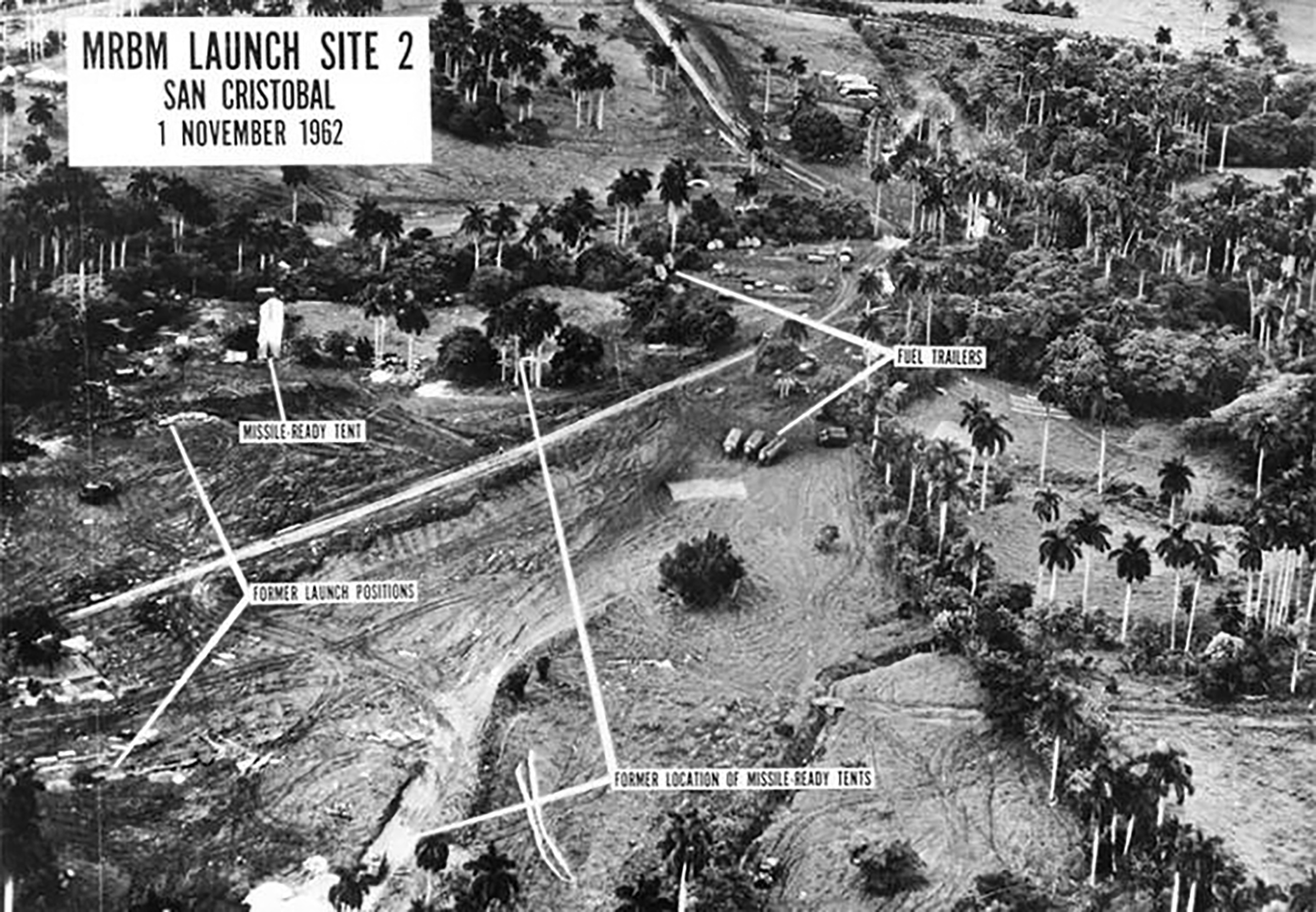
On October 14, 1962 a USAF U-2 spy plane overflew Cuba and took pictures of new installations on the ground. When these pictures analyzed by the CIA they showed Soviet missile launchers, missile transport trucks and launch site construction that would allow Soviet missiles to strike targets across most of the United States, Over the next days President John F. Kennedy met with his advisers on this new and serious threat. Kennedy rejected the idea of attacking and destroying the missile sites and decided the best course of action was a “naval quarantine” to buy time to negotiate a Soviet withdrawal.
Kennedy met with Soviet Foreign Minister Gromyko on October 18th and told him that America would not tolerate Soviet missiles in Cuba. Gromyko claimed there were none. Knowing Gromyko was not being truthful, Kennedy initiated his quarantine plans.
October 22nd was the day the unthinkable became a possibility for most Americans. In an 18-minute televised speech, Kennedy informed the American public of “unmistakable evidence” of the missile threat. He promised the United States would take action to prevent ships carrying weapons to Cuba. He demanded the Soviets withdraw their missiles.
At the same time, the U.S. ambassador to the Soviet Union delivered a letter from Kennedy to Soviet Premier Khrushchev. The letter stated in part “the one thing that has most concerned me has been the possibility that your government would not correctly understand the will and determination of the United States in any given situation, since I have not assumed that you or any other sane man would, in this nuclear age, deliberately plunge the world into war which it is crystal clear no country could win and which could only result in catastrophic consequences to the whole world, including the aggressor.”
What I remember of the following days seems somewhat like the time after September 11, 2001. A uneasy quiet fell upon the nation as people were afraid; worried there would be attacks on American cities and civilian populations. Perhaps because of this fear I have the impression of the American people coming together as a whole with a determination to survive any Soviet attack. The difference of course is there had been attacks on 9/11 whereas no attack had yet been made in October 1962. But the 1962 situation was far more serious in its possible impact and consequences.
At the time we lived in St. Louis; the city which was home to the aircraft manufacturing facility supplying the majority of fighter and attack aircraft to the Navy and a significant percentage to the USAF. This same company was building our first manned space capsules. We were definitely a target.
Despite the threat of nuclear war people carried on with the lives but with some differences. We had air raid /emergency sirens in those days and people were trained on where to go and what to do. At school, we practiced getting under our desks. Wooden desk tops would not stop radiation or blast waves but at some distance from a blast they might save a child from falling debris. We hoped. My parents, like other adults, went to the grocery store and stocked up on canned goods. Mom also bought jugs of water and filled empty bottles with tap water. We had a stack of non-perishable food, water and other survival needs against the most secure sidewall in our basement.
Between October 23rd and 27th a series of letters flew back and forth between Khrushchev and Kennedy. Khrushchev initially rebuffed the demand for the removal of missiles “intended solely for defensive purposes.” Kennedy reminded Khrushchev his secret missile deployment to Cuba was the cause of any crisis between the two superpowers.
Khrushchev indignantly accused Kennedy of threatening the Soviet Union. Despite this bluster all Soviet freighters bearing military supplies headed for Cuba stopped and all but one turned back by the 25th. The oil tanker Bucharest continued to approach the quarantine zone and Cuba. Two American warships were ready to intercept the Bucharest but Kennedy decided to let it through the quarantine because it wasn’t carrying any actual weapons.
In the first watershed moment of the crisis, Khrushchev decided to appeal to the President to jointly de-escalate the conflict and not “doom the world to the catastrophe of thermonuclear war.” The Premier risked the appearance of weakness while Kennedy’s acceptance of the offer as genuine risked the appearance of naivete. A second watershed moment occurred when an American U-2 pilot was shot down and killed on the 27th and Khrushchev and Kennedy both realized the situation was spiraling dangerously out of control.
Khrushchev’s overture was to demand the United States withdraw its missiles from Turkey as part of a removal deal. Kennedy ignored the demand but promised not to attack Cuba after the Russian withdrawal. In a private meeting between ambassadors, Russia was told the U.S. already planned to remove its missiles from Turkey but could not say so publicly.
On October 28th in a speech aired on Radio Moscow Khrushchev announced the dismantling and removal of Soviet missiles in Cuba. The Cold War was still on but the immediate threat of nuclear war has passed. The world sighed in relief.