


THE WAR THAT ENDED IN DECEMBER BUT DIDN’T
by Guy Miller, Vice Chair Emeritus, Chennault Aviation and Military Museum
Anyone who has been to the Vietnam Wall or a Vietnam War exhibit knows the war officially ended in 1975. What most people don’t realize is the agreement to end the war was actually made in December 1972. It was during the Christmas season of that year that the largest bombing mission in history took place. This air campaign, Operation Linebacker II, is considered the action that ended U.S. involvement in the Vietnam War. The 2 ½ year delay between proclaiming the end of the war and the actual end of fighting came about because all parties essentially ignored the peace agreement.
By the late 1960s both the American public and Congress were tiring of the war in Vietnam. Richard Nixon was elected President in 1968 and understood the combination of domestic anti-war fervor and Congressional determination to place limits on Presidential war power meant that finding an end to the conflict was a political necessity. Nixon’s plan was to introduce a policy called “Vietnamization.” This program was designed to shift the responsibility for prosecuting the war from the United States to the South Vietnamese and thus allow the U.S. to gradually withdraw its troops from Vietnam. South Vietnamese troops would take charge of all fighting but still receive American aid and, if necessary, air and naval support.
Negotiations for peace began in 1968 but the parties were entrenched in conflicting positions. Essentially the U.S. and South Vietnam wanted to preserve an independent and non-communist south. The North Vietnamese leadership wanted to set up favorable conditions for eventually reuniting the country under their control. Under “Vietnamization,” American troops had begun withdrawing in 1968 and all ground combat troops were gone by 1972. But the U.S. continued bombing campaigns and North Vietnam insisted those be stopped before any real negotiations could take place.
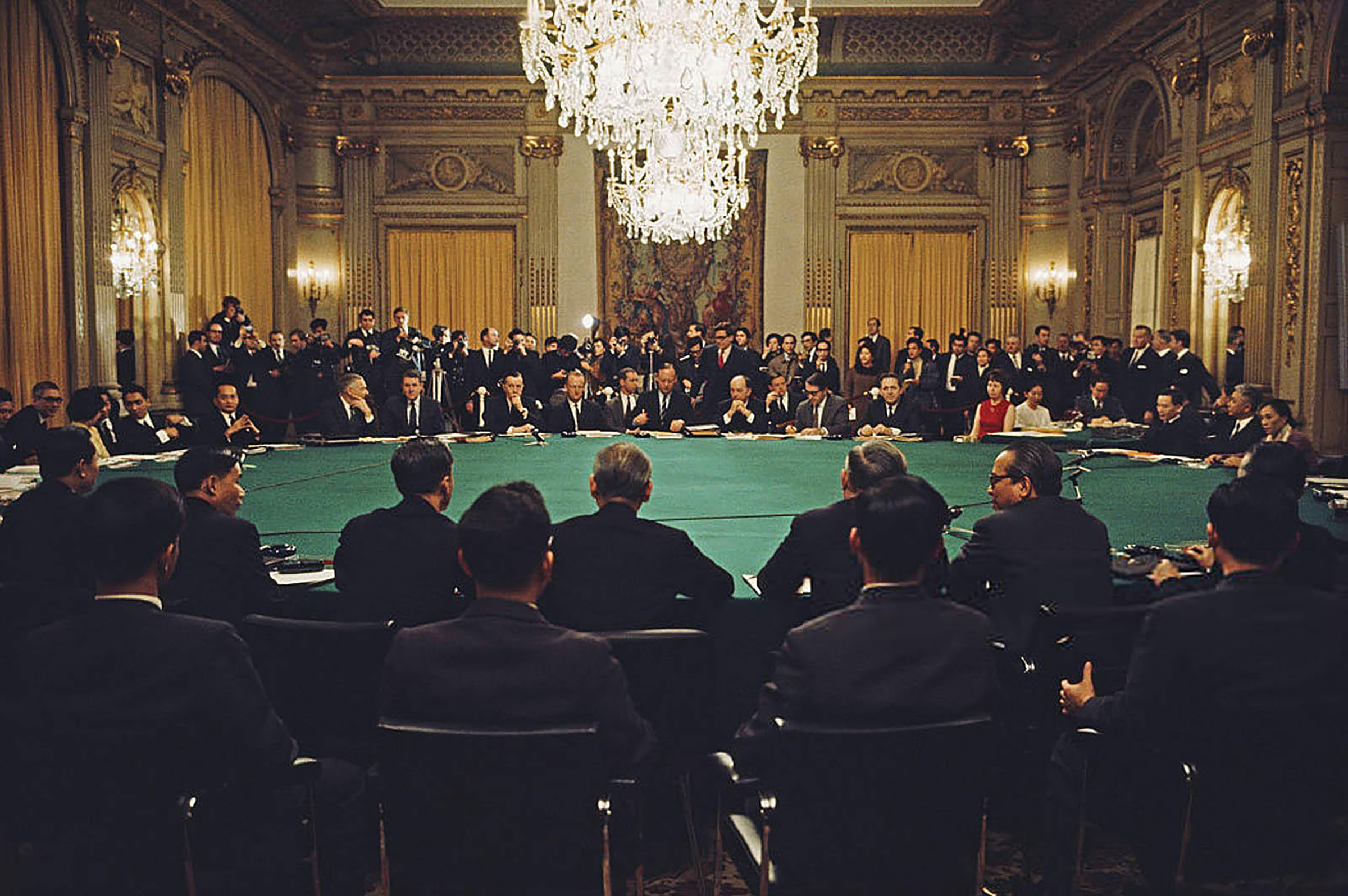
In early 1972 the North began a massive invasion of South Vietnam which threatened a take over of the northern half of the country. The U.S. responded with a concentrated overwhelming air campaign that caused the communist offensive to be halted. As the November Presidential election neared, Sectretary of State Henry Kissinger secretly opened separate negotiations with the North Vietnamese representatives and they came to an agreement in October. When South Vietnamese President Thieu learned of the agreement he rejected the terms and demanded many changes. This caused North Vietnam to retract any concessions they had made and counter with demands of their own.
The South’s rejection caused North Vietnamese delegates to walk out on further talks. On December 14th, President Nixon ordered them to return and set a 72-hour deadline which passed with no action from the North Vietnamese. Knowing he had to force the North to come back to the table, Nixon ordered Operation Linebacker II- the largest heavy bomber campaign since World War II. Nicknamed the “11 Days of Christmas,” the operation consisted of successive days of sorties by Air Force B-52s with supporting aircraft from the Navy and Marines.
Beginning on December 18th, over 200 B-52s flew 729 consecutive sorties against military and industrial sites in Hanoi and Haiphong. The only day that both sides got a reprieve was Christmas, when the American personnel were given a 36-hour break to celebrate. During the holiday pause, Nixon ordered the North Vietnamese to return to the bargaining table. When the North Vietnamese refused Nixon had the bombings continue.
During the 11 days of Operation Linebacker II, B-52s dropped over 15,000 tons of ordinance and Navy and Marine fighter-bombers dropped an additional 5000 tons. Defense Department records show this campaign destroyed or damaged 1,600 structures, 500 rail targets, 10 airfields, numerous anti-air missile sites and 80 percent of North Vietnam’s electric-generating capacity.
By December 29th, the North had had enough and agreed to return to Paris to sign an agreement that was essentially the same as that agreed upon in October. President Thieu of South Vietnam, pressured by a combination of military aid promises and threats from Nixon, reluctantly agreed to go along. All parties had now agreed to end the war. They only needed to finalize the wording of the peace accord and affix their signatures. On January 27, 1973, the Agreement on Ending the War and Restoring Peace in Vietnam was signed by representatives of the South Vietnamese communist forces, North Vietnam, South Vietnam, and the United States.
Unfortunately none of the Vietnamese parties abided by the settlement and the war continued.
By the time the last U.S. military unit left Vietnam the communists and South Vietnamese were already engaged in the “postwar war.” Both sides claimed with some justification that the other side was continuously violating the terms of the peace agreements. Nixon continued to provide military aid to Saigon but his ability to influence events in Vietnam was being sharply curtailed by the Watergate revelations and by Congress’s prohibition of further military action in Vietnam.
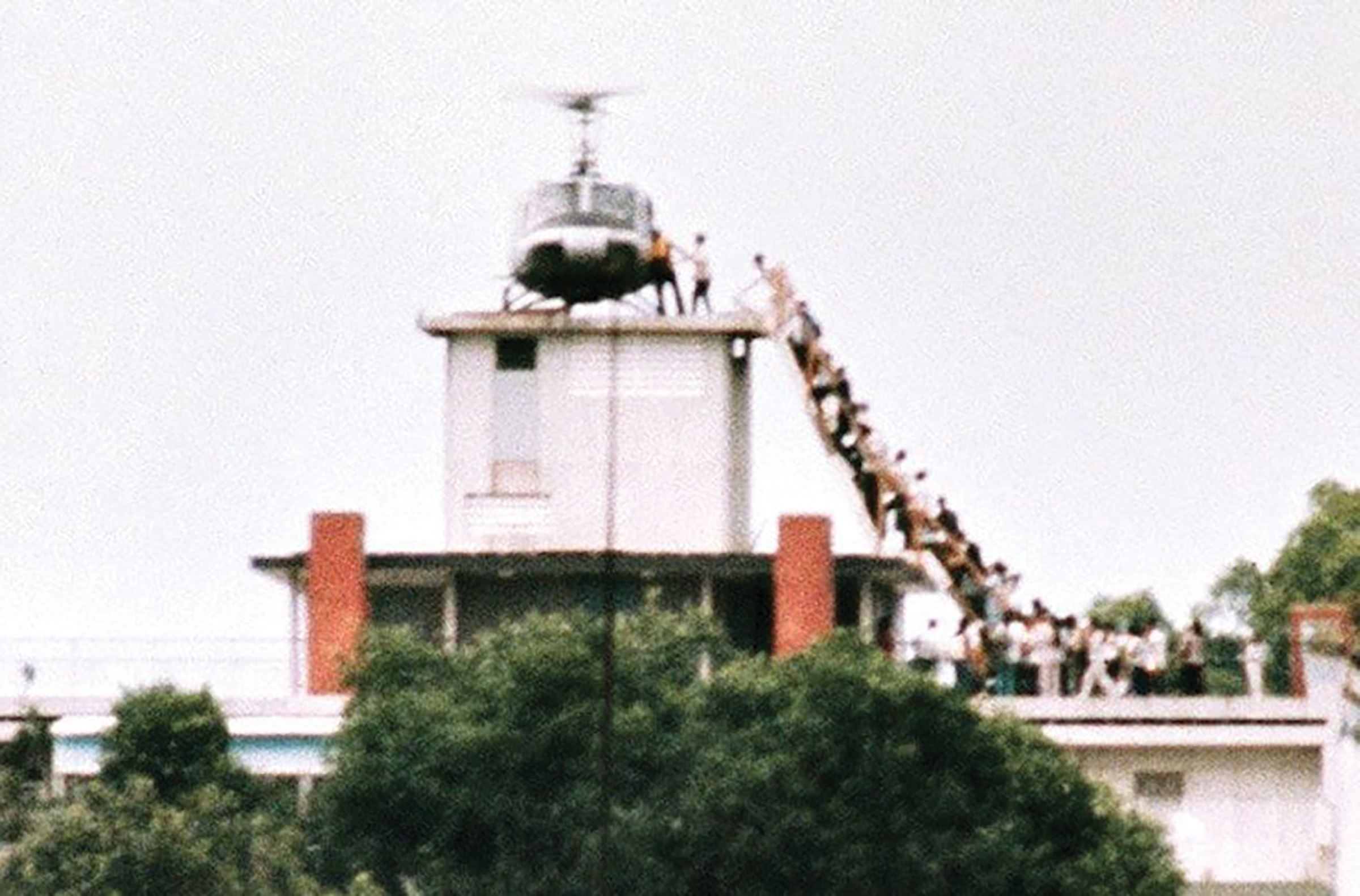
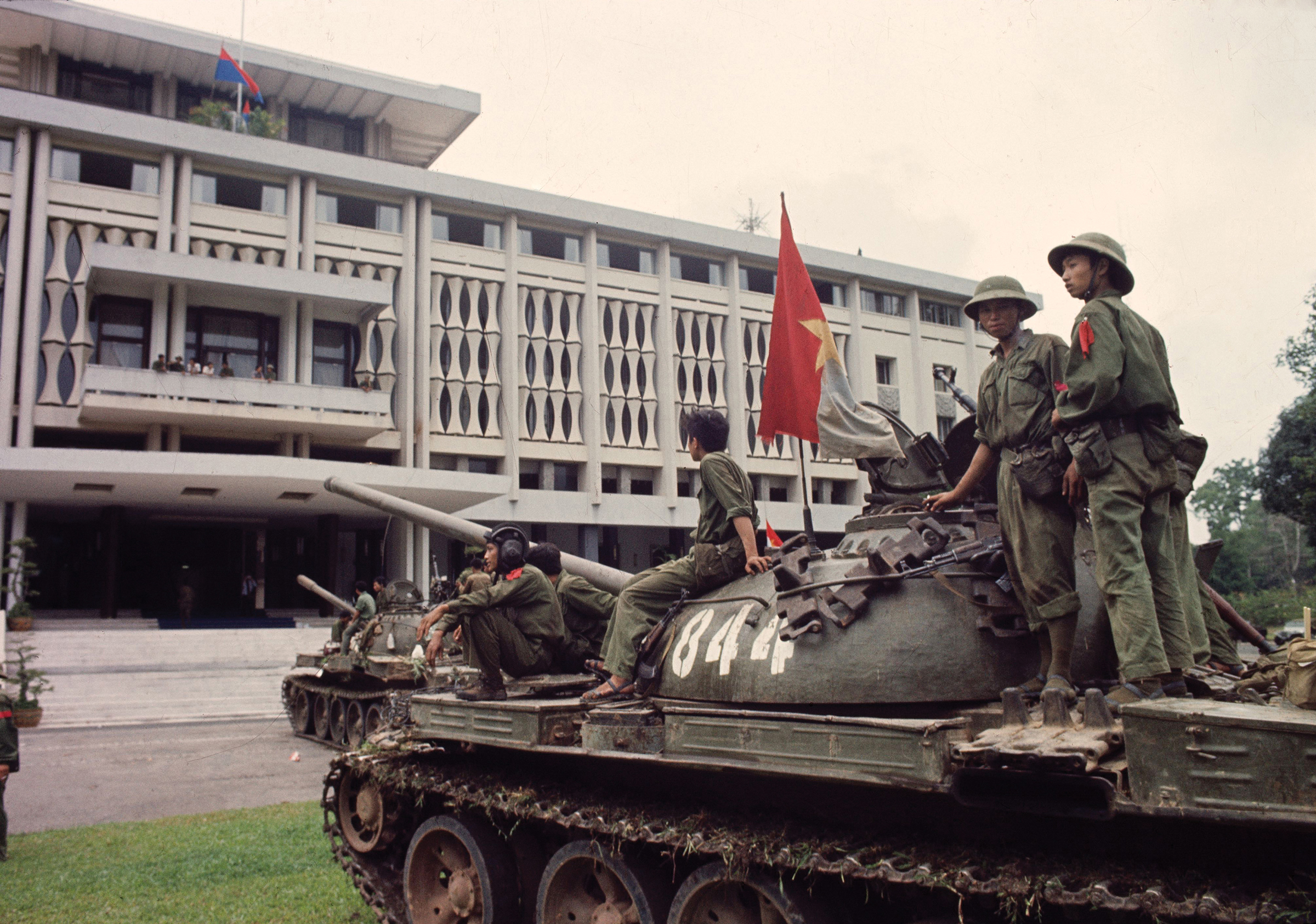
Unchecked and having rebuilt their forces, North Vietnam initiated a major offensive in March 1975. The South’s government and army quickly collapsed. Congress was ready to wash its hands of a long and futile war and ignored President Ford’s plea for aid for the South. On April 30, 1975 North Vietnamese tank columns occupied Saigon without a struggle. Those Americans remaining in country escaped in a series of frantic air- and sealifts along with Vietnamese friends and coworkers. The war which should have ended in December 1972 was finally over.