



Bayou Artist | The Painted Petal
ARTICLE BY APRIL C DOUGHTY
PHOTOGRAPHY BY KELLY MOORE CLARK
A leap of faith and a return to creativity transformed one small-town storefront into a vibrant destination. Today, The Painted Petal reflects both Catherine Oswalt’s artistic journey and the quiet revival unfolding along Lake Street.

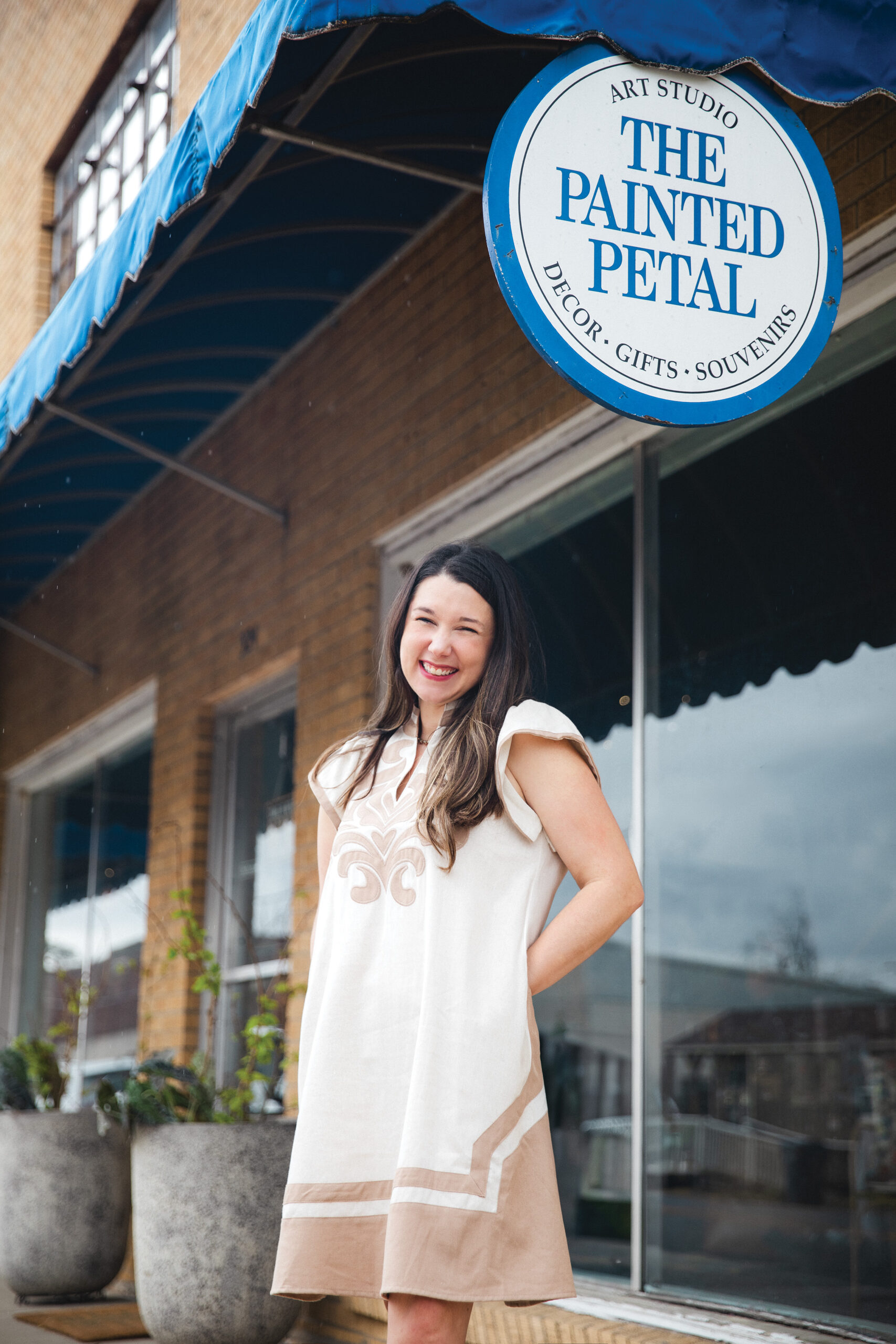
In Lake Providence, where cotton fields stretch to the horizon and Lake Street hums with renewed life, The Painted Petal stands as both a creative hub and a testament to the power of returning to what you love. Located in the town’s cultural district, The Painted Petal is a gallery and gift shop, a bright spot filled with lively, Louisiana-inspired art, and other unique wares that can only be found there. The owner of The Painted Petal, Catherine Oswalt, nearly finished an art degree at the University of Louisiana in Monroe (ULM) before fear persuaded her to choose a more practical path in accounting. When she made that decision, Oswalt was a young woman in love with a cotton farmer, and her musings about their future life together in a small Delta town convinced her that creative work wouldn’t be sustainable in such a place.
But the decision didn’t last long. Oswalt worked as a tax accountant only until she got married and quickly decided this was not the work she wanted to be doing. Drawn back to making art, she opened a small studio in 2017 where The Painted Petal is now primarily to get her artwork off the dining room table. Today that space has morphed and grown into a thriving gallery and gift shop and has helped spark a revival along Lake Street, an area that someone recently told Oswalt, “feels like something out of a Hallmark movie.” Deeply invested in both her creative work and the community that surrounds it, Oswalt now finds it impossible to imagine working or raising her children anywhere but Lake Providence.
hen Oswalt was studying art at ULM, she was deeply invested and had dreams of continuing her education at Savannah College of Art and Design after earning her bachelor’s degree. Although love and fear caused her to change her plans, Oswalt doesn’t regret the decision to trade her art degree for one in business. “Art is one of those things that sticks with you,” she said, “and you can grow and do and still study art all the time without having a degree or certification of any kind. You don’t have to have a piece of paper to pick up a paint brush and do your thing.” Plus, the business background really helps when it comes to cost accounting and understanding how to make a profit.
Growing up, Oswalt also had an excellent role model. Her mom Erin Myers was both an artist and a business owner as well. She had a gift shop for 20 years in Oswalt’s hometown of Natchez and painted home wares, whimsical florals, and furniture when Oswalt was little. Although Oswalt said she never painted with her mother, she watched her paint at the dining table almost every night. Art was just part of life for her mom, so much so that the naturalness of making carried over into Oswalt’s life as well. In high school, when Oswalt discovered how much joy she found in creating, she was hooked, and with her mom as a model, she found it easy to aspire to a creative life. Oswalt said, “My mom helped with knowing that I could make a living and pushing past the point where I was at already. She gave me hope to keep going.”
These days, their story has come full circle. Oswalt now owns a second gift shop in Natchez, also called The Painted Petal, where she features some of her mom’s work, and Oswalt also paints every day now just as her mom did when Oswalt was a kid. Today, Oswalt considers herself a full-time artist and has found the success she was once worried she’d never find. In addition to managing the two gift shops, Oswalt sells her original work and many of her more giftable items through a wholesale site called Faire where her pieces are re-sold by more than 100 retailers throughout the United States. One hugely ironic detail about Oswalt’s story is that she actually failed painting in college. She failed painting class and now she makes a living primarily as a painter. “It’s easy to go to work in the morning when you love what you’re doing,” she said.
Oswalt believes it’s important to be true to who you are. “Know what you want to be,” she said, “and don’t ever stop trying to do your thing, even if somebody tells you you’re not very good at it.” Another part of being true to herself, Oswalt said, is embracing what makes her unique. Setting herself apart has always been important to her, both as an artist and as a business owner. “I don’t like to copy people,” she said. “I like to be original and stick out from the crowd.” One of the most enjoyable aspects of creating for Oswalt is knowing that no one else can make the exact same thing. “There’s only one in the entire universe,” she said. Just as beautiful is the sense of endless possibility that comes with the act of creating. There are always new and different things to be created. Because uniqueness is so important to Oswalt, she’s never felt drawn to the things traditional gift stores carry. She strives to offer things in The Painted Petal that she can hold in her hands and think, “You can’t find this anywhere else.”
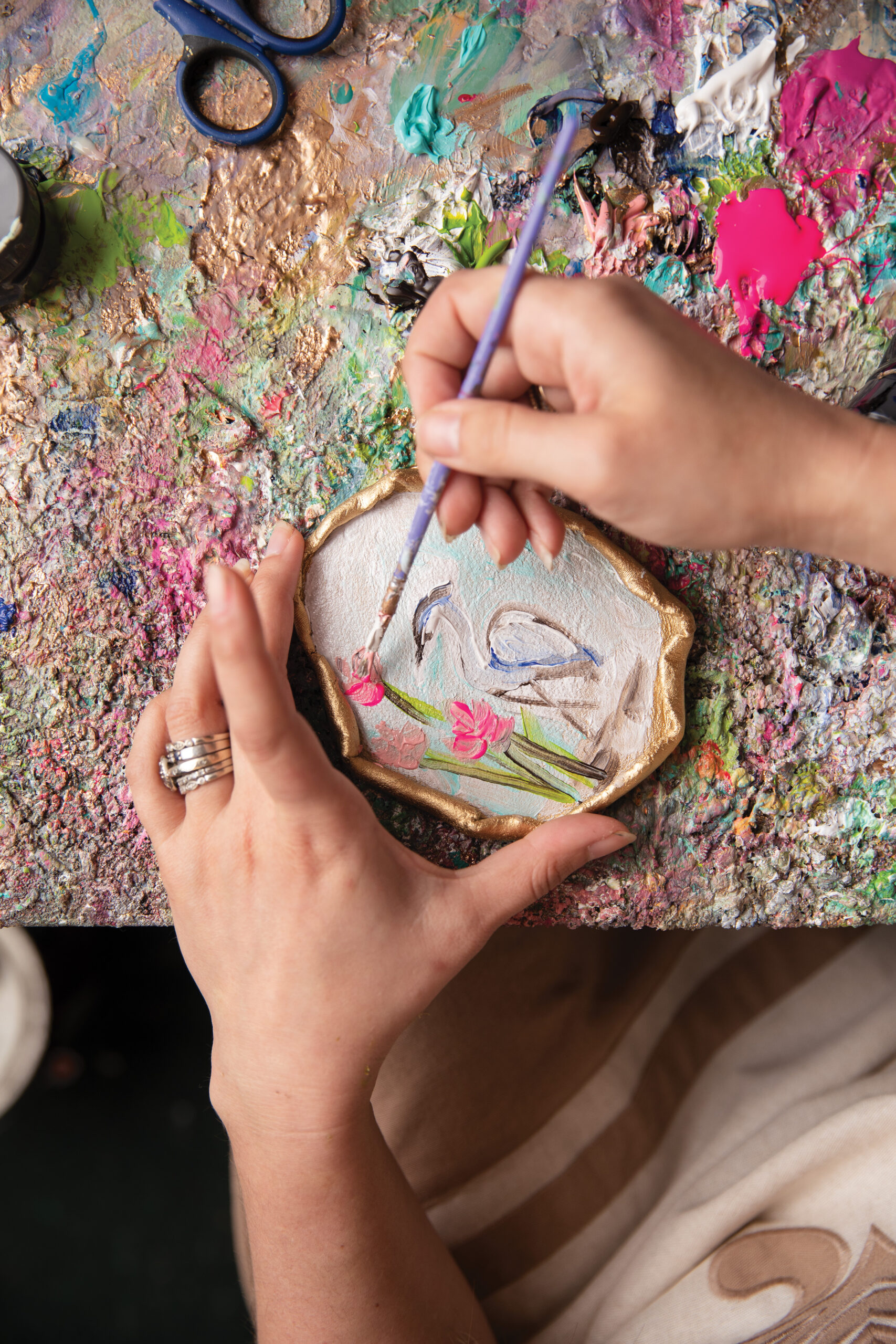
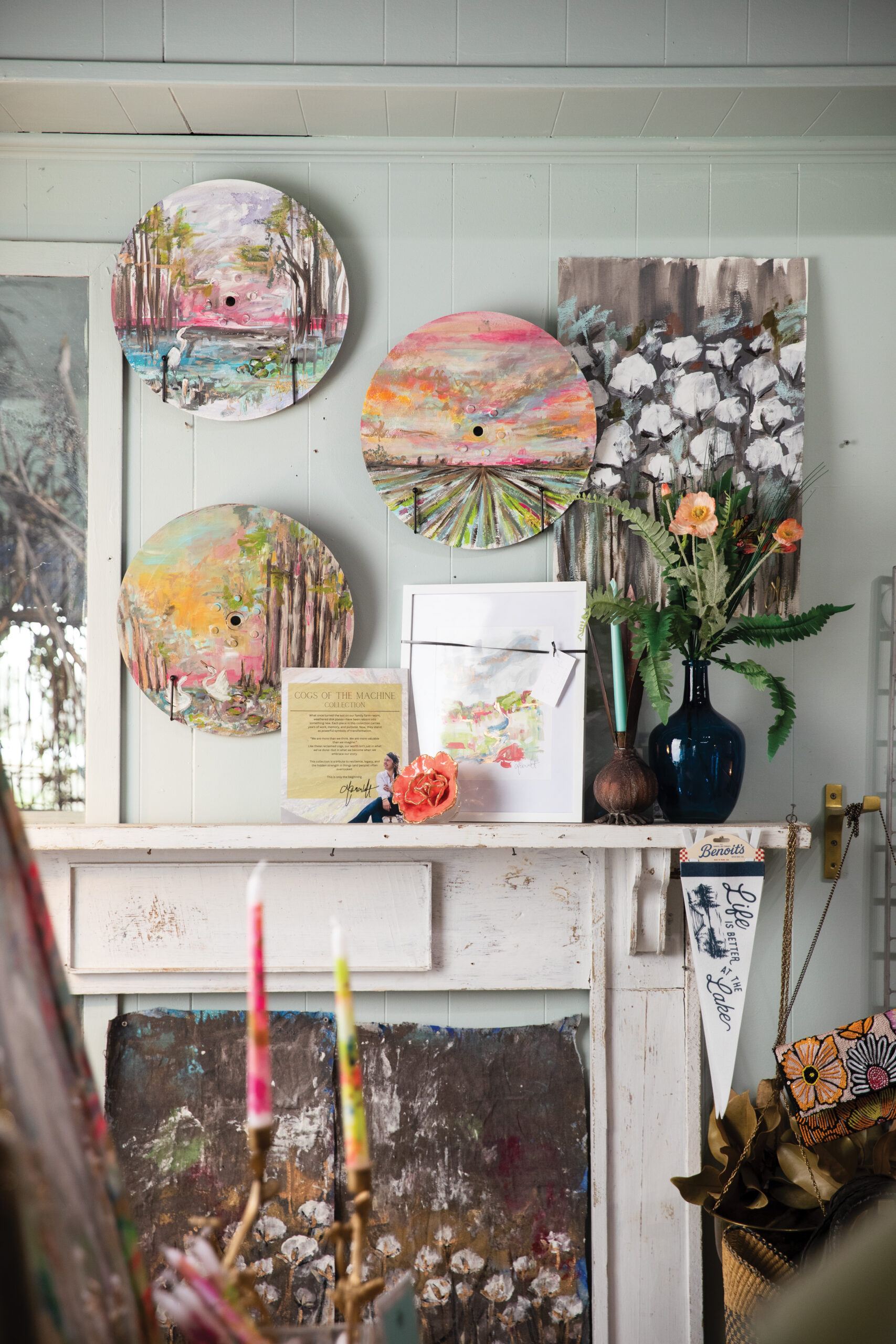
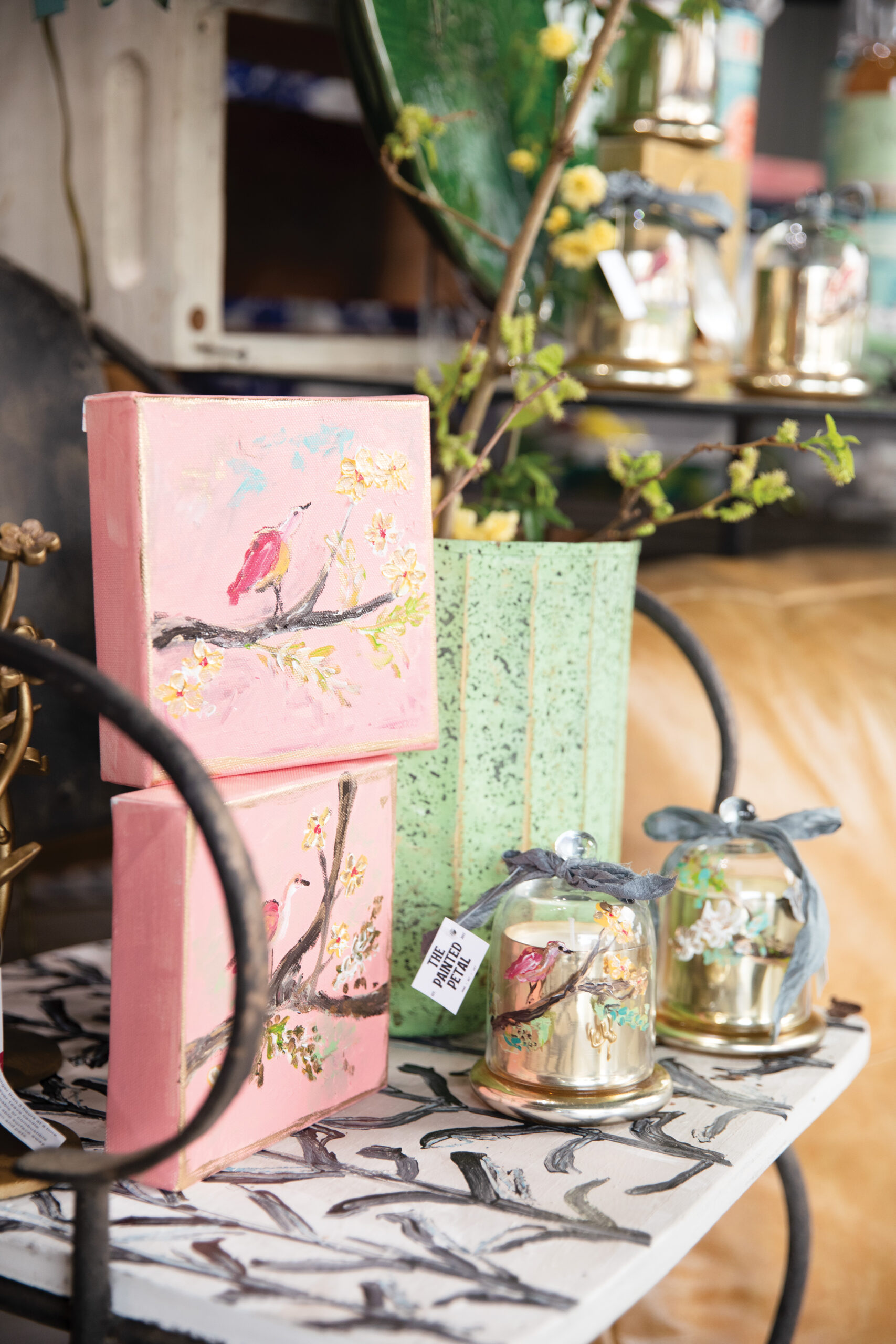
With regard to her own work, Oswalt describes it as “traditional and classy with a touch of whimsy.” She works mostly with acrylics and occasionally mixed media, and her work also tends to be inspired by Louisiana and the Lake Providence area. She paints Louisiana landscapes, such as swamp scenes and cotton fields, as well as a lot of birds. She describes these birds as a mix of heron and crane. Although they don’t have any distinctive features that represent a specific species, they’re reminiscent of real Louisiana birds while being uniquely Catherine. In fact, Oswalt’s mom has dubbed them “Catherine birds.”
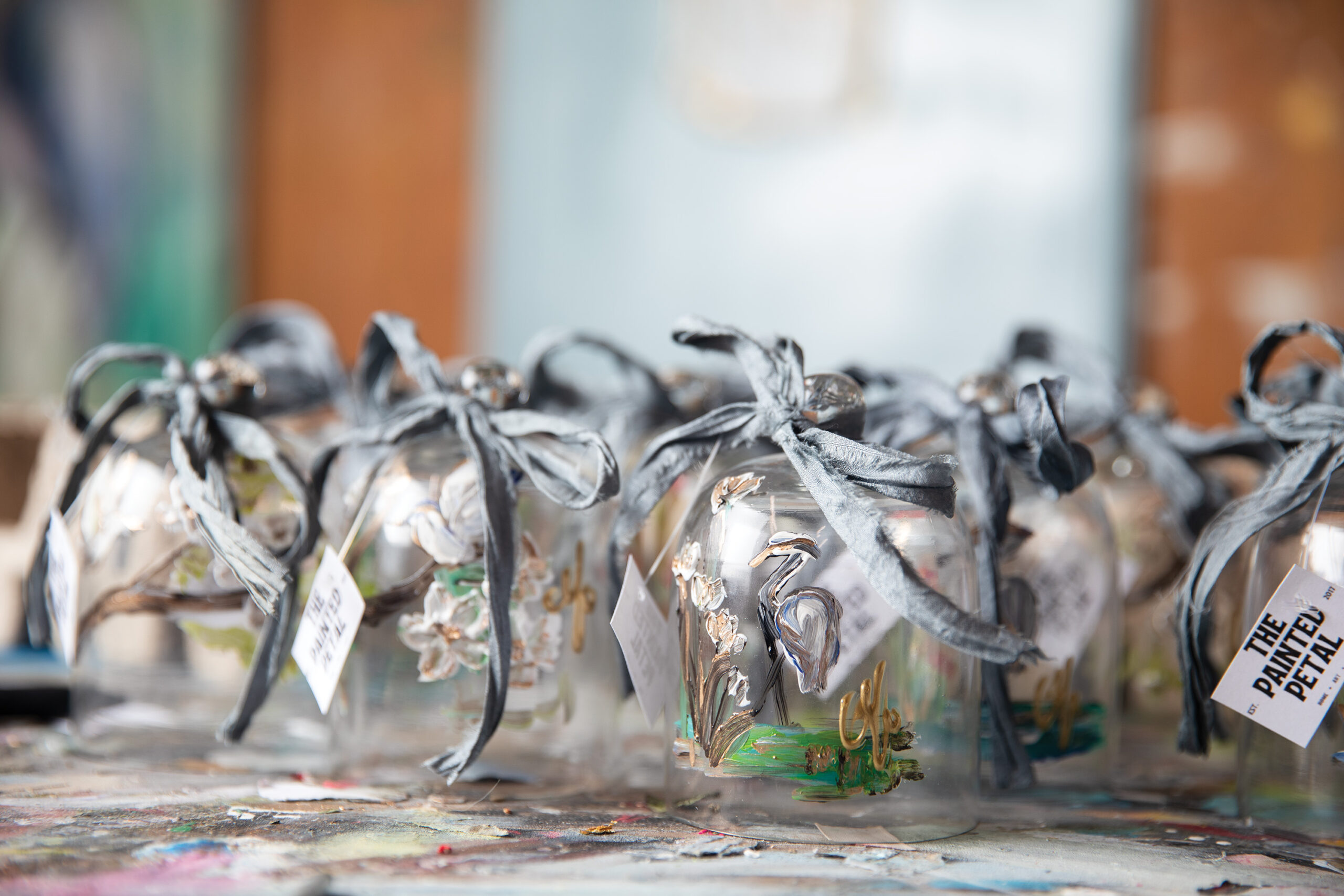
The style Oswalt uses when painting birds or other subjects is characterized by organic shapes and fluid lines. The colors often reflect her moods and the changing seasons. Right now, she’s been creating some fun, bright pieces with neon pink under painting. Although she’s created a lot of commissioned work in the past, much of her recent work has been created on her terms. She prefers to begin without a plan and works very spontaneously, letting her work evolve in the moment. “The painting really speaks and takes its own form when I start working on it,” she said. “It’s kind of freeing not to have a direction but still have a destination.”
Lake Providence and Louisiana itself provide that destination and a sense of connection to place that has shaped not only Oswalt’s life but also the work she creates. Louisiana’s landscapes, culture, and rhythms often find their way into her art. “Louisiana is so special, so I feel like there’s a lot to show off and depict throughout my work,” she said. The lake itself, stretching wide and reflective along Highway 65, is a daily reminder of that beauty, a reminder that is both permanent and always changing, whether it’s with the light, the seasons, or the comings and goings of wildlife. Along with the surrounding farm land, the lake provides constant inspiration for Oswalt’s work.
Being able to paint daily and find success as an artist and business owner has been very fulfilling work for Oswalt, especially as a mom. She appreciates the fact she still gets to pick her kids up from school and attend all their games and activities. Being present for them is the most important thing to her at this stage in her kids’ lives. All three of her children are under 10, and they keep her on her toes. There’s Caroline (8), Camille (6), and Camp (4), and they are her heart.
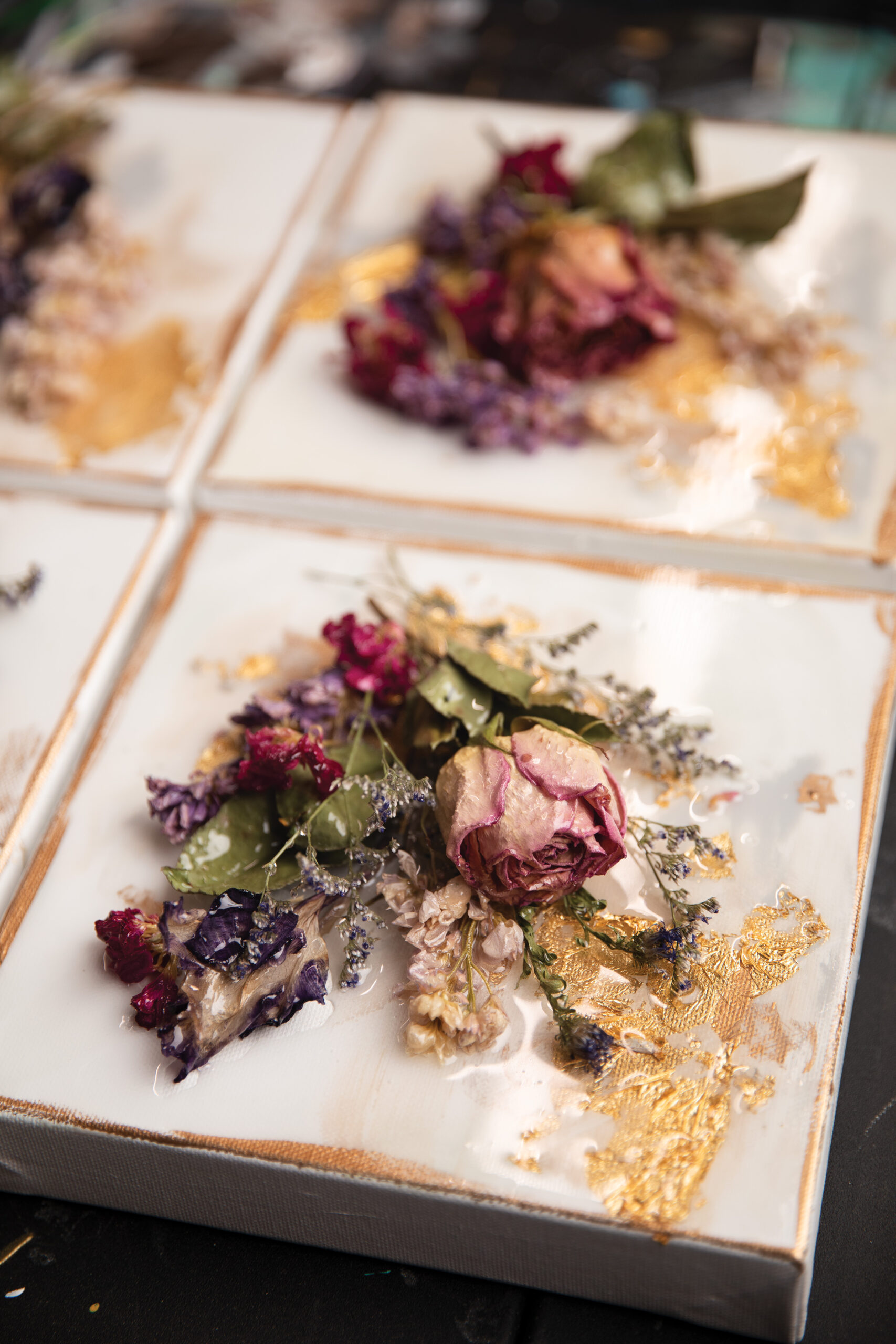
At the same time, it’s so rewarding to see her art fit into a customer’s space like it belongs there—like it’s at home in that space—and creating each piece is a powerful expressive outlet and stress reliever. Although family comes first for Oswalt, selling her work and making sure her gift shops are thriving are essential to supporting her family. Loving what she does is a bonus, but finding balance is key. She admits that finding balance can be difficult sometimes, especially during this season of life, but Oswalt aims to give each part of life its rightful weight. “We have to be able to struggle and juggle everything,” she said. “That’s just being in the throws of motherhood and having a full-time job that depends on my hands to work.”
One of the reasons Oswalt is able to juggle things as well as she does is that she’s doing it in Lake Providence. The town has a way of grounding people in what matters most. “Lake Providence feels like home,” Oswalt said. “Even before I lived here, there was always something about it. It’s the perfect nothing town. That makes it everything.”
For outsiders, Lake Providence can be easy to misunderstand. The small town has endured its share of negative press and the quiet realities that come with rural life, such as aging buildings, modest infrastructure, and the same economic challenges that have shaped many Delta communities. But Oswalt believes that focusing on those things misses the essence of the place entirely. For Oswalt, what defines Lake Providence is its people and the sense of belonging that seems to exist just beneath the surface. “A lot of people have this premise that there’s nothing here, that it’s a nothing town,” she said. “And it’s not anything glorious, but once you dive down deep, there’s nothing like Lake Providence.” She acknowledged that her affection might sound sentimental to outsiders, but for her, the feeling is unmistakable. “You don’t meet a stranger,” she said. “People are always honking and waving. It’s home. Everybody always knows somebody too.”
In many ways, Oswalt’s shop has become part of the town’s story as well. When she first moved to Lake Providence, she remembers a stretch of Lake Street that felt quiet to the point of emptiness. “When I moved here, there was nothing on Lake Street except for an old discount store,” she said. “There wasn’t much. There wasn’t anywhere you could go and get a gift, and it was almost depressing.” Rather than seeing that emptiness as a reason to look elsewhere, she saw it as an invitation. Opening her shop was, in part, an act of faith in the town itself. “I was the first one that kind of jumped in and set out to be down there and give Lake Providence a face,” she said. Oswalt envisioned more than just abandoned buildings on the side of the road. She hoped that if she filled just one building with something great, more would come.
And slowly, they have. Since Oswalt opened her doors, other businesses have begun investing in Lake Street. Buildings have been renovated. New shops have appeared. The momentum may be gradual, but it is visible. “There’s a lot of people that are investing in our main street,” she said. “It’s turning around, but it just takes one small step.” For Oswalt, that step was never about finding the perfect storefront or chasing the kind of picturesque setting that might draw tourists elsewhere. “I don’t have the nicest building,” she said, “but you couldn’t give me a Main Street USA building anywhere else in any other town. I wouldn’t take it.”

Visitors who make the trip to Lake Providence will quickly find that the town offers more than they might expect at first glance. After popping into her shop, Oswalt suggested a slow drive down Highway 65 to take in the vast stretches of farmland that roll out toward the horizon. She noted they’re especially striking in the fall when the fields shift in color and that the work behind those fields represents months of preparation and dedication. Oswalt also recommended having lunch on the porch at Maria’s and checking out Green Acres, the town’s plant and wine shop, which offers an eclectic mix of greenery and specialty items that Oswalt describes as “kind of like a mini Trader Joe’s.”
Along Lake Street, an old fire truck offers an opportunity to pose for photos beside a small landmark that captures the town’s blend of nostalgia and charm. Visitors can also stop by the historic Byerley House, which serves as the town’s visitor center and may soon house a coffee shop. Nearby are reminders of the region’s deeper history, including Grant’s Canal, a Civil War landmark, and the Louisiana State Cotton Museum along Highway 65, which tells the story of the crop that has long shaped the Delta’s landscape and economy.
Taken together, these places form the kind of day trip that rewards curiosity and encourages a slower pace. And for Oswalt, that’s part of Lake Providence’s appeal. One client once told her that the town was “the center of the universe,” a comment she still smiles about today. “I absolutely believe it,” she said. “You can go anywhere and somebody is going to know somebody from Lake Providence.”
In the end, Oswalt’s story, like her artwork, reflects the place that surrounds it. Her shop may have helped spark new life along Lake Street, but it is also rooted in the same qualities that make the town feel like home: persistence, community, and a quiet belief in what something small can become. For visitors willing to slow down and look a little closer, Lake Providence reveals itself in much the same way her art does, layer by layer, until the ordinary begins to feel unexpectedly special.