



THE NOVEMBER JOURNEY THAT SAVED A NATION
by Guy Miller, Vice Chair Emeritus, Chennault Aviation and Military Museum
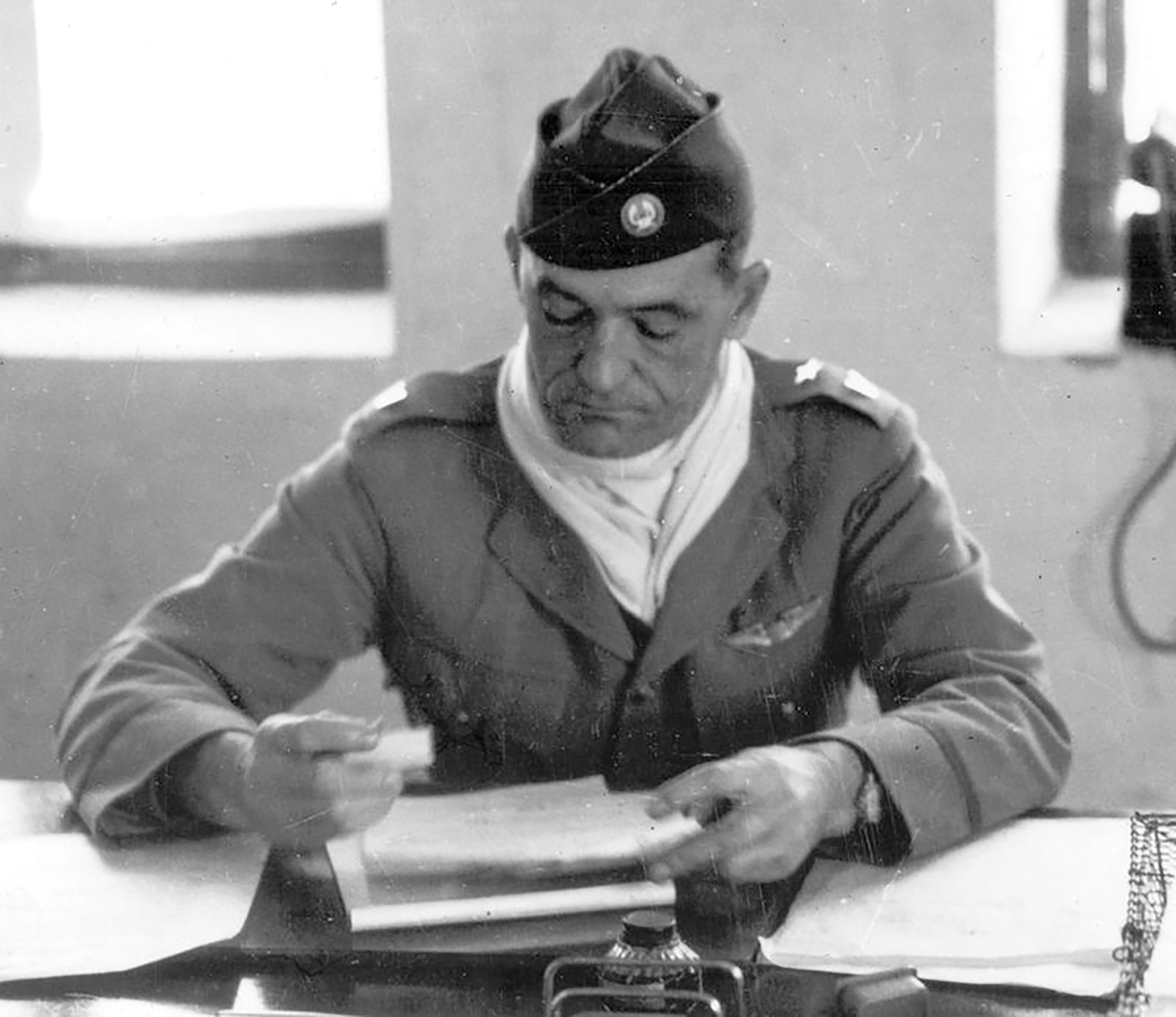
The Chennault Room at the museum is resplendent with military and personal memorabilia as well as information that tells the story of General Chennault and the American Volunteer Group. The AVG is of course more popularly known as the Flying Tigers. Most of the items in the collection attract the eye due to their uniqueness or impressiveness. But tucked away almost unnoticed in the far corner is perhaps the most important piece of history in the room. This item is a small, very ordinary journal with some travel information displayed on one of the opened pages. This journal is important because it documents the reason this collection even exists. This journal is important because it contains information that stopped a relentless enemy and saved a nation.
China was attacked by the Empire of Japan in the summer of 1937. Shortly before this happened, retired U.S. Air Corps aviator Claire Lee Chennault was contracted by the Chinese government to evaluate and train the Chinese Air Force. By 1940 it was clear to Chennault that the Chinese Air Force would never stop the Japanese Army Air Service due to its obsolescent aircraft, ill-trained pilots and shortage of equipment. After consulting with Chinese leader Chiang Kai-Shek, Chennault left China to return to the United States “to get as many fighter planes, bombers, and transports as possible, plus all the supplies needed to maintain them and the pilots to fly the aircraft.” The pages opened on display in Chennault’s journal document the many legs of air travel flown to get Chennault from China to Washington D.C.
As the journal shows, Chennault left Kunming on October 21, 1940 and reached Hong Kong the following day. After spending some days in Hong Kong, Chennault boarded a Pan American Airways clipper on November 1 to begin the series of seven flights that were necessary for air travel between China and the American capitol city.
Chennault met with numerous people as his trip progressed that November and these meetings were documented in most of the subsequent pages in the journal. The people he met with were widely diverse including many representatives of the U.S. military, Chinese military officers stationed in America, aircraft industry executives, government officials and other civilians.
Perhaps the most fascinating information contained in the journal also gives insight into the workings of Chennault’s mind. Three of the pages list types of fighter aircraft along with pertinent information about each one. In order, the aircraft listed are the Bell Aircobra [Ed.- the P-39], Brewster [Buffalo F2A], P-40 [Tomahawk], P-40D [Warhawk], Grumman [P-] 36A and [P-] 36B [the Navy’s F4F-3 Wildcats]; Lockheed 322 [a variant of the P-38E Lightning], N.A. 73 [an early export variant of the North American P-51 Mustang], Vultee Vanguard [P-66] and an unknown 4-man aircraft simply designated as #18500 which appears to be a light bomber. The information listed for these aircraft often includes cruising range, ceiling and armament; and sometimes includes notes on aircraft armor, minutes to altitude or range at altitude, bomb load and characteristics such as fixed or folding wings. Chennault also has notes to remind himself to “inquire about [the] dimensions of fields & runways for military planes” as well as needed runway length, width and the construction thickness of the surface.
It is obvious Chennault was evaluating the available types of fighter aircraft in production so he could determine which best suited the needs of air warfare under the conditions present in China and which he should therefore attempt to obtain. Although we will never know for sure, it is possible Chennault had already decided the P-40 was the best choice for China’s aircraft needs because he made additional notes for only the P-40:
Notes on P-40 landing
30o Flaps, land fast, hold stick
forward lightly.
Technical : lengthen tail oleo
strut from 24” to 27 7/32”.
Shorten main oleo’s from
7 ½” to 7”.
In addition to aircraft data, Chennault jotted down notes on personnel acquisition. He thought about separation and return to U.S. service, passports, insurance, and who he needed to meet with to discuss getting U.S. aviators and ground crew released for service in China. He also made himself reminders about certain equipment needs including radios, floodlight trucks, oxygen and oxygen masks.
Perhaps the most surprising entries are Chennault’s notes comparing a U.S. armored division to a German Panzer division. It is fascinating to see an air force pilot thinking about how army tank divisions would stack up against each other if America entered the European war.
To be quite clear, Chennault’s November 1940 trip made possible the creation of the American Volunteer Group. Chennault’s November 1940 trip gave China the chance to avoid being overrun by the Imperial Japanese Army and becoming a Japanese vassal state. Chennault’s November 1940 trip ensured the Japanese Empire would not get unfettered access to the resources in China that might have made them that much harder to defeat.
The journal is sealed in its display but you can still read all of Chennault’s notes if you are interested. The museum can provide an electronic copy of the transcribed journal upon request. Tell them I said it was okay! 🙂