


THE CONTINUATION OF POLITICS BY OTHER MEANS
by Guy Miller, Vice Chair Emeritus, Chennault Aviation and Military Museum
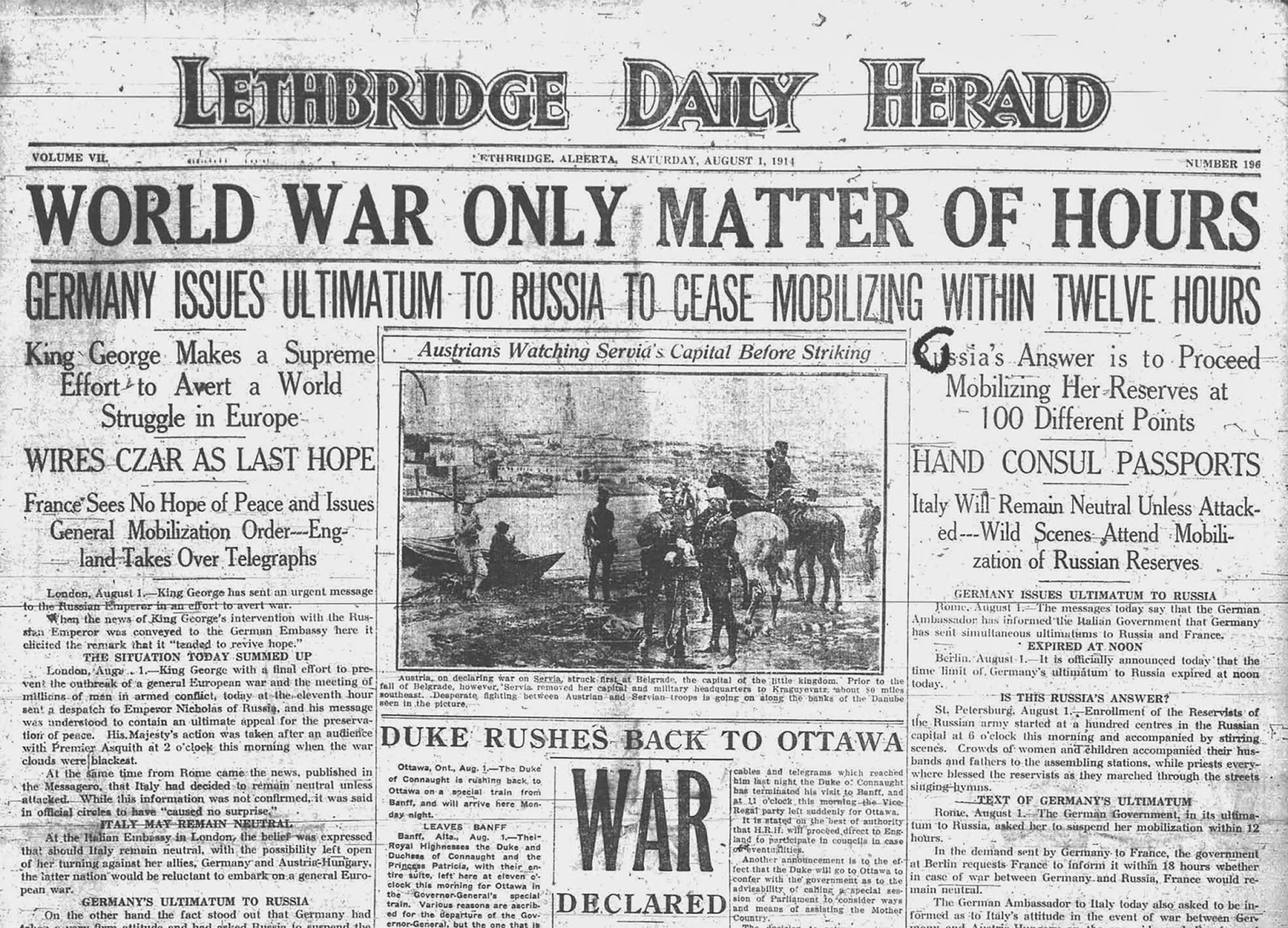
By the early 20th century, Europe was on the brink of conflict. The major powers- Great Britain, France, Germany, Austria-Hungary, and Russia- were entangled in a network of alliances and rivalries. These led to a series of rapid and catastrophic events in August 1914 that transformed tensions among Europe’s great powers into a full-scale war.
The formation of the two alliances had made possible a multi-national war. The Triple Entente of 1907, comprising France, Russia and Great Britain, was formed in response to the perceived threat from the 1879 Triple Alliance of Germany, Austria-Hungary and Italy which had been renewed several times since its signing. The two alliances were meant to provide mutual support and create a balance of power but they also meant that any conflict involving one member could quickly escalate into affecting multiple nations.
A naval arms race was initiated when Germany’s rapid industrial growth and military expansion threatened Britain’s naval dominance. The general staffs of the European powers also began creating elaborate plans for mobilization in the belief that some kind of war was inevitable. Unfortunately many military leaders and politicians saw war as a legitimate means of resolving disputes and asserting their national superiority.
The Balkan region had always been a hotbed of nationalist fervor and political instability; so much so that it was referred to as “the powder keg of Europe.” A power vacuum left by the decline of the Ottoman Empire emboldened designs for Balkans by both Austria-Hungary and Russia. Within the Balkans, nations such as Serbia sought to expand their territories at the expense of their neighbors.
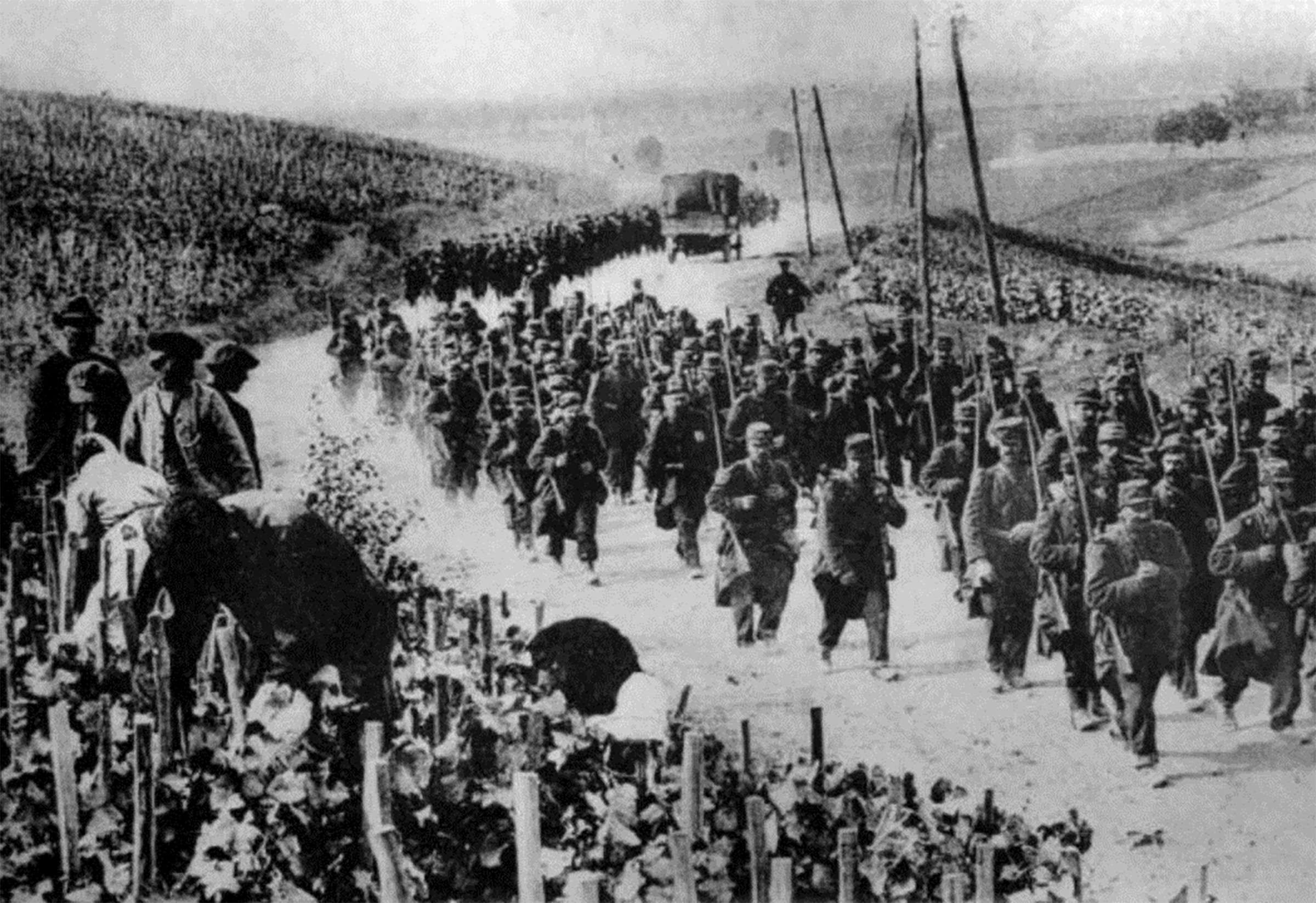
The spark that ultimately ignited the war came on June 28, 1914, when Archduke Franz Ferdinand of Austria-Hungary was assassinated in Sarajevo by a Bosnian Serb nationalist. The assassination led to the so-called “July Crisis,” a month of intense diplomatic maneuvering and escalating threats. Austria-Hungary, with the backing of Germany, issued an ultimatum to Serbia on July 23 meant to force Serbia’s annexation by Austria-Hungary. Serbia’s conciliatory response was deemed unsatisfactory and this set off a chain reaction beginning with Russian mobilization on July 29th in support of Serbia and to defend Slav interests.
On July 30th, the French Cabinet made an unprecedented decision “never before taken in history” to withdraw troops ten kilometers from its borders to avoid clashes with the German Army. On July31, Germany sent an ultimatum to Russia demanding it demobilize. That same day, German Ambassador von Schoen used diplomatic channels to ask France its position on any potential conflict.
On August 1st, Germany’s ultimatum to Russia expired without a reply. Accordingly, Germany declared war on Russia. Ambassador Schoen received a response from France at 11 am which said “France will act in accordance with her interests.” Within minutes, the Russian ambassador informed the French of Germany’s war declaration against Russia. The French Cabinet convened knowing they faced a German invasion but also knowing France needed to stand or fall with Russia. By 4 pm the first mobilization posters appeared at Place de la Concorde with mobilization starting at midnight.
The British Cabinet was divided over whether to support France in case of war. First Lord of the Admiralty Winston Churchill had already ordered the British fleet to its war stations on July 28th. On the 31st he persuaded Prime Minister Asquith to authorize a warning telegram to Germany and mobilized the fleet upon learning that Germany had declared war on Russia. The British Cabinet also wanted to know if France and Germany would respect Belgian neutrality. France responded positively within an hour but Germany remained silent.
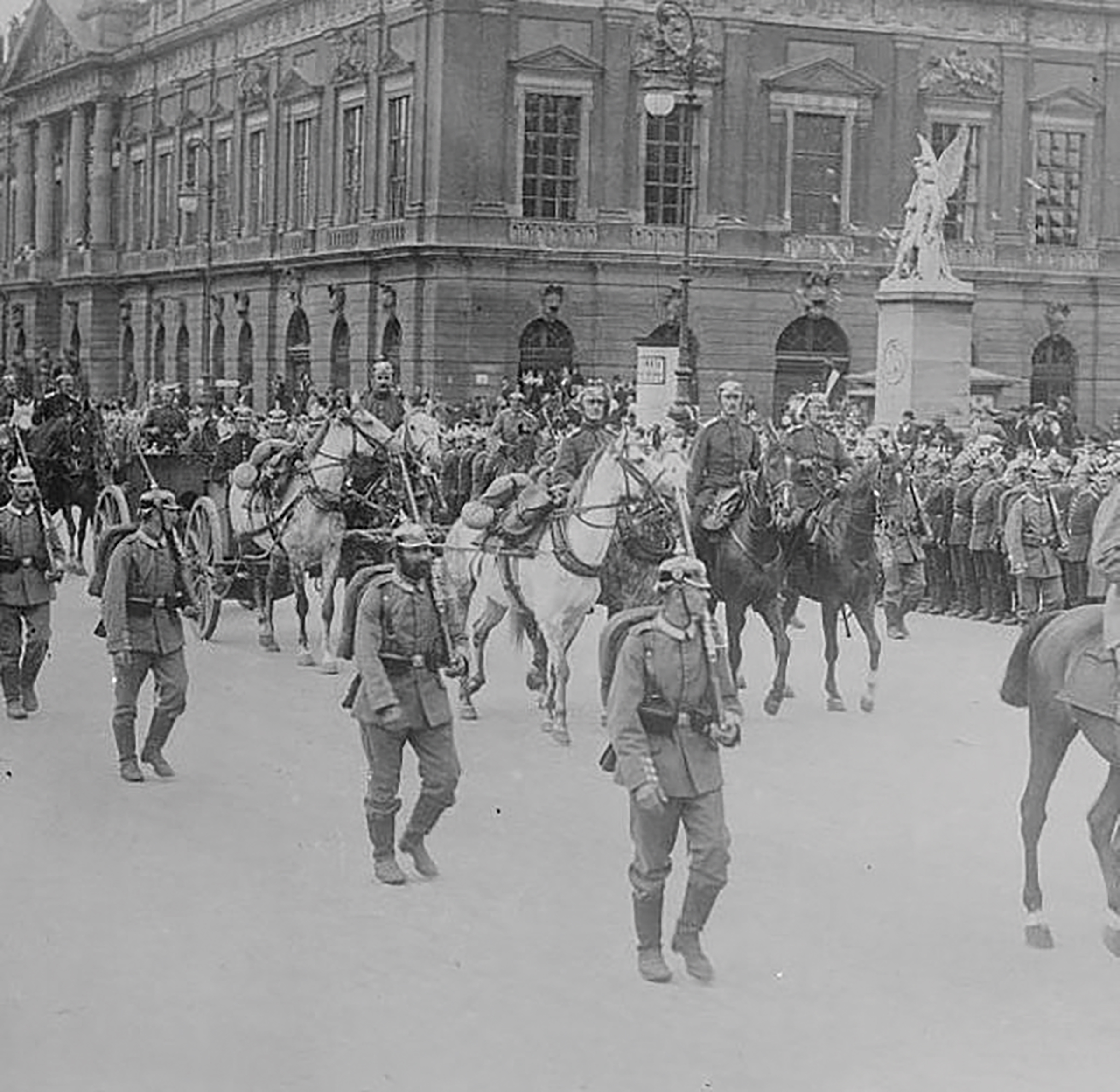
Germany’s war strategy, the Schlieffen Plan, called for a rapid invasion of France through Belgium to avoid a prolonged two-front war against France and Russia. Unaware of the communications between the British Cabinet and the German government, on August 2nd German Minister Claus von Below-Saleske assured the British Foreign Minister that Belgium had nothing to fear from Germany. That evening, Below was asked to open the sealed envelope he had received from Berlin on July 29th and found it to contain Germany’s ultimatum. Dumbfounded, Below presented it to the Foreign Minister at 7 pm. The document claimed France was about to enter Belgium to attack Germany and “anticipat[ing] this attack” its troops would have to pass through Belgium in self-defense. Any Belgian resistance would be regarded as an act of war against Germany.
As the Belgian government considered its own response, the German government had second thoughts. Believing any Belgian resistance would disrupt the critical operational schedule towards Paris, Below was instructed to persuade the Belgians to comply. At 1:30 am on August 3rd, during a surprise visit to the Foreign Office, he used the fake news of French dirigibles bombing Nuremberg to imply that France would next invade Belgium. Unconvinced by this last-minute logic, Belgium formally rejected the German demand at 7 am. That same day, Germany declared war on France. The King of Belgium ordered the destruction of bridges and tunnels to impede any German advance.
On August 4th German troops invaded Belgium. Britain declared war on Germany since Britain had guaranteed Belgian neutrality under the Treaty of London (1839).
The war quickly spread beyond Europe. By the end of August, Japan had declared war on Germany, hoping to seize German territories in Asia. The Ottoman Empire was considering mobilizing because of its strategic interests and treaties with Germany. The Great War had begun.