



Pages | “The Lake House” by Kate Morton
REVIEW BY MEREDITH MCKINNIE
“A person never forgets the landscape of their childhood.”
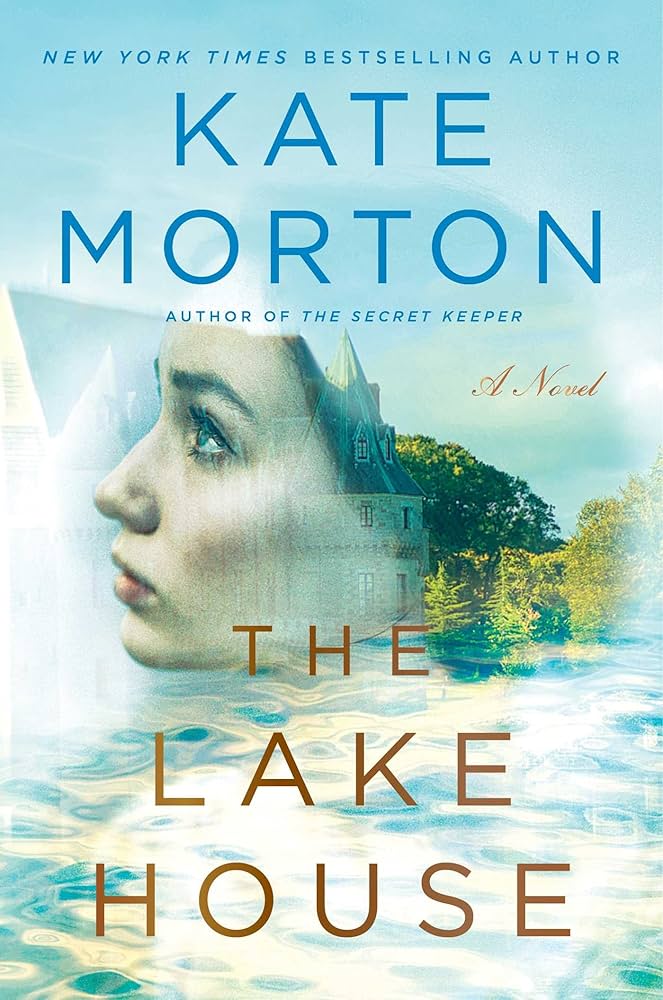
In Kate Morton’s 6th novel, readers are again transported to another era, early 19th century, and another place, Cornwall, England. In 1914, Eleanor caught the attention of Anthony Edevane, an up-and-coming surgeon who inherited his family’s estate Loeannath. After returning from the war, Anthony suffers from PTSD, exhibiting violent episodes that force his isolation. The couple has 3 daughters (Deborah, Alice, and Clementine), followed much later by Baby Theo. During a Midsummer Eve party, Baby Theo goes missing, impacting the family for generations, namely Alice, who becomes a successful writer of novels involving missing children.
In a parallel story set in 2003, Sadie’s on leave from the police force for misconduct amidst a missing child case. She visits her grandfather Bertie in Cornwall, discovering the long-abandoned Loeannath estate on her morning run. Intent on distracting herself from the case back home, Sadie investigates the cold case of missing Theo, piecing together accounts from the police, family members, and local citizens. Morton writes of Sadie, “She had found there were very few genuinely dull people; the trick was to ask them the right questions. Like in many of Morton’s novels, Sadie examines her own checkered past by interrogating the inconsistencies in someone else’s.
With 3 battling timelines, unfolding the stories of Eleanor, Alice, and Sadie; Morton braids the past and present seamlessly, exposing the layered secrets that portend a century-old mystery. Known for composing intriguing subplots, Morton leads readers down the obviously longer path, luxuriating in the telling and craftsmanship of human emotions and behaviors that collapse dynasties onto themselves. Her characters surprise us with their choices, forcing us to reckon with the unknowing of how experience, influence, and desire interplay, how circumstances impact one relative much differently than another. Morton intricately examines the acuteness of perspective and the balm of time.
This being my third review of a Kate Morton novel, I like to warn readers that her novels provide supreme escapism that requires patience. She refuses to speed through to a satisfying ending, rather exploring offshoots that seemingly lead nowhere yet heavily undergird rich plots. With Morton, it’s not so much the destination as the journey – and what a literary journey it is. Like The Clockmaker’s Daughter and Homecoming reviewed previously, I find Morton’s work overtly stimulating, richly satisfying, and daring in scope.
“We are all victims of our human experience, apt to view the present through the lens of our own past.”