



Pages | “Circe” by Madeline Miller
“I thought once that gods are the opposite of death, but I see now they are more dead than anything, for they are unchanging, and can hold nothing in their hands.”
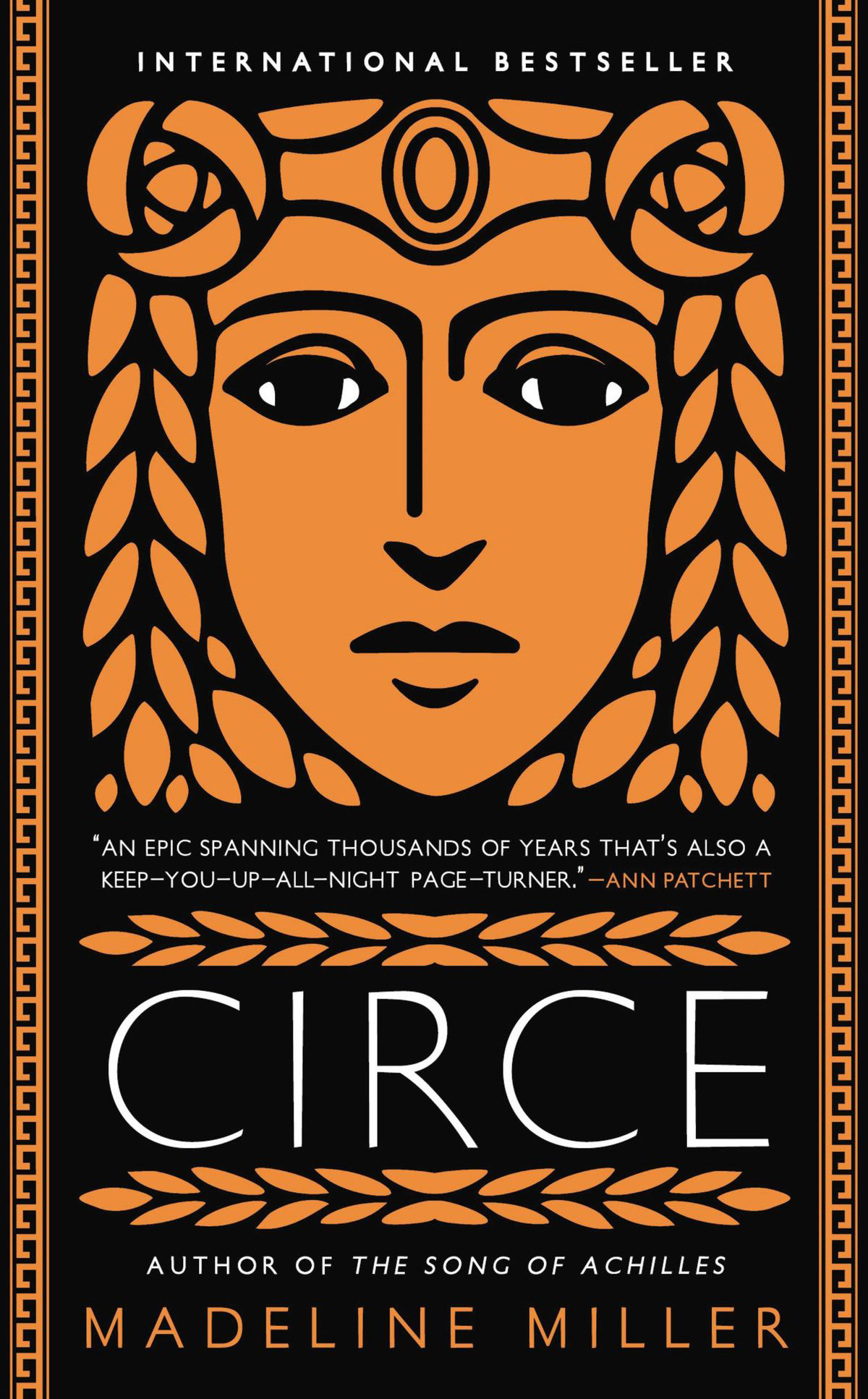
The goddess Circe first appears in Homer’s The Odyssey, a goddess who famously turns men into pigs. In this telling, Miller excavates Circe’s origin story. Raised as an outcast in her own home by her father Helios, God of the sun, and her mother, the nymph Perse; Circe risks severe punishment in showing kindness to a condemned God Prometheus, bringing him nectar between his beatings from the other Gods. Prometheus, in turn, reminds Circe that her fate does not have to mirror the cruelty and foolishness of the other Gods, that she has agency in her future. Empowered by Prometheus’ assertion, Circe takes the punishment agreed upon by her father and Zeus – permanent exile to an island all alone. Miller writes, “Humbling women seems to me the chief pastime of poets. As if there can be no story unless we crawl and weep.” Free from the confinement of family and expectation, Circe hones her skills for magic and witchcraft, proving “witches are not so delicate.” Along the way, Circle encounters well-known figures from Greek myths (think Medea, who sacrifices her family and home for love or Odysseus, responsible for the infamous Trojan horse strategy).
This page-turning account of Circe’s self-discovery, while character-driven, is no less a compelling plot. Circe fails in love, fails in lust, and ultimately, falls in love. While a story of permanent isolation might sound dull, Miller introduces a bevy of characters, interweaving familiar Greek gods, demigods, and mortals. Circe learns the effects of her power and its limits, channeling a humanitarian nature alien to the mythological Greek world. Though a newcomer to Greek mythology, Miller’s fast-paced novel sucked me into the cosmos. I loved reading about the power and impact of a female protagonist in the male world of Greek mythology. While Greek mythology, by definition, is fictional, this perspective is a new lens through which to examine the world of Greek gods and heroes. Likewise, Madeline Miller’s novel The Song of Achilles (2011) is a similar retelling of the Trojan War, told from the perspective of Patroclus. The novel earned the Orange Prize for Fiction and was a New York Times bestseller.
“That is one thing gods and mortals share. When we are young, we think ourselves the first to have each feeling in the world.”