



Meredith’s Musings | Social Performances
article by MEREDITH MCKINNIE
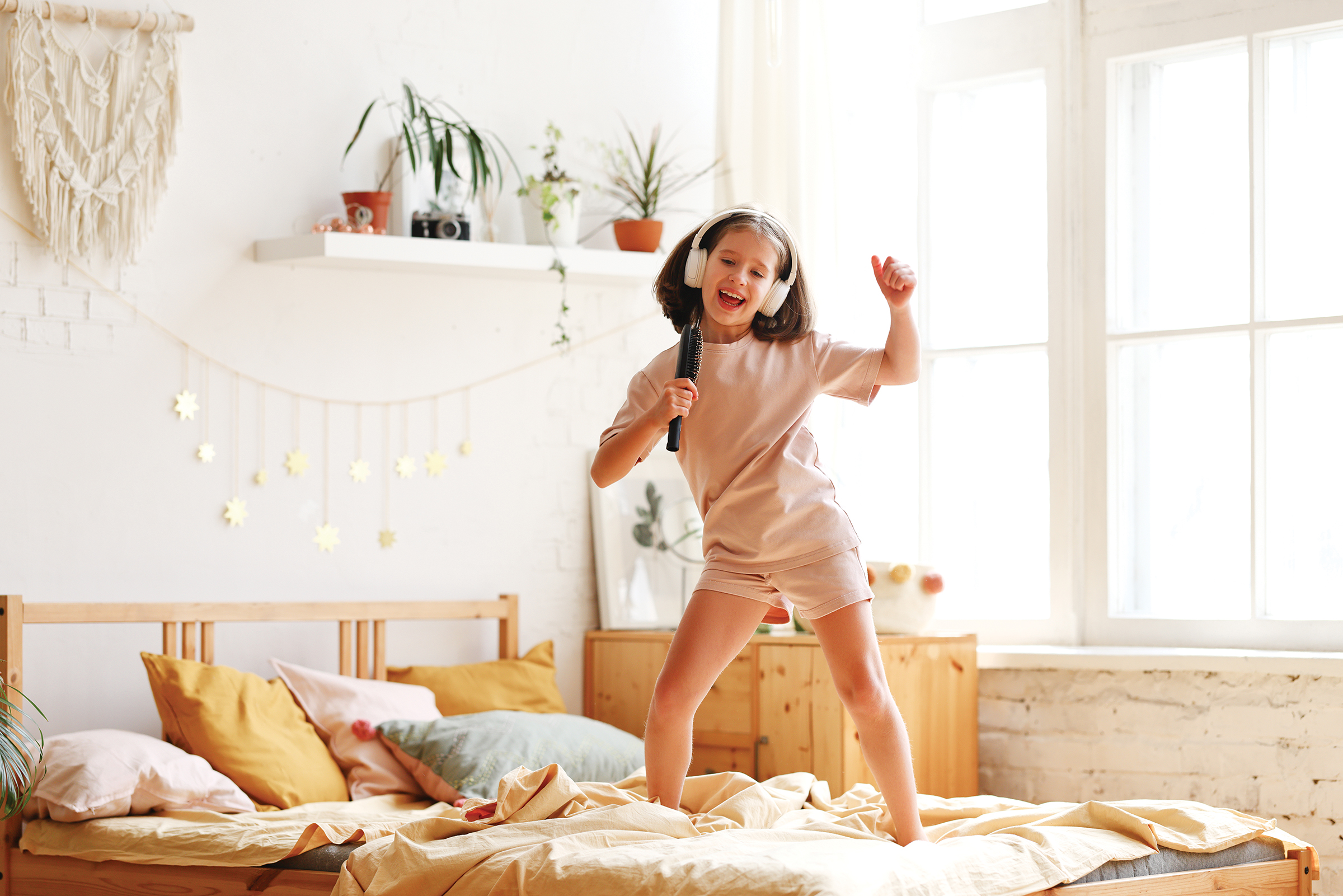
Of my two daughters, the oldest is the performer (thus far). I noticed this about her as a baby. Before she even reached 12 months, her mouth stayed stretched across her face, proudly displaying toothless gums. She laughed incessantly, loved being watched, and rewarded attention by holding onto it. Don’t look away, spectator, my next trick is just around the corner. I recognize myself in her actions. I learned to smile without someone having to ask me. When I pass a stranger, I feel a gravitational pull on my face – eye contact and a smile, then a quick look down at the floor as if there is anything interesting there. People always complimented my pretty smile, commentary I loathed as a teenager – interpretation being that the rest of my body was not. In retrospect, I wonder if my bevy of smiles was a plea to the recipients, “I come in kindness. Please don’t make fun of me.”
While on the way to school last year, my oldest casually said as we approached drop-off, “Time to put my smile on.” I got that sinking feeling in my stomach. She’s already learned to perform. I realize that the root of social interaction in the South is politeness, a practice especially imposed on young girls. And I want my daughter to be kind and polite, to accommodate others, but not to lose herself in the process. Like everything I’ve discovered about raising children, it’s a delicate balance. Before any planned performance, such as a recital or a showcase for gymnastics, I’ll notice her sitting stiff in the lineup, eyes focused on the stage, mentally preparing herself as if she will be judged. I like the mental focus but worry about her fear of judgment. When completing her homework, tracing letters and counting frogs, she’ll intently mark her paper and then ask what grade I would give the work. I stress that her practicing is the point, that the grade doesn’t matter. I don’t want her to think of learning as transactional, though our education system will teach her that it is.
When she dances around her room, prancing in front of her little sister, making sure she is watched, she’ll routinely ask, “Am I the best dancer in the world?” The mother in me wants to scream, “Yes!” The realist in me wants her to know that preferences are subjective. I want her to dance because she loves to dance, yet I also want her to do her best. Is it fair to ask for her best without suggesting she is the best? Am I setting her up to seek perfection? The world may knock her down with realism but it will reward a woman who strives for perfection. But will she love herself? Imparting that nuanced understanding of the world and our place in it to a 7-year-old means indulging half-truths, dosing her with what she can understand. I never know if its enough.
My youngest daughter does not smile on command, often turning her cheek if one slips out. She shies away from kisses and doesn’t seek the spotlight. She’s content to let Sister shine. When she started school, I worried about how she would interact with others. Would she make friends? Would she be included? School was a relatively easy experience for me. I always made friends and adapted to various social circles; Big Sister is proving to be the same. Yet I wonder, how much of our acceptance is that willingness to perform politeness, to smile on command, to make sure we’re acknowledged? Does the world make space for us because we insist upon it? Are the default performers masking insecurity?
Parenting does allow us to “see the world through a child’s eyes.” But I’m learning, it also allows me to see myself, my childhood, from a unique perspective. No, my oldest daughter is not me, but I recognize Little Me manifesting in her behavior. When she stamps her foot, I sigh, both frustrated and amused. I would do the same and sometimes still do. Little Sister makes a hurt face and sulks into a corner, rarely demanding her desires be met. If she dances, it’s never because we asked her to and music is optional. She moves when and how she wants to. This school year I will observe if her inclinations change, if long periods of social interaction fashions a performer. I secretly hope it doesn’t. I hope she saves her smiles for the most deserving and dances to the music only she can hear. I hope when she dares to smile, it’s because her heart is.