



In the Garden with Kerry Heafner
The Christmas Holidays are a time to sit back and take stock of this past year’s accomplishments and run through a seemingly endless list of possibilities for next year’s gardens. What did you grow in 2022 that was new and exciting for you? For me, it was the assortment of new heirlooms we grew in the Louisiana Kitchen Garden Exhibit at Louisiana Purchase Gardens and Zoo. Case Knife pole beans, Roseland Small White Pickling cucumber, Pitre’s Red Bush okra, Montelaro Family eggplant, Calhoun Gray watermelon, and several very old LSU tomatoes were very successful! At home, it was Red Ripper peas lining a section of fencing and producing all through the hot, dry summer! Hopes for next year include growing the Red-N-Sweet watermelon out again. Maybe there will be enough to share with local restaurants! And, there is still a list of beans I want to grow next year. High on my list is the “Ma Savage” pole bean from Tiger Bend Road in Union Parish. “Ma Savage” was Mrs. Ruby Jane Green Savage, and her famous bean was used by Dr. J.C. Miller of LSU in pole bean breeding trials! What’s on your priority list for next year?
But, don’t forget to enjoy a little holiday horticulture in the here and now. Camellias are what I look forward to every fall and winter. Sasanquas (Camellia sasanqua cultivars) start us off with colorful blooms when just about everything else is on the way out for the year. Japonicas (C. japonica cultivars) pick up in mid to late December and take us over to early spring, just as warm season color is getting underway again. Camellias are right at home in all areas of Louisiana. They perform best in areas that receive either part shade or dappled sun, and that have acidic soil with good internal drainage. “Leslie Ann” and “Shishi Gashira” are Louisiana Super Plant selections and will perform beautifully in the home landscape if properly planted and cared for. Feel free to deck your landscape with boughs of holly, too! Several species of holly are native to our part of the world. Among them, American holly (Ilex opaca) may reach heights of between 50 and 70 feet in native habitat. Yaupon holly (I. vomitoria) is widely scattered in upland woods in our area, and Deciduous Holly (I. decidua), also called Possum Haw holly, will retain its red fruit after leaves have fallen away, as botanical name suggests. Hollies are dioecious trees and shrubs, meaning there are male and female plants. Male plants will produce only male flower for pollen production. Female plants will produce the familiar berries (drupes, to be botanically correct). Hollies are now available commercially with a wide array of leaf shapes and berry colors range from red to orangish yellow. Hollys are great options for those interested in installing natives in their landscape. The small, white flower are insect pollinator magnets, the berries are consumed by birds, and the trees and shrubs also provide good bird habitat.
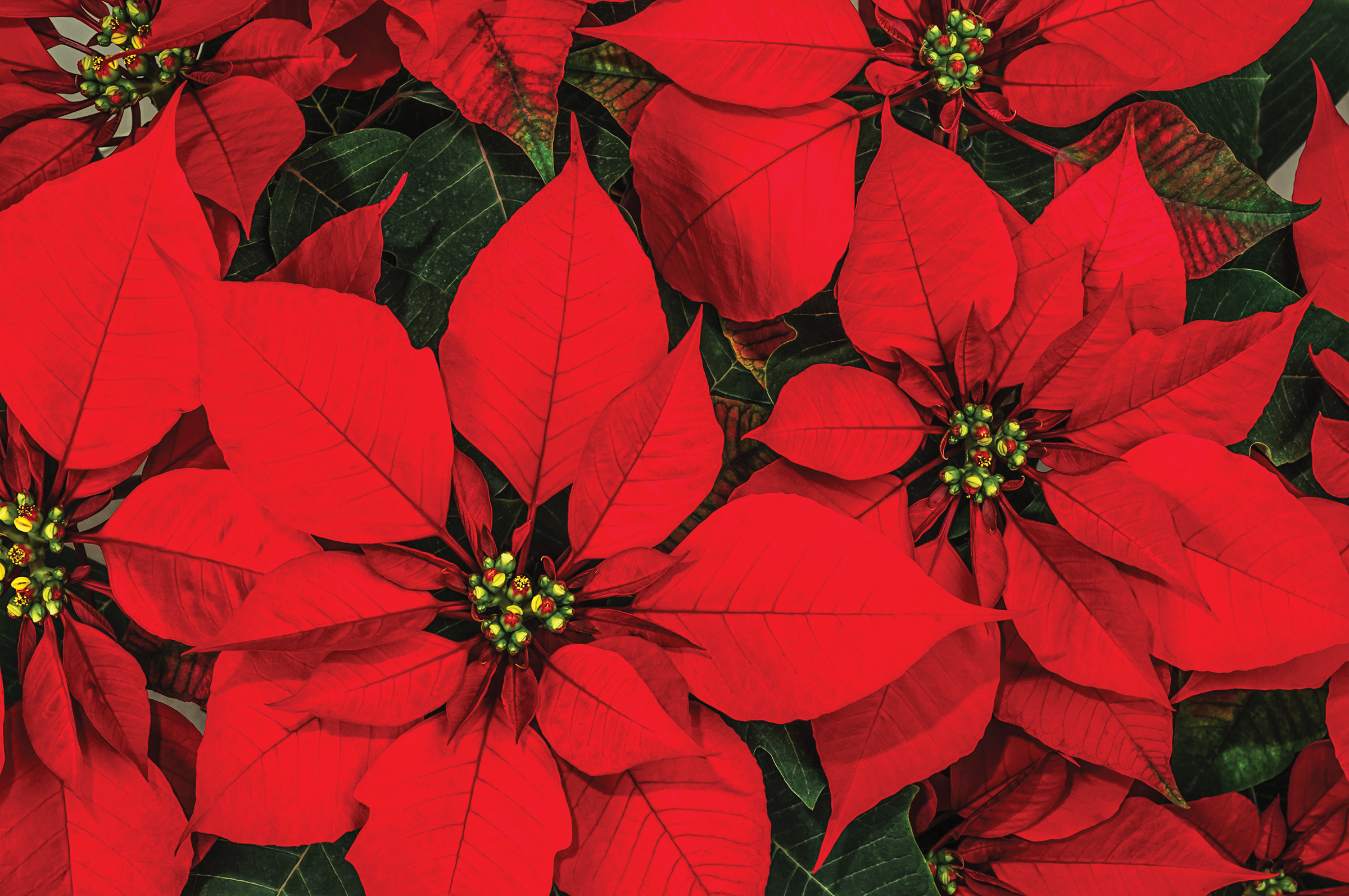
Now, let’s go indoors where most holiday horticulture happens. Don’t forget that, as the holidays start earlier and earlier, plants used for festive, indoor décor will need TLC all season long to make them not only aesthetically pleasing but also safe. Floral departments of grocery stores have various holiday potted plants for sale, and they are usually in pots wrapped in a decorative foil. When watering these plants, remove them from the foil wrappers so excess water can drain out. Poinsettias (Euphorbia pulcherrima) should be situated in a sunny location where room temperature ranges from 60 to 70 F. Water only when soil is dry and do not fertilize while it is flowering. The bright red, leaves (bracts) are actually not the flowers. The poinsettia’s flowers occur in small, yellow clusters in the centers of the red bracts. Poinsettias can be moved outdoors during next year’s warm weather, too. Once poinsettias start fading after Christmas, allow the potting medium to dry out but not the point that the stem shrinks. Either repot in March or April, or move to an outside bed once temperatures are consistently above 40 degrees F. At repotting or planting outside, cut the stem back to about 4 to 6 inches above the medium level. New growth should begin in 2 to 3 weeks.
Thanksgiving and Christmas cactus (Schlumbergera sp.) should be kept between 70 and 80 F. Water only when soil is dry and keep watered indirectly much like for African violets (Saintpaulia sp.). Fertilize only with a low nitrogen fertilizer (less than 10 percent N) and pinch off new growth in spring for rooting. Both can be put back outside in a shaded area once warm weather returns.
Are you using a real Christmas tree this year? If so, chances are it’s either Fraser fir, Scotch pine, Leyland cypress, or Eastern red cedar. With its Christmassy scent, Frazer fir (Abies faseri) is the most popular Christmas tree species used in the southern United States. Unable to tolerate the heat and humidity of Louisiana, Fraser firs are farmed in many counties of the Southern Appalachians and trucked all over the country. Keep your live Christmas tree well-watered and away from fireplaces or space heaters. When the holidays are over, remember that used Christmas trees make great habitats for wildlife. If you live near a pond or lake, sink the tree with cement blocks to provide structure that fish and other aquatic wildlife will use for habitat. As many of our native game fish ambush their prey, the tree will provide them a good hiding place. Next spring, when the bite is on, you’ll be glad you put your used Christmas tree to good use. If you don’t live on or near a body of water, then consider using your Christmas tree in your backyard as a way to attract birds. Treats made from suet, peanut butter, birdseed, and like material can be hidden among the branches for our feathered friends that overwinter in the area.
Finally, as we say goodbye to 2022, I want to thank each of you who tune in every Tuesday at 4:30 for “In The Garden on Louisiana Living.” If there is a gardening topic you would like to hear about, just let me know! I also want to thank everybody at KTVE NBC 10/KARD Fox 14 for making the last six years such a joy. I look forward to Tuesdays!