



In the Garden With Kerry Heafner
The Slow Food movement began back in 1986 in Italy when a fast-food restaurant opened near the Spanish Steps in Rome igniting a national protest. I can’t say I remember seeing this in the headlines back then, but I was only sixteen at the time. Almost 40 years have passed since then! Events I remember from ‘86 include the Space Shuttle Challenger disaster, seeing Halley’s Comet (too early on cold mornings), the Chernobyl nuclear disaster, Top Gun and its soundtrack dominating the box office and the airwaves, Casey Kasem counting down the Top 40 every Sunday afternoon, and Iran-Contra getting cranked up. Good grief! Anyway, local Roman citizens were appalled that a fast-food joint would overshadow local culture and foodways, so the Slow Food movement was born. Slow Food vs. fast food, you see. Today, Slow Food has chapters in more than 160 countries with a mission to ensure everyone has access to good, clean, and fair food. This means that ingredients are locally sourced, are free of harmful chemicals and preservatives that have been linked to any number of health issues, and that all citizens have fair access to local, clean, fresh food.
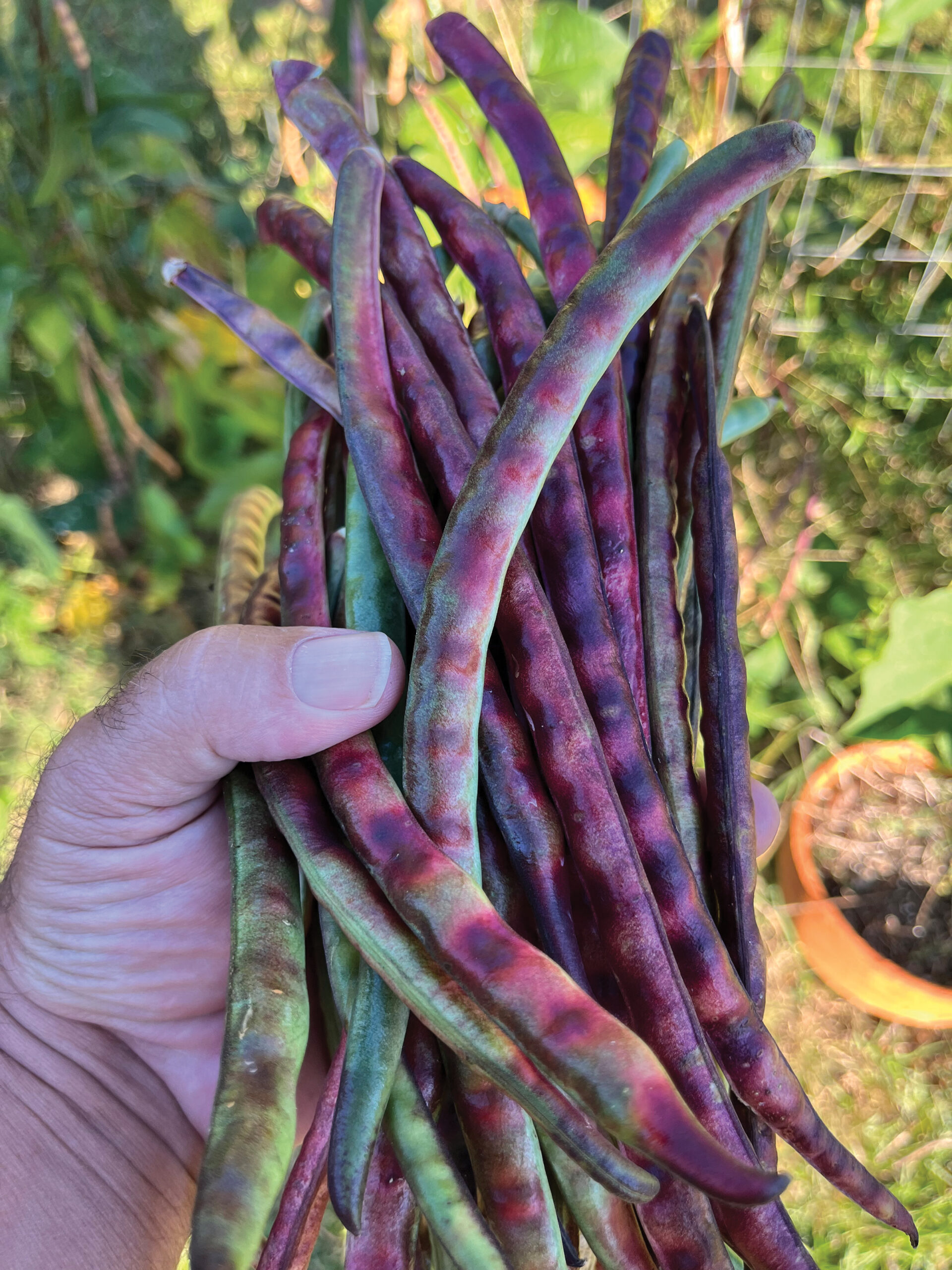
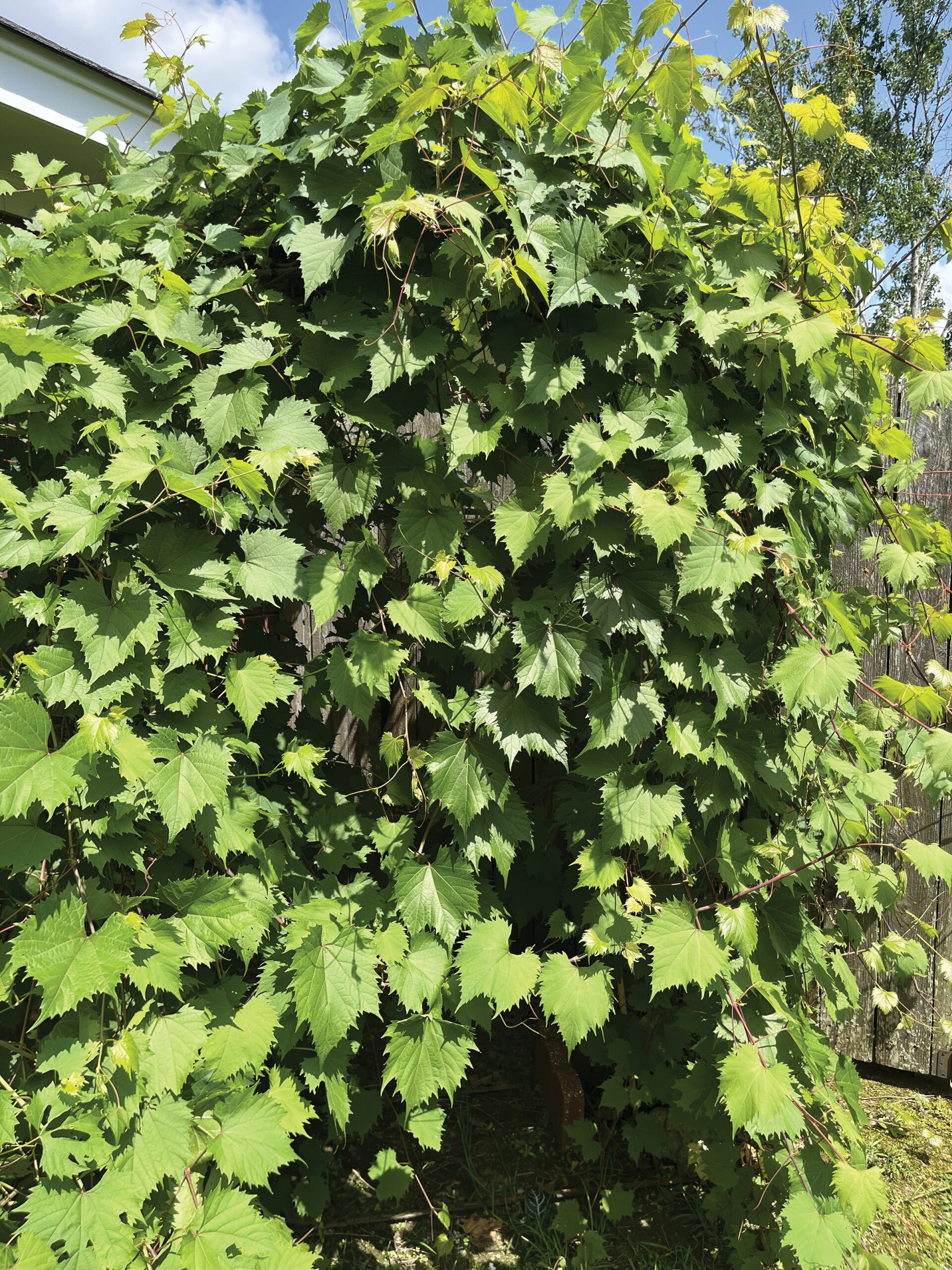
One aspect of the Slow Food movement is the preservation of genetic diversity in foods. This means promoting biodiversity and preserving the plants and animals that local cultures have depended on historically and depend on now for sustenance while also preserving the historic methods of preparing culturally significant foods. One way this is done is by designating a plant or animal for boarding onto the Slow Food Ark of Taste, a catalog of food diversity that is at risk of extinction. Most plants and animals boarded onto the Ark of Taste are considered heirloom varieties or species. For the last two or three years, I’ve had the pleasure of serving on the Slow Food Ark of Taste nominating committee for the southern U.S. region, and it’s been eye-opening. The diversity of culturally significant, at-risk foods just in the southern United States alone is overwhelming! These include the American Buff Goose, the Arkansas Black apple, Candy Roaster squash, the Ossabaw Island hog, Piney Woods cattle, Sassafras, Southern field peas (varieties too numerous to name here), and Tupelo honey. Endangered foods specifically from Louisiana include Creole cream cheese, handmade filé, Louisiana heritage strawberries, the Louisiana Satsuma, and Yellow Creole dent corn (keep reading). Our North Louisiana Seed Preservation Program is helping this effort, if in only a small way. I’m happy to say that LSU’s Red-N-Sweet Watermelon now has Ark of Taste designation and hopefully won’t be the last Ark of Taste designee from northern Louisiana. Local food culture reflects local agriculture, and while we’ve been hunting for heirloom seeds in this area it’s been easy to see just how different northern Louisiana foodways were and are from those down south. Largely, northern Louisiana food culture is influenced by that of other southern states. For us, these are Texas, Arkansas, Alabama, and even the Carolinas. Two examples of vegetable crops that made their way to Louisiana include Gentry’s Gray watermelon of Winn Parish, which is likely a landrace of O’Dell’s White, a South Carolina melon, and a sizeable field pea called Huey P. Long from Union Parish. Just this year, the North Louisiana Seed Preservation Program distributed seeds of the previously mentioned Yellow Creole dent corn to farmer Luke Jackson in the Shreveport/Bossier area. Ears are packed with the most beautiful orangish-yellow kernels that are more rounded than most other dent corns. Yellow Creole was the traditional Louisiana grits corn and was once common in corn trials at the old Calhoun Research Station. We’re glad Luke had a prolific crop, most of which will go to Chef Gabriel Balderas who owns Zuzul Coastal Cuisine and El Cabo Verde in Shreveport. Chef Gabe is committed to using locally grown and sourced ingredients in his creations and even grows a lot of his ingredients himself. This is not to say that northern Louisiana doesn’t have international influences. Our community was homebase to both Italian and Middle Eastern immigrants in the late 19th and early 20th Centuries. To this day, I visit homes and see fig trees grown from cuttings from trees that were brought from Italy in the early 1900s. Most recently, while doing a home visit just off Forsythe Avenue, I discovered a grapevine that was brought here from Beirut, Lebanon, by the homeowner’s maternal grandfather in the early 20th Century. The vine never flowers or produces grapes. Rather, it’s grown for the leaves that are used in traditional Middle Eastern dishes. After leaves are harvested from the vine and the petioles are removed, they’re washed in a saltwater mixture and stacked, then frozen in freezer bags until ready for use. Typically, the leaves are stuffed with a combination of ground meat, preferably grass-finished beef, and an array of vegetables seasoned spices, and steamed until tender. The homeowner relayed stories of family members coming over to harvest grape leaves and how cuttings of this vine had been passed around to family members in the ArkLaMiss for generations. This is just another wonderful example of how the rich agricultural history of our northern Louisiana is reflected in our local foodways. We’re so lucky that descendants of these earlier immigrants still call the ArkLaMiss home. Our tastebuds are grateful, too!
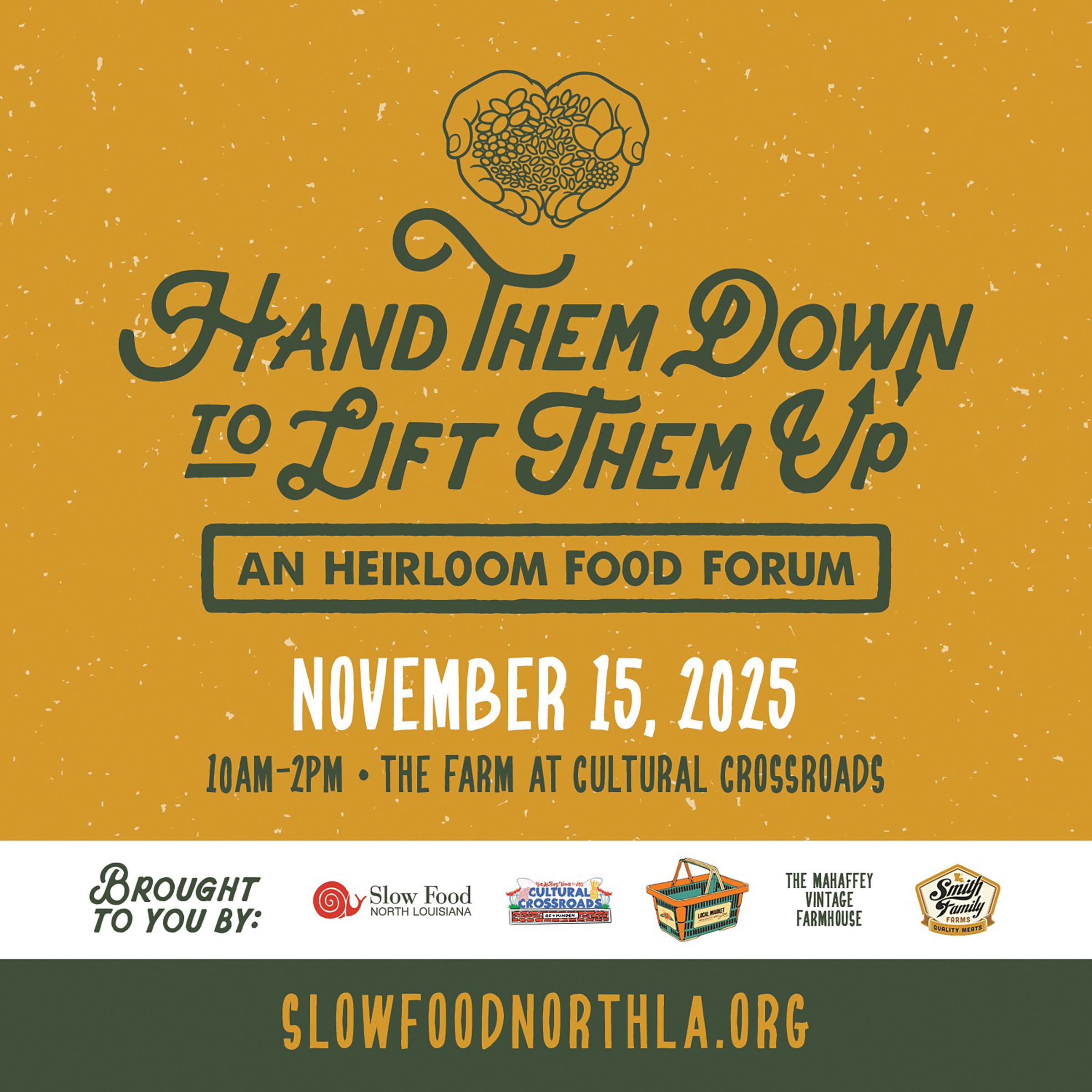
With all that said, I would like to invite you to an event this month hosted by Slow Food North Louisiana. The event is titled “Hand Them Down to Lift Them Up” referring to all the wonderful heirloom seeds Marcie Wilson and I have procured for the North Louisiana Seed Preservation Program. Marcie and I will talk about the seed program and some of our recent finds. A catered lunch will be provided by Chef Hardette Harris of Us Up North Kitchen in Shreveport. Chef Hardette is a North Louisiana rock star! She is a 2024 James Beard Award semifinalist for Best Chef, South, and was the creator of the official meal of Louisiana, as designated by Lieutenant Governor Billy Nunguessor’s office. Special guests will be Deb Freeman and Joshua Fitzwater from Southern Grit in Richmond, Virginia. “Fitz” is going to talk about their efforts to restore the Red-N-Sweet watermelon to commercial trade in their area. Deb Freeman is an award-winning food writer and historian, will be screening her Emmy Award-winning documentary Finding Edna Lewis. Lewis was a historically significant African American chef who still influences contemporary chefs throughout the eastern United States. This is a ticketed event, $40.00 general admission, $35.00 for Slow Food North Louisiana members. It promises to be a great program! To learn more about the Slow Food movement, go to www.slowfood.com, and www.slowfoodnorthla.org.
Folks, the 2025 holiday season promises to be one filled with hope, joy, and good food! It’s no surprise that the most enduring memories of holiday seasons past are those made while family and friends are gathered in the kitchen or around the table. Savor our North Louisiana culinary culture by preparing meals made with locally grown and culturally significant foods. Share generously with those less fortunate. And above all, be thankful that another year is almost behind us and another is head of us.
All of us at the LSU AgCenter wish you and yours a Happy Thanksgiving.