



In The Garden | Kerry Heafner
Article by Kerry Heafner
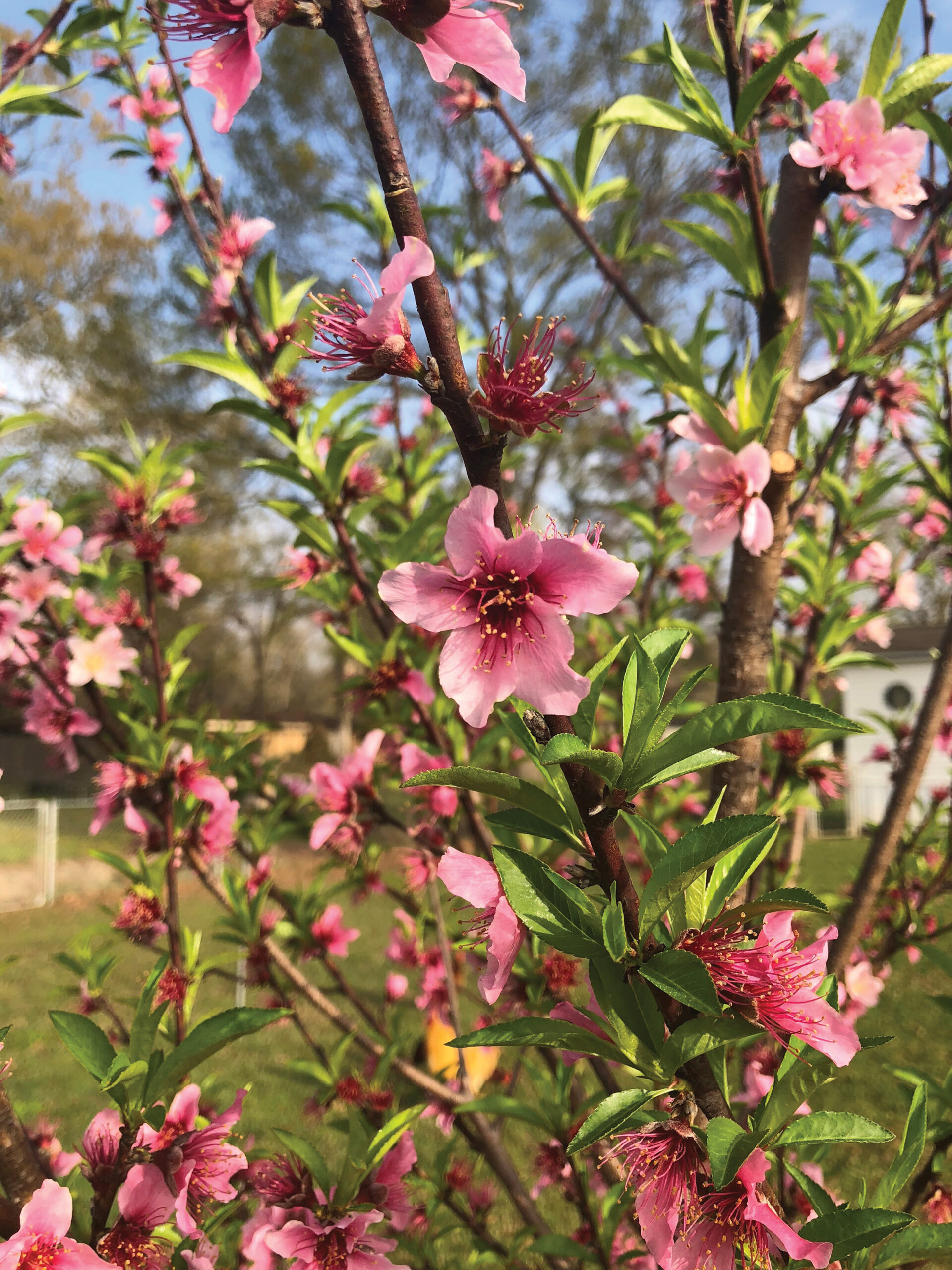
Even though it’s the holidays, we need to start thinking ahead to spring. Now through February is the ideal time to install woody perennials in the landscape! Whether ornamentals or fruit trees/shrubs/vines, now is the perfect time to get them off to a perfect start for maximum performance next spring and for years to come. There’s no shortage of options, either. Look first at the list of Louisiana Super Plants and you’ll likely find something that fits the bill for the area you want to plant. Southern Indica Azaleas (Rhododendron indica) were named as Louisiana Super Plants this year and can any Deep South landscape have too many? Heck no! ‘Formosa’ is the popular large azalea that loads up with purple to magenta blooms every spring and provides a colorful backdrop to smaller varieties. ‘George L. Taber’ has light pinkish white petals with deep pink nectar guides in the centers of the flowers ensuring a bevy of pollinating insects will be visiting you landscape. The solid white petals of ‘Mrs. G.G. Gerbing’ make it a popular variety for many home landscapes when a cooler tone is desired and anything else of color planted with it really pops. ‘Conversation Piece’ is another azalea making the Super Plant list and for good reason. It’s multicolored petals that show up in spring are an eye-catching contrast to the more solid colors of the Indicas. Fall and winter in the ArkLaMiss are for camellias! Super Plant options that are already popular include ‘Shishi Gashira’ and ‘Leslie Ann.’ Azaleas and camellias have growing requirements that are basically identical. They need an acidic, highly organic, well-draining soil and a setting with mostly shade to dappled sun. They will tolerate full sun, but that will also stress them quicker than if they have at least some shade. Clay soils can be amended with peat moss, and it’s important to not overwater azaleas as they are highly susceptible to root and crown rots. Fruit trees/shrubs/vines should be installed during this time, too. Blueberry bushes have the same soil requirements as azaleas and camellias. Light is the only difference; blueberries perform best with full sun all day. Rabbiteye varieties are recommended for northern Louisiana and planting in ground instead of in containers is always the best option because roots need plenty of room for expansion. A layer of pine straw mulch will be beneficial to your blueberry bushes, too. Plant at least two varieties for cross pollination. All Rabbiteye Blueberries are Louisiana Super Plants. Pay special attention to variety name when making tree fruit selections. Make selections for our area based on that variety’s chilling requirement. Each variety needs a specific number of hours of cold below 45 F. A good winter for West Monroe is around 800 chill hours. Outlying areas will get either more or fewer chill hours based on factors like proximity to water, topography, microhabitats, etc. Apples, pears, persimmons, peaches, and what-have-you will likely need lime added to the soil. Because our soils are naturally acidic, a lime application will get the soil’s pH up to the optimum range of 6.0 to 6.8 for optimum nutrient uptake by the tree. Dolomitic lime contains magnesium, an important nutrient in chlorophyll production. Calcitic lime is just straight calcium carbonate and lacks magnesium. Lime often takes at least two months to do its thing so feel free to add it anytime.
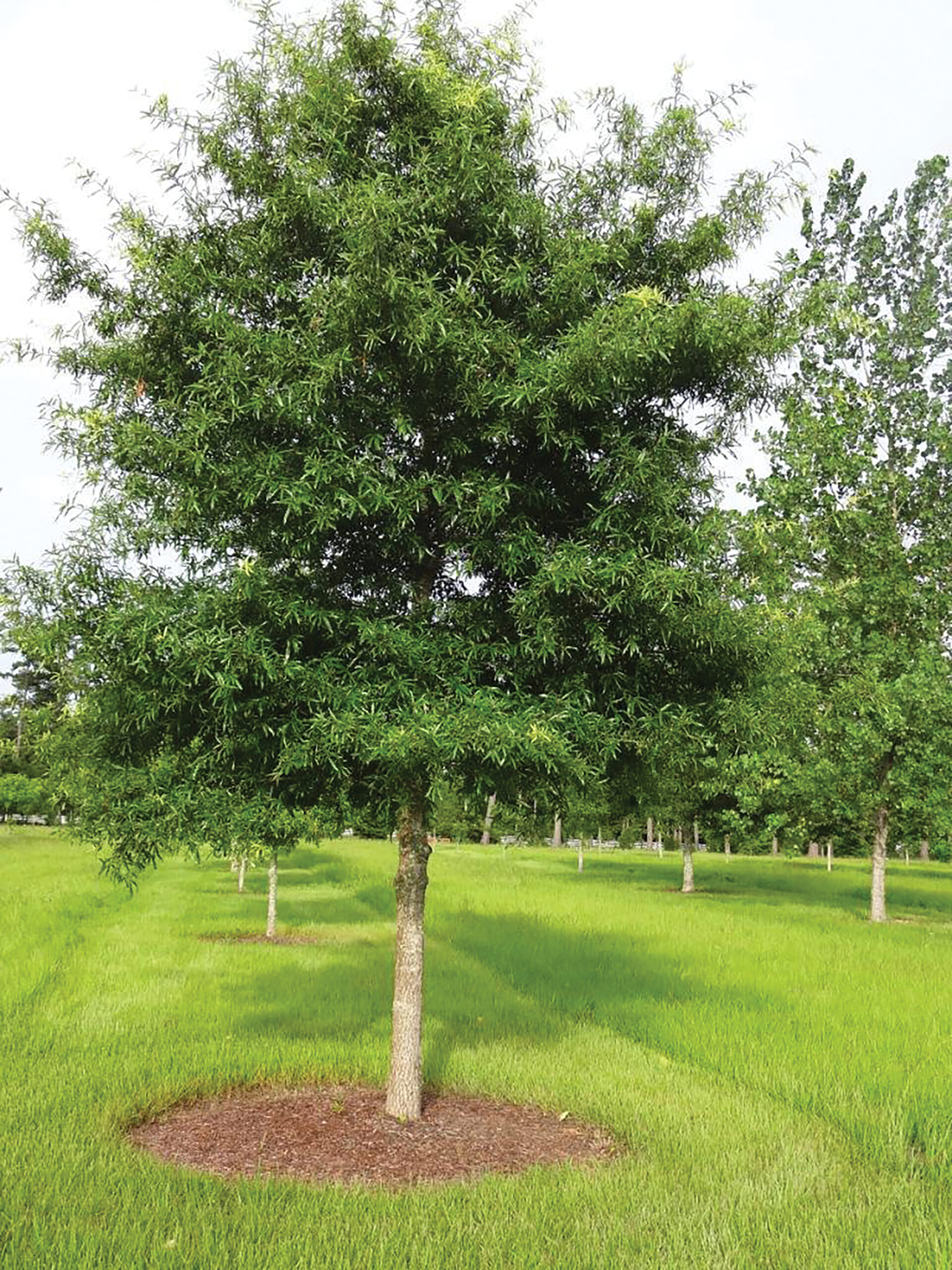
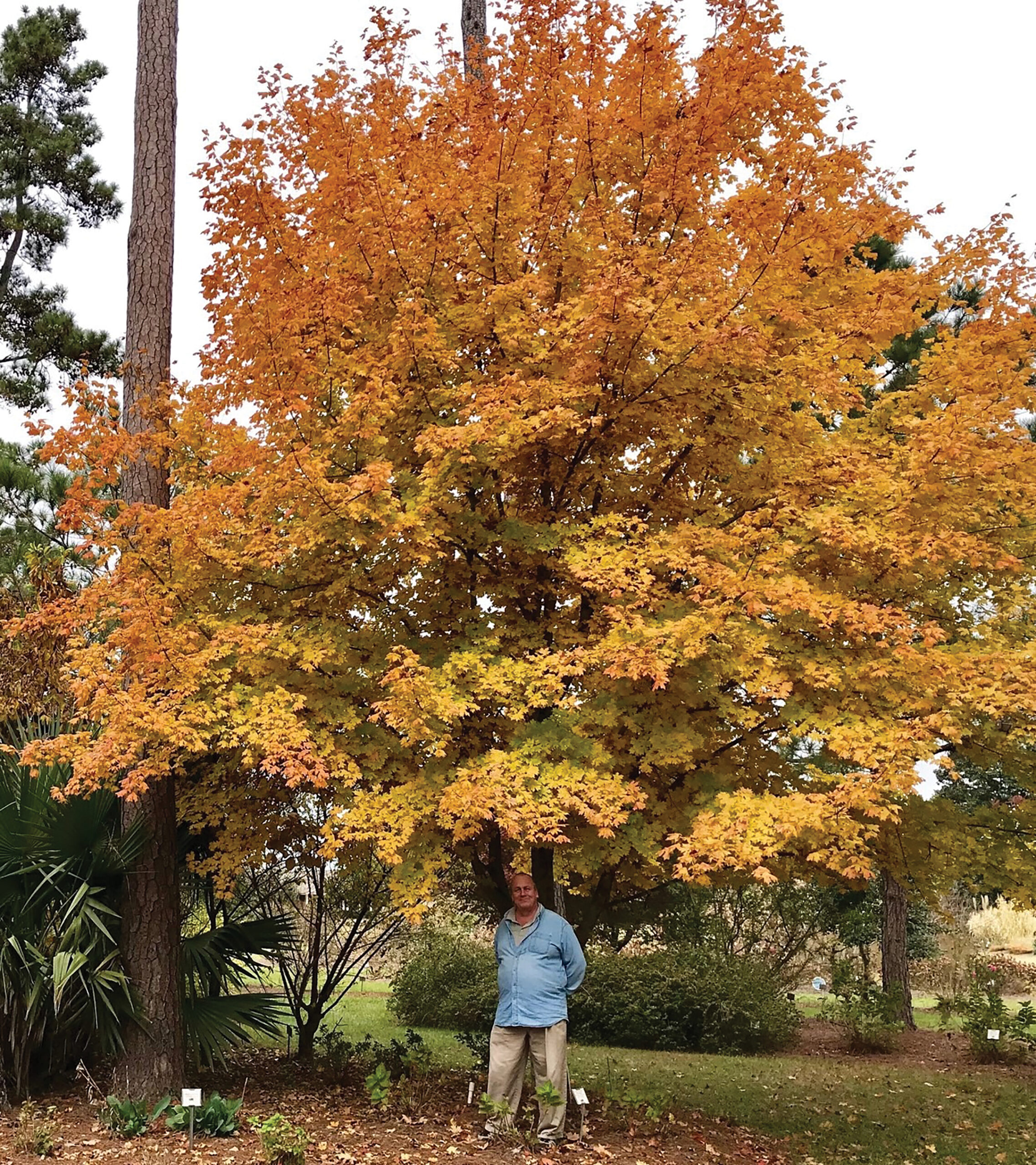
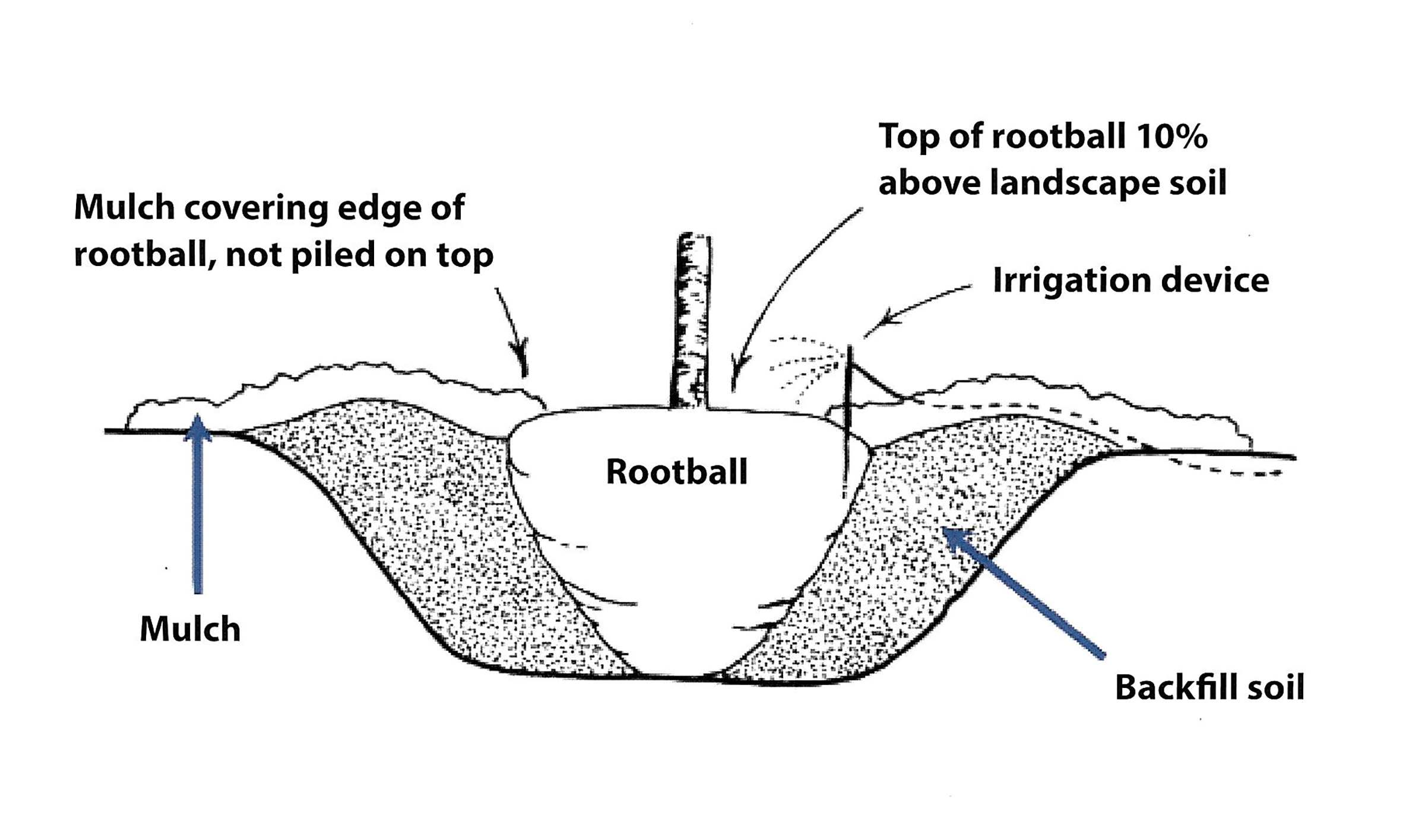
When I’m planting fruit trees, I don’t even measure the amount of lime I’m adding. I simply work two or three generous handfuls (I have big hands!) into the soil that will be used to backfill the planting hole. Finally, plant fruit trees so the graft union is above soil level. Don’t forget about ornamental and specimen shade trees for the landscape. Bald Cyress (Taxodium distichum), Southern Sugar Maple (Acer floridanum), and Willow Oak (Quercus phellos) are all wonderful options for shade and attracting birds and other wildlife to your landscape! All three are Louisiana Super Plants, too! Southern Sugar Maple (if you can find it) will have the added advantage of brilliant fall foliage that can be relegated to the compost pile once the leaves are raked up. These are three trees that will need plenty of space. If empty space is premium in your landscape, consider smaller options like ‘Shoal Creek’ Vitex or ‘Little Gem’ or ‘Jane’ Magnolias. You can’t go wrong with any of these. ‘Shoal Creek” Vitex will produce long spikes of brilliant blue flowers that draw in clouds of insect pollinators in early summer. ‘Little Gem” Magnolia is a more compact version of our familiar Magnolia grandiflora that produces large, fragrant, white flowers while ‘Jane’ is one of the deciduous, hybrid Saucer Magnolias that will provide pink and white flowers in early spring. A dense canopy of late spring and summer foliage plus its maximum height of about 20 feet make ‘Jane’ a great option for a foundation shrub or as a hedge for privacy. In all these cases, get woody perennials off to a good start by taking time to prepare a good planting hole. This will spare you a lot of headaches later and will ensure your plants, which aren’t cheap these days, will pay long-term dividends on their investment. First, kill off or remove grass and any other vegetation where the planting hole is to be. Second, dig the planting hole two to three times wider than the root ball of the plant being installed. A wider planting hole is preferred so the root system has ample room to expand outward for good anchorage and good absorption of water and nutrients from the soil. Third, don’t put synthetic fertilizer down in the planting hole, especially with blueberries. Fertilizers are salts and you’ll risk burning the roots if they contact synthetic fertilizers. Amend the soil to backfill the hold with as needed. I always try to incorporate a generous helping of compost. Any plant will like that! Water at planting and anytime we go for extended periods without rain, which is not usually a problem for our region. Be careful not to overdo it with water and set the scene for root and crown rots and fungal issues.
The holidays mean lots of indoor color! Poinsettias (Euphorbia pulcherrima) should be situated in a sunny location where room temperature ranges from 60 to 70 F. Water only when soil is dry and do not fertilize while it is flowering. Bright red, leafy bracts surround small, yellow flowers. Christmas cactus (Schlumbergera bridgessii) should be kept between 70 and 80 F. Water only when soil is dry, fertilize with a low nitrogen fertilizer (less than 10 percent N), and pinch off new growth in spring for rooting. Are you using a real Christmas tree this year? If so, chances are it’s either Fraser fir, Scotch pine, Leyland cypress, or Eastern red cedar. With its Christmassy scent, Fraser fir (Abies fraseri) is the most popular Christmas tree species used in the southern United States. Fraser firs are farmed in many counties of the Southern Appalachians and trucked all over the country. When the holidays are over, remember that used Christmas trees make great habitats for wildlife. If your property has a pond or lake, sink the tree in it with cement blocks to provide structure that fish and other aquatic wildlife will use for habitat. As many of our native game fish ambush their prey, the tree will provide them with a good hiding place. Next spring, when the bite is on, you’ll be glad you put your used Christmas tree to good use. If you don’t live on or near a body of water, then consider using your Christmas tree in your backyard to attract birds. Treats made from suet, peanut butter, birdseed, and similar material can be hidden among the branches for our feathered friends that overwinter in the area.
This holiday season be safe, take stock and be grateful, enjoy being with friends and family, eat some good food, help those who may be going through a rough patch, and let’s welcome 2026 with high anticipation for a productive growing season.
Thank you for letting me be your Extension Agent for eleven wonderful years. All of us at the LSU AgCenter wish you and yours a very Merry Christmas and a safe and Happy New Year!