


Historical Impressions | Part Two: The Landing
by Guy Miller, Vice Chair Emeritus, Chennault Aviation and Military Museum
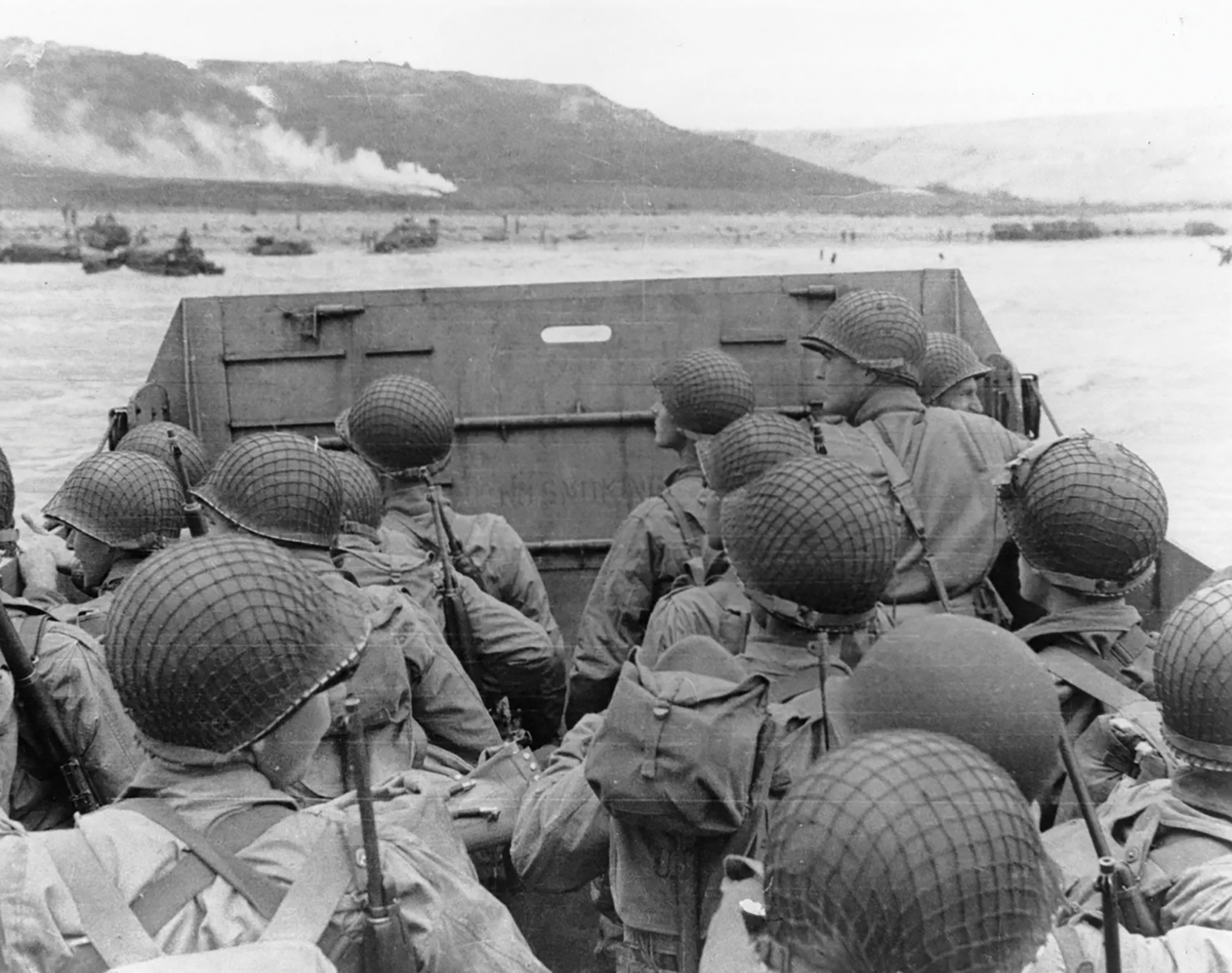
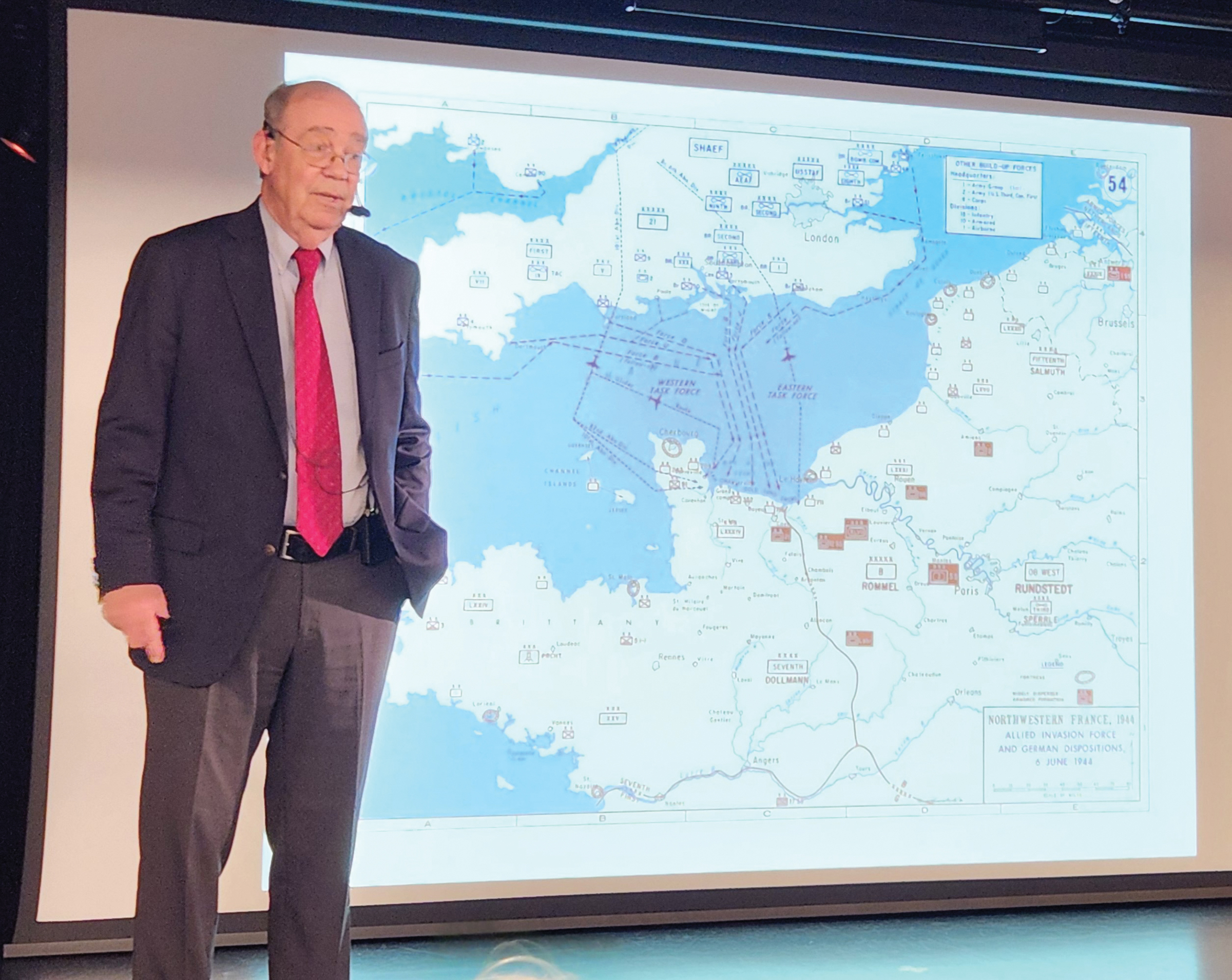
Today was the day. Our journey from the US mainland had been designed specifically to bring us to this spot off the coast of France on this particular day. The shoreline was indistinct with haze as I gazed from the deck of our “transport” ship. We did have an advantage that others brought to this beach did not have. Yesterday afternoon we received a briefing on the plans for battle from Dwight David Eisenhower. And Eisenhower was coming with us to the Normandy battlefields.
There is no one alive who knows more about the planning and operation of the WWII Normandy landings than D. David Eisenhower II. Professor Eisenhower wrote the definitive book (977 pages) on General Eisenhower’s conduct of the war and associated political ramifications. In addition to researching every scrap of paper left from WWII- including personal diaries- in regards to Normandy and other aspects of the war, he had access to the personal thoughts of his grandfather and other key generals and politicians who were still alive in the late sixties, seventies and early eighties. Eisenhower’s book was a finalist for the Pulitzer Prize in history in 1987.
How close was David to his grandfather? Camp David is named after him.
David’s other advantage was his wife Julie. Julie Nixon. A renowned historian in her own right, Julie had her own access and insights from growing up in the White House during two presidencies- that of her grandfather-in-law to be and that of her father.
The Normandy beaches today are European vacation spots lined with villages, private homes, inns and tourist shops. As David told us, France cannot afford to set aside land for battlefield parks. If you consider all the battlefields in France from WWII back to Roman times, every square foot of France would be a war memorial park. Still, it was jarring to see people playing and enjoying the sun and sand where so many gave their lives in battle. Offsetting that, there were American flags everywhere- businesses, public buildings and private homes throughout the region. Flags of all of the Allies were displayed but often with private homes it was only the flags of America, France and Normandy. US military vehicles were also everywhere, both static displays and restored jeeps and trucks running up and down the roads.
Omaha Beach is different from any of the other assault beaches in Normandy. Its crescent curve contains an unusual assortment of bluffs, cliffs and draws. The high ground above it made it the most defensible beach of those chosen for D-Day. Many planners did not believe it acceptable for a major landing. Any advance made by troops from the beach would be limited to steep, narrow passages between the bluffs.
German strong points commanded all the approaches and pillboxes were situated in the draws with the capability to enfilade assaulting troops. All German positions were hardened against naval gunfire and would need to be taken out by direct assault. Adding to the , allied intelligence failed to discover a nearly full-strength infantry division had recently arrived for rest and recuperation after intense combat.
I might have a visualization advantage here that most visitors do not possess. In my training with the Marine Corps I assaulted beaches carrying a rifle and wearing olive utilities and web gear very similar to those used in the 1940s. I even wore than very heavy M1942 steel pot helmet. No live ammo was shot in my direction but I do know the feeling of pulling up to the sand and exiting with all that gear while the sound of battle rages around me.
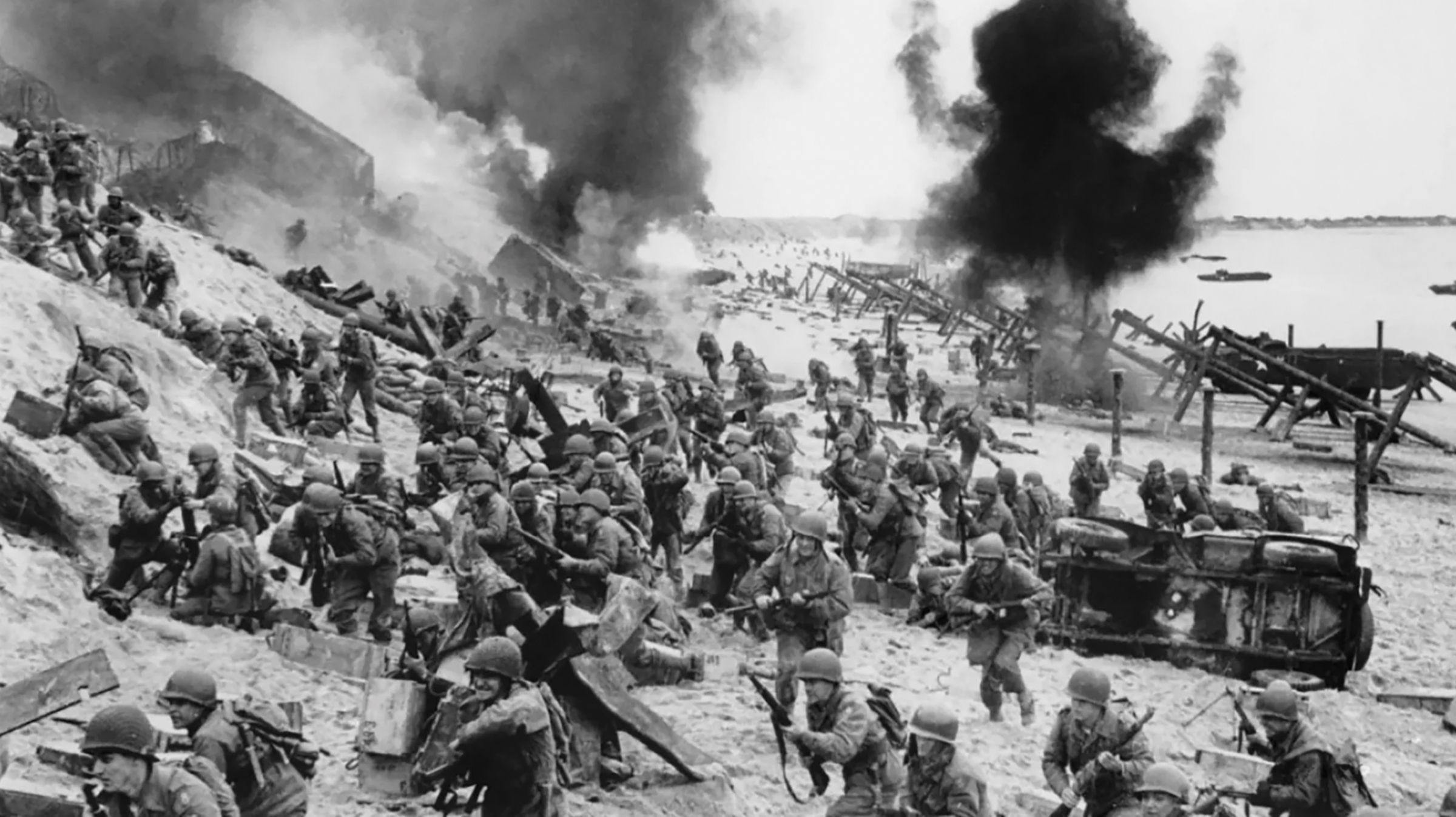
Standing on the sand with my own beach assault memories, it was possible to gaze to the Channel at locations where no other person was in direct view and imagine the thousands of ships sitting offshore. To see the landing craft open to the beach and others behind waiting their turns. To see the explosions, the bullets striking, the carnage of bodies, parts and blood everywhere. In the water the men who were shot mingled with those who drowned when they plunged into water that was too deep for their bodies weighted down with gear. During the first three hours, the casualty rate for the American soldiers was 90%.
The German fortifications above Omaha Beach had been subjected to a massive bombing and naval gunfire barrage prior to the first landings. We got a sense of how extensive this must have been when we visited the cliffs of Pointe du Hoc to the east. Here the German bunkers still stand among overgrown craters of sizes up to 50 feet across and twenty feet deep. Despite the naval bombardment at Pointe du Hoc, the German troops were still there and ready when the 2nd Ranger battalion arrived to begin scaling the 110 foot cliffs to disable the six 155mm guns believed to be located there.
I stood on Omaha Beach with my imagination and thoughts and my eyes misted over. The courage, daring and unbelievable patriotism of the men of the 1st and 29th Divisions cannot be overstated. All veterans were invited to participate with David in a wreath ceremony at the American Cemetery. Standing in an American cemetery in France and singing the Star Spangled Banner was moving enough. But looking at those 9388 American graves when Taps was played was more than I or most others could resist and tears began to flow.