



Happy Easter! Have A Bowl Of Radishes!
by Guy Miller, Vice Chair Emeritus, Chennault Aviation and Military Museum
Easter is a holiday traditionally associated with chocolate and other candies. How do you think your children would react if they woke up Easter morning and the expected chocolate and sweet treats were not there?
During World War II, Easter eggs, chocolates, and other candies that were commonly enjoyed during the holiday became scarce or even unavailable due to rationing. The rationing systems were put in place for many daily-use items to ensure that essential goods and supplies were allocated fairly and to conserve resources for the military. Under rationing, individuals were given specific coupons or tokens that entitled them to purchase limited amounts of certain goods, including chocolate.
On December 5, 1942, the War Production Board issued Conservation Order M-145 which banned the manufacture of chocolate novelties, including “products manufactured in a special shape commemorating, symbolizing, or representing any holiday, event, person, animal or object.” Boringly-shaped chocolate bars could still be made for consumers but only if the ingredients were available after meeting the government’s needs for the military.
The reasoning behind this strict rationing was chocolate was considered a luxury item and its production required ingredients that were affected by wartime shortages. Cocoa and sugar, the two principal ingredients of chocolate, were imported so what little supply there was had to be used in the war effort. Chocolate had been becoming scarce even before the ban since German U-boats in the Atlantic and Japanese conquests in Southeast Asia were choking off the supply of cocoa and sugar to America. Also contributing to the shortage was scarce labor. Many skilled confectionery workers (especially women) quit making candy bars and other sweets and opted instead for war production jobs that also required tactile dexterity such as assembling fuses and firearms.
Although a luxury item for civilians, chocolate was seen as an essential item for the military. Chocolate not only boosted morale, it was calorie-rich and a natural stimulant. Unfortunately it also easily spoiled and had a low melting point.
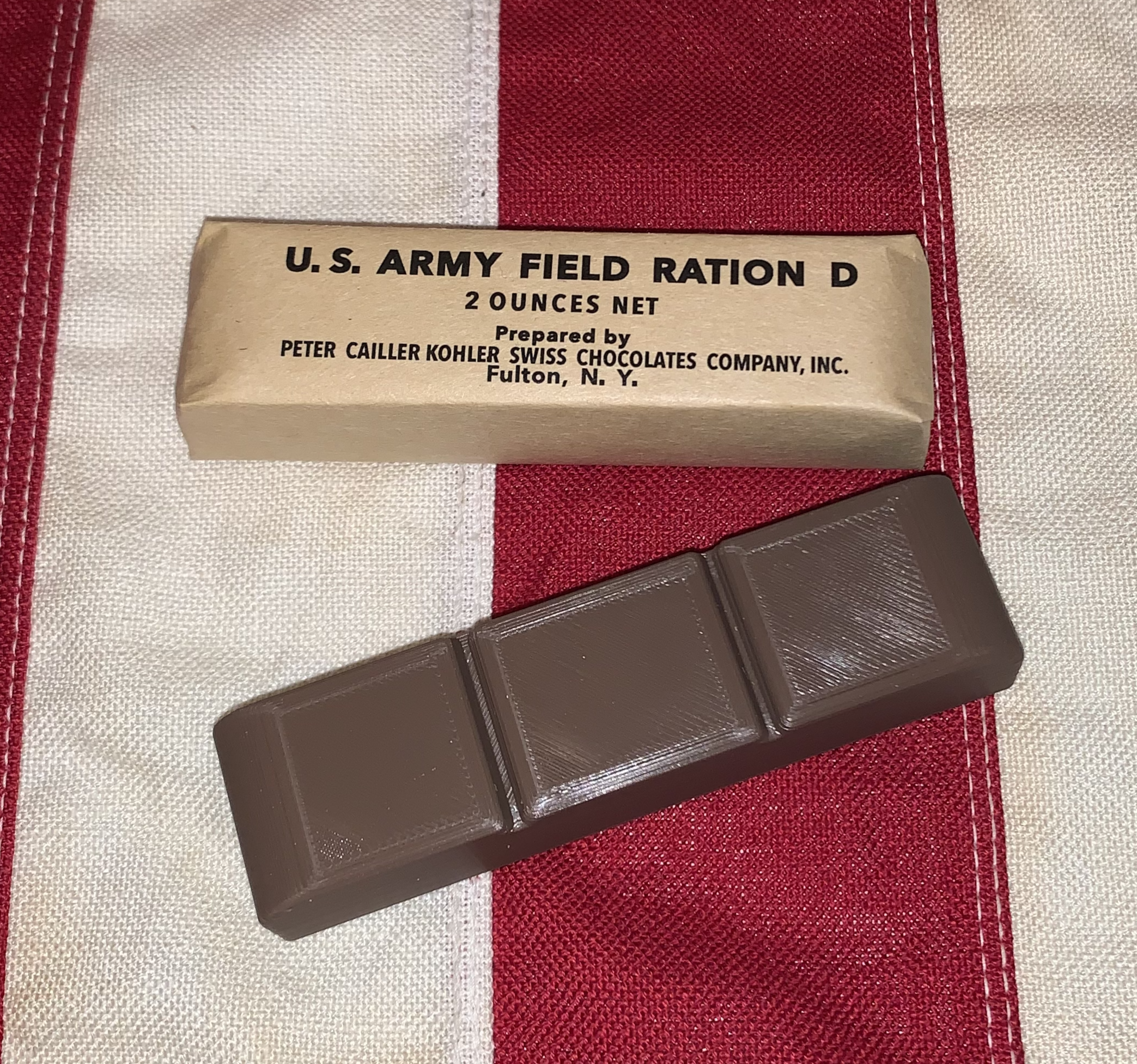
In 1937, the Army Quartermaster Corps began development of a new chocolate-based emergency ration that could survive the heat encountered in jungle and desert war zones. The Army gave manufacturers strict specifications for a 4-ounce chocolate bar that had to be high in calories and protein and not melt in high heat and humidity. Surprisingly the Army also did not want the bars to taste too good. Believing young soldiers would be unable to resist snacking, the Army specified taste should be “a little better than a boiled potato.”
Hershey’s ultimately developed the formula that was used by all manufacturers for the production of the new chocolate-based D Ration. The resultant chocolate bar packed 600 calories and could remain solid at up to 120 degrees. This original 4-ounce D Ration was also tough to eat and not very popular with the troops. With the development of the non-melting formula, chocolate manufacturers shifted their production towards supplying the military with these chocolate emergency rations. In 1943, the formulation was changed slightly in 1943 to make it sweeter.
In addition to prioritizing cocoa and sugar as essential to the war effort, the War Production Board believed rationing these foods would promote a sense of shared sacrifice among the civilian population and especially children. As the board noted:
“American children will contribute to the war program by sacrificing chocolate Santa Clauses, St. Valentine’s hearts, Easter bunnies and eggs and other chocolate novelties. By giving up such items, the children will provide additional breakfast cocoa and chocolate bars for their soldier brothers and sisters who are fighting the war, for their fathers and mothers, some of whom are working in war plants, and for themselves.”
Conservation Order M-145 went into effect on December 15th so it had little impact on Christmas 1942. There were even enough stockpiles of already manufactured chocolates to cover Easter 1943. But new supplies ran out within a few months and manufacturers and retailers had to come up with substitutes.
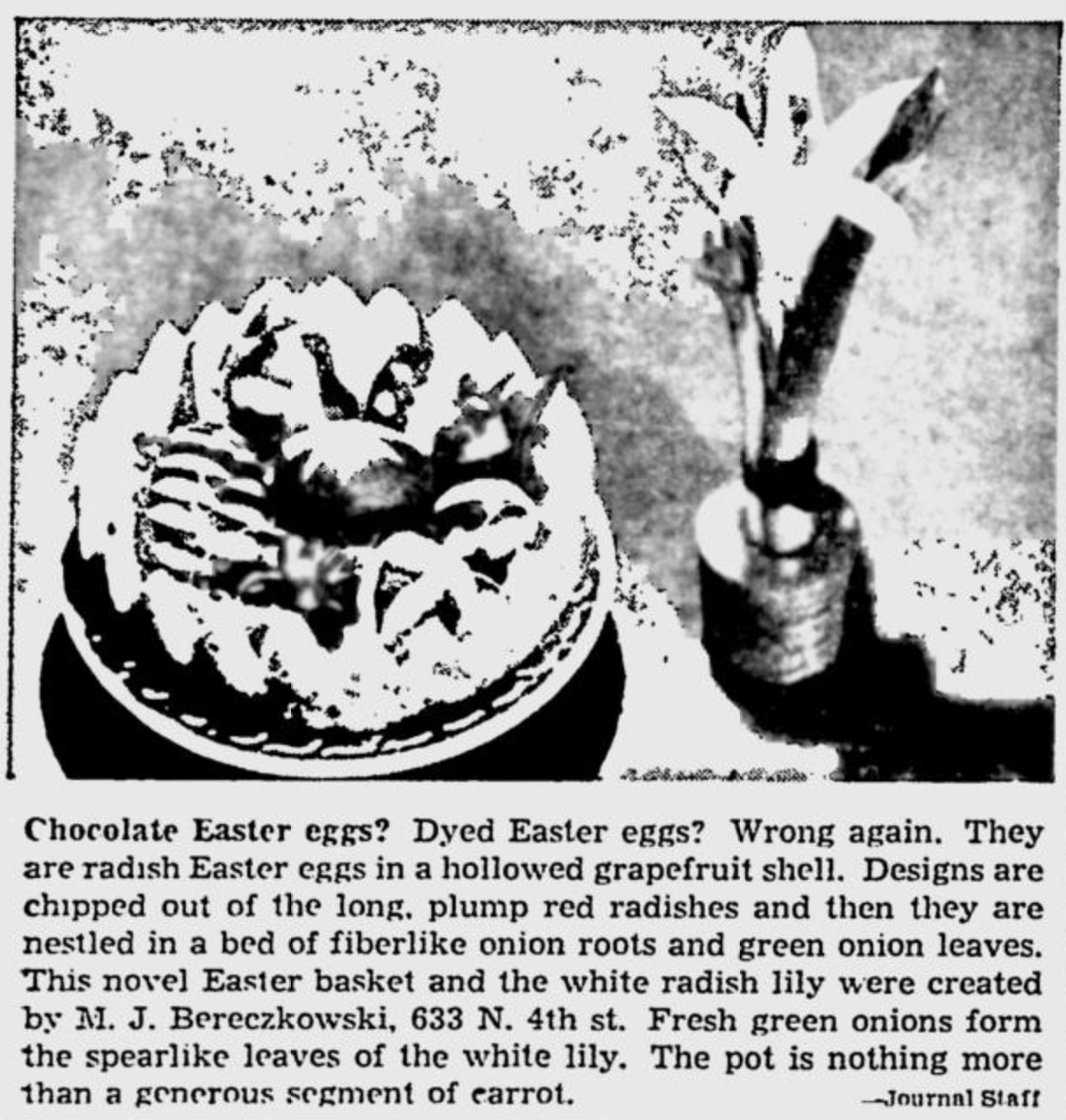
For Easter 1944 and 1945, instead of chocolate bunnies, families had to make do with alternative homemade treats and sweets and toys such as plush rabbit dolls which had not previously been a part of normal Easter tradition. Children also received bunny-shaped pieces of wax, soap, or wood. Easter baskets did contain candy eggs sometimes but these were usually solid lumps of caramel instead of chocolate. Some families also decorated hard-boiled eggs as a substitute for chocolate eggs. Or if you were really unlucky, the “eggs” in your basket might just be decorated radishes.
As Americans needed to become more resourceful and creative, homemade non-food gifts, decorations, and festive meals became more common as parents sought to maintain a sense of normalcy and joy for their children during the Easter holiday.
Civilians and soldiers alike hoped that with the end of the war everything would return to normal and waxy potato-tasting bricks of chocolate would go away and the delicate and delicious confections of simpler times were return. Unfortunately, chocolate has such a long and complex supply chain which meant returning to pre-war style production after the war was difficult. Most cocoa came from British and French colonial possessions in West Africa and the cocoa plantation economies had collapsed during the war. Accordingly, Easter 1946 was another lean year for chocolate and it was not until early 1947 that a reliable supply was again available in the United States.