



In The Garden
April is a busy month in ArkLaMiss gardens and landscapes. So, without further ado, but with a lot of copy editing, let’s get outdoors and get after it!
VEGETABLES
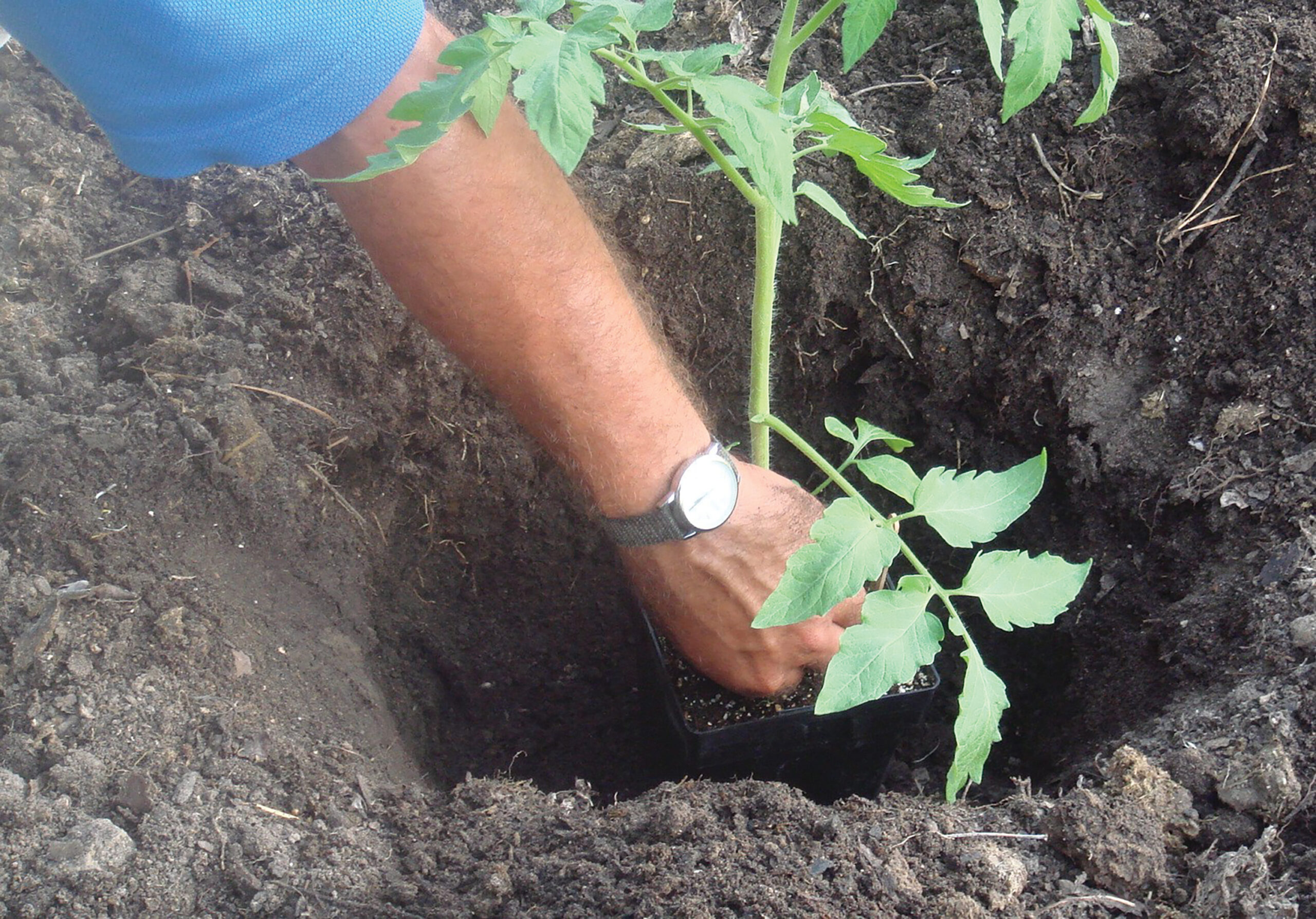
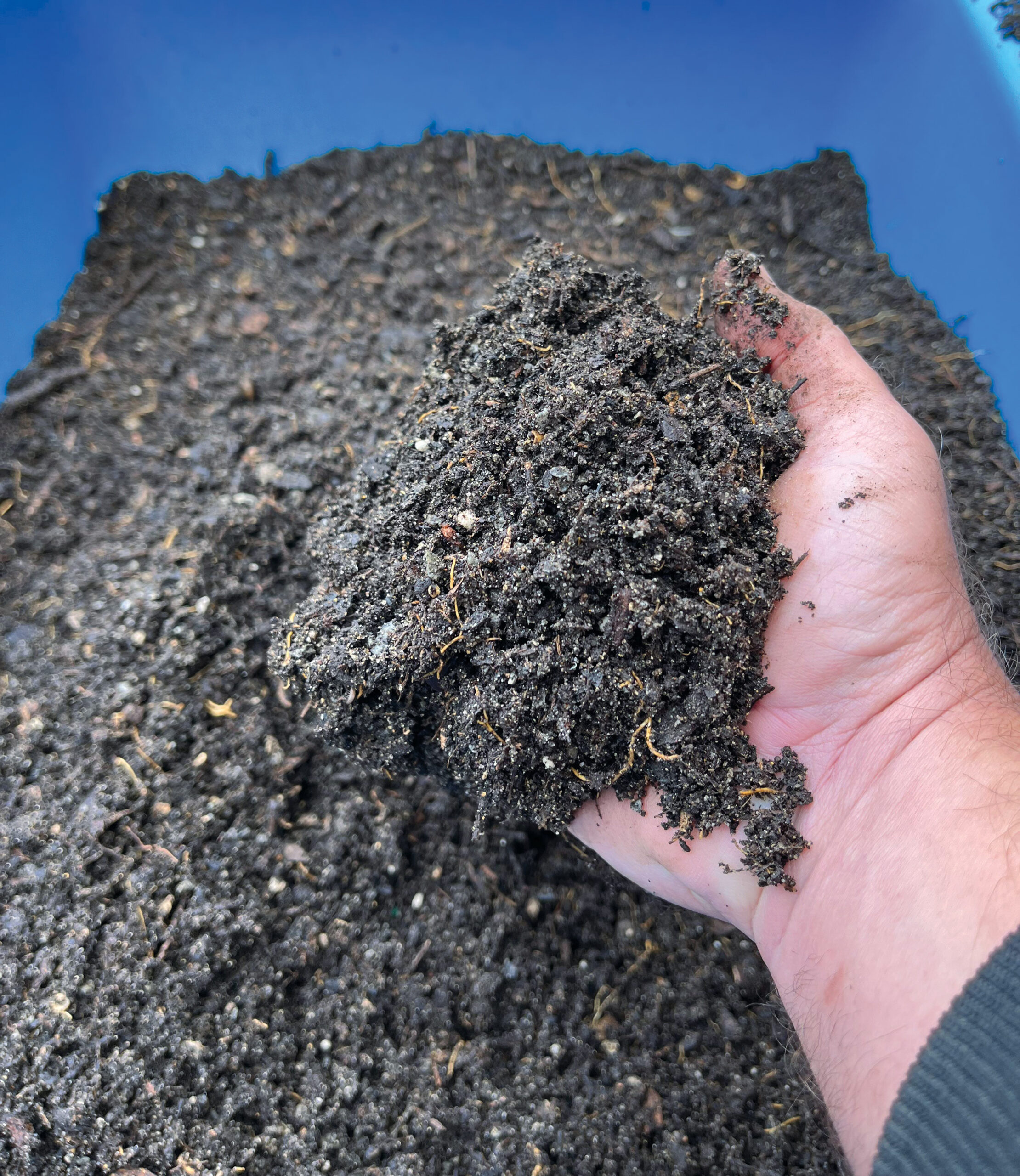
Set out transplants of tomatoes, peppers, and eggplants this month. All three thrive in slightly acidic, organic soil that drains well. Set tomato plants fairly deep and remove the first pair of lower leaves. Whether they are staked or caged is a matter of personal preference. However, if tomatoes are staked, put stakes into the ground prior to planting to avoid damaging the root system later. When I plant tomatoes, I mix together a generous helping of homemade compost and about a half-cup of gypsum (calcium sulfate) down in the planting hole. Tomato plants love compost, as most other plants do, and gypsum will add calcium without liming the soil. That is, it won’t raise the soil pH. This is a good defensive strategy to fend off blossom end rot (BER). Give transplants a good drink of water at planting. Leave enough space between plants and between rows to allow for uninhibited growth and good air circulation. Mulch with either wheat straw, hay, leaves, or grass clippings. Pine straw is also a great mulch for the vegetable garden. The goal is to prevent soil from splashing onto leaves and spreading fungal pathogens. When the season is over, natural mulches can be either composted or turned back into the soil.
Transplants of cucumbers and summer squash can go into the garden now as well, provided plants are not root bound. Cucurbits have problems if the root system is stressed, so make planting holes plenty wide enough to minimize disturbing roots. A lot of these vegetables are best direct seeded into the garden. Five or six seeds are sown in “hills.” After germination, the weakest seedlings are thinned out so that the two strongest plants remain. The rule of allowing enough space between plants for adequate air circulation certainly applies here. Both bush and vining summer squashes are available for home gardens and persnickety gardeners have their favorites. This reporter grows the white patty pan squashes almost exclusively because of their superior flavor. Other gardeners prefer the traditional, yellow, crook-neck summer squash because of their reliability, productivity, and often compact nature of mature plants. At transplanting, a collar made from newspaper or thin cardboard wrapped loosely around the stem will help prevent cutworms and squash vine borers. Cucumbers will need a trellis of some kind to run on. Flying insects will have a better chance of pollinating flowers and fruit will be raised off the ground to prevent rotting. Slicing cucumbers can grow straighter when vines climb on a trellis.
Other vegetables that be direct seeded are snap beans, butter beans, lima beans, and sweet corn. Sweet potatoes are gaining popularity among home gardeners and slips for transplanting are becoming more commercially available. Sweet potatoes will need plenty of room for vining on the ground. Like most other vegetables, they require full sun and well-drained but moist soils. In fact, adequate soil moisture is key for storage root development shortly after transplanting. ‘Beauregard’ is the favorite variety in Louisiana.
LAWNS
If you’re thinking of sodding or seeding a new lawn, this is the month to do it. The first of several fertilizer applications can be applied to existing lawns this month as well. This month, warm-season turf grasses will take anywhere from ½ to 1 pound of actual nitrogen per 1,000 sq. ft. of lawn area. Fertilizing combined with spring rains will result in rapid and lush growth. So, mowing for the 2016 lawn season will get underway this month in earnest. Keep lawn mower blades sharpened and set blades at a height so that no more than 1/3 of the grass leaves get taken off at one time. Generally, mow grass only when it reaches 1.5 times the height of the desired cut. If irrigating, set timers so lawns are watered less frequently, but so root systems are watered more deeply. Irrigating every day so that lawns stay saturated can lead to fungal and other problems.
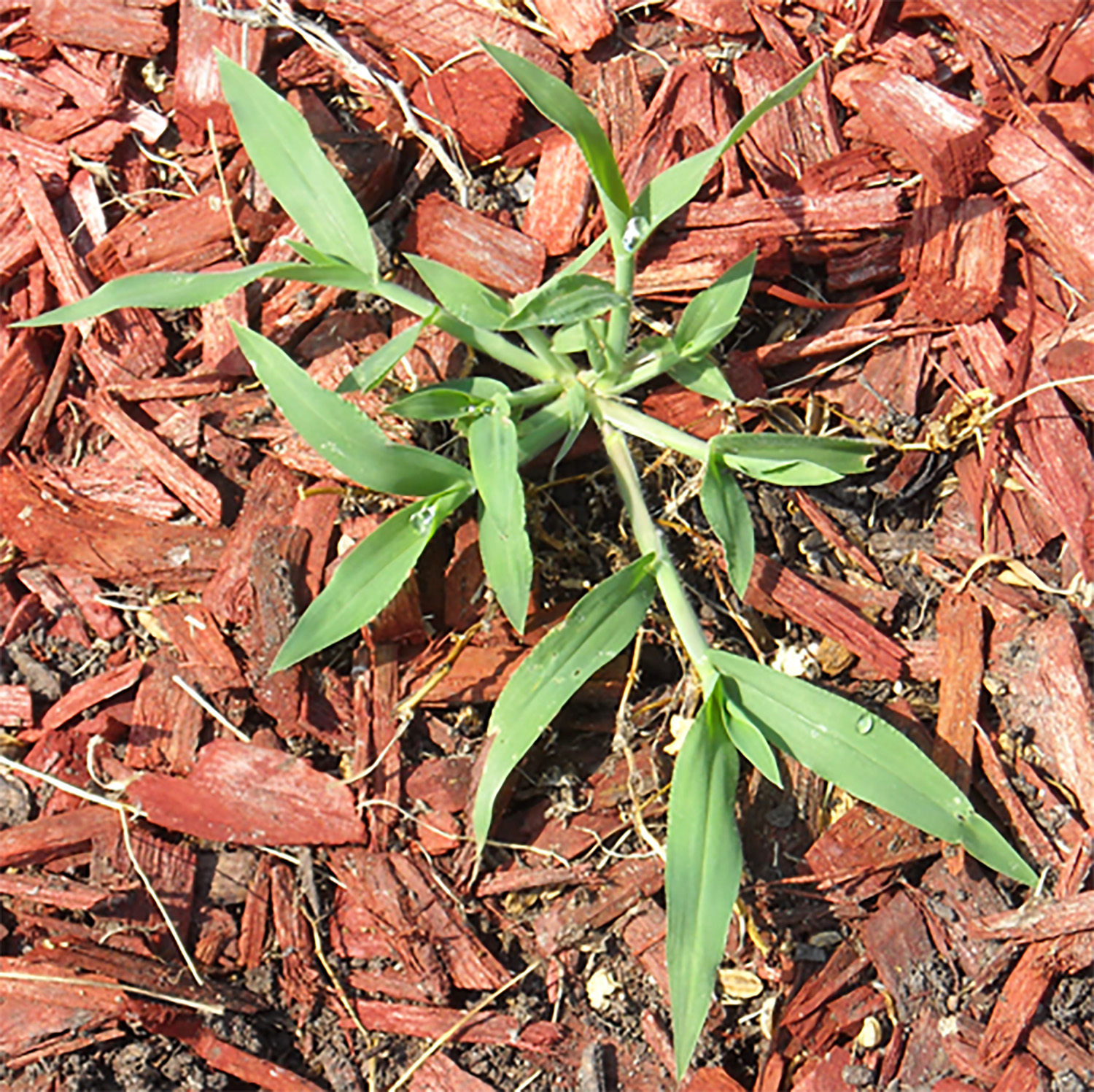
Lawn weeds such as Virginia buttonweed (Diodia virginiana) and crabgrass (Digitaria sp.) are making their presence known. Virginia buttonweed is particularly aggressive. Herbicides that contain 2,4-D, carfentrazone, dicamba, and mecoprop as active ingredients such as Ortho Weed B Gon, Ferti-Lome Weed Free Zone, and Gordon’s Speed Zone will kill buttonweed with multiple applications. St. Augustinegrass and centipedegrass may be damaged if these herbicides are applied in extremely hot (over 90 degrees) weather. Some newer products are also effective against buttonweed and other warm weather lawn weeds. Celsius is produced by Bayer and has thiencarbazone, iodosulfuron, and dicamba as active ingredients. Metsulfuron is the active ingredient in MSM Turf, Manor, and Mansion. These will likely need to be ordered from internet sites. As with any pesticide, read, understand, and follow all label information and instructions for use on any pesticide container.
Summer Color
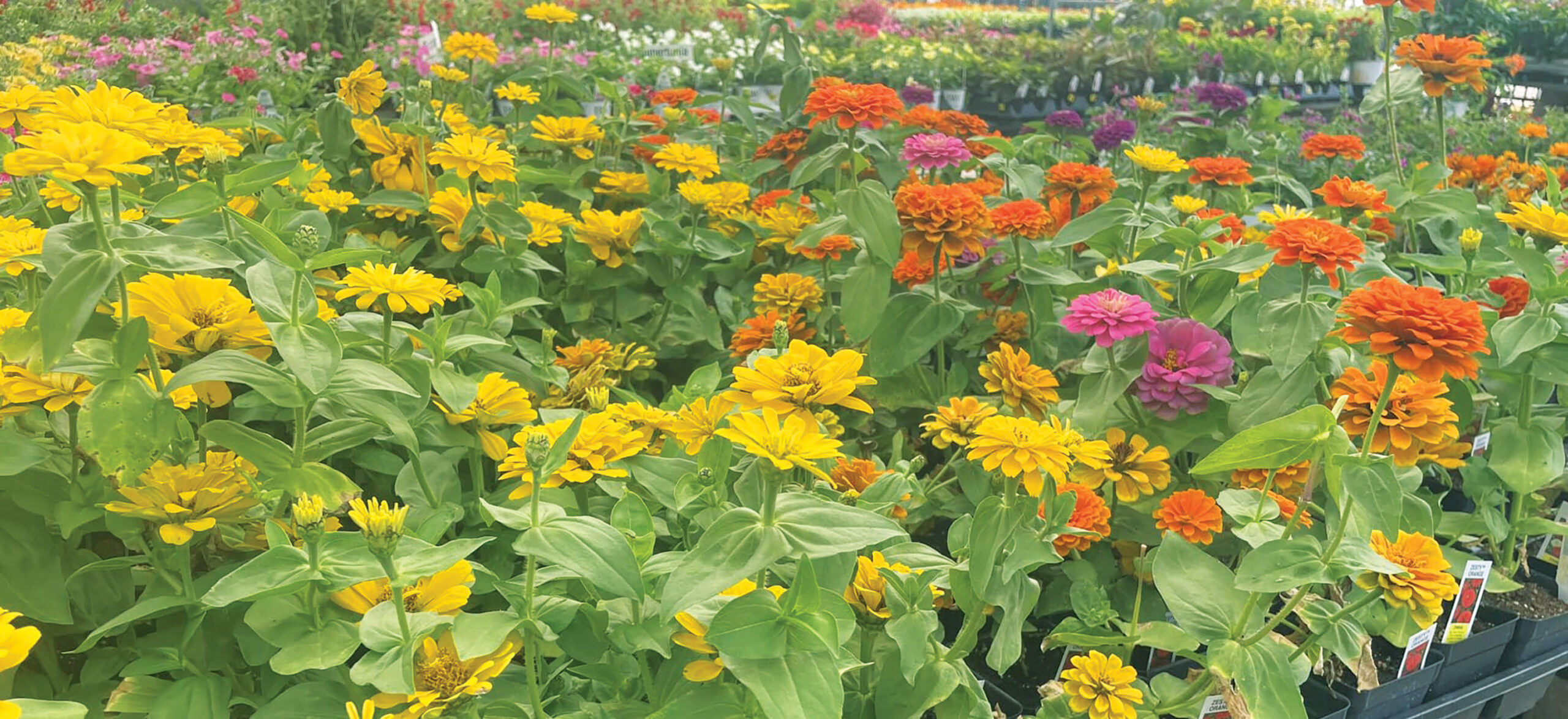
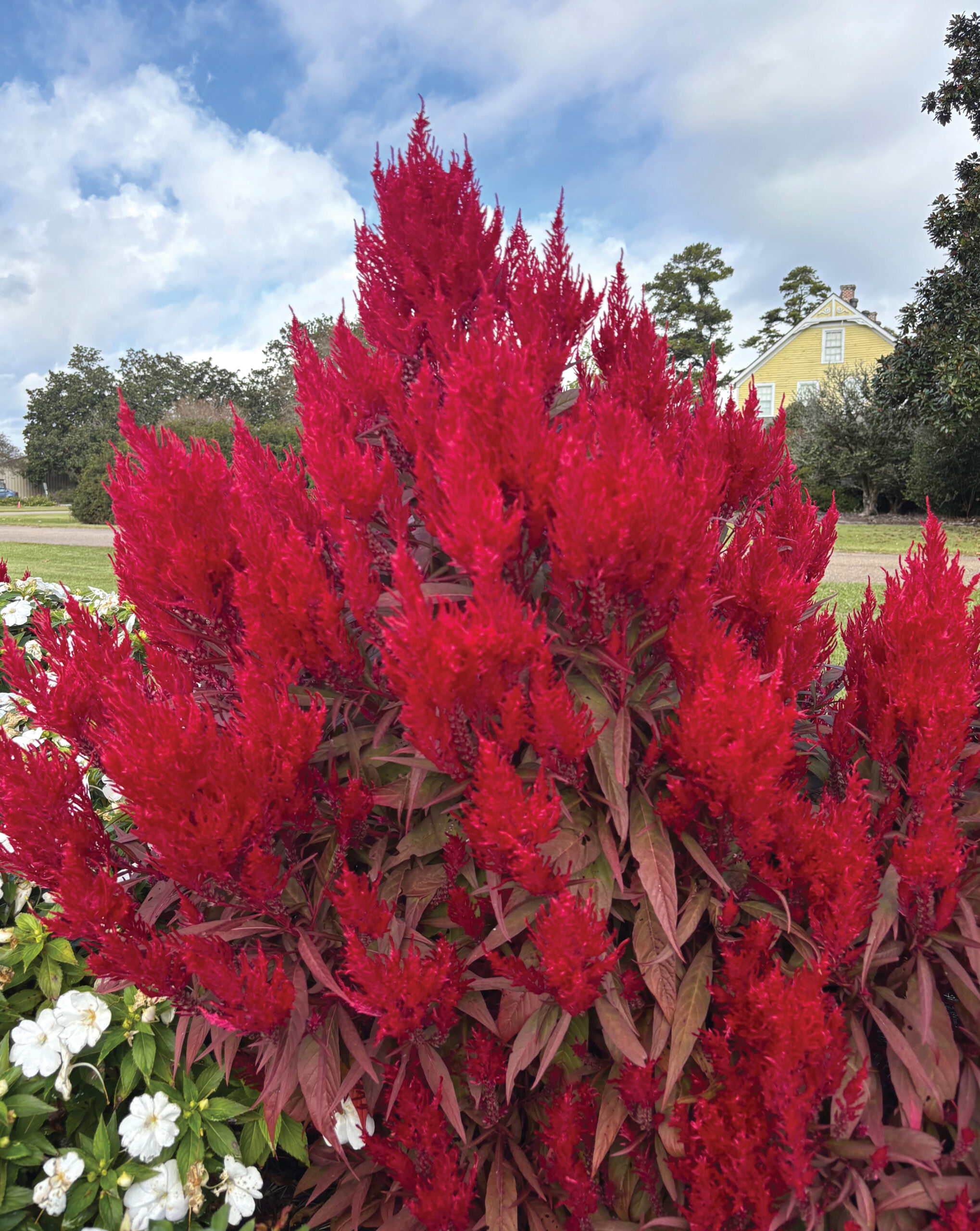
Warm season annuals can go in this month. Consider installing plants designated as Louisiana Super Plants for not only ornamental beds, but also near the vegetable garden to attract pollinating insects! A new warm season Louisiana Super Plant selection for 2026 is ‘Dragon Breath’ Celosia (Celosia argentea) and can you really ask for something better? I say no! Dragon’s Breath Celosia is brilliant red, will get about two feet tall and 15 inches wide, and is just the thing for a long, hot, Louisiana summer! This is the second Celosia to have Louisiana Super Plant Status, the other being ‘Intenz Classic’ which has flowers that are more magenta than red. Combine these two for a blast of bright color that will please not only your eyes, but the eyes of pollinators that will surely swarm around both. And don’t forget about Porterweeds (Stachytarpheta sp.) if planting summer color for pollinators is your Mazda Game Plan. Like Celosias, Porterweeds are perfectly adapted to a Louisiana summer and are low maintenance. They need little in terms of fertilizer and will last until the first killing frost. Porterweeds have shown to be important nectar sources for insect pollinators, so plant a few near the vegetable garden if you see few bees around your squash plants! And who doesn’t love the brilliant sparkle of Zinnias? Zinnias have become more and more popular every summer it seems and the ‘Zesty’ series are Louisiana Super Plants for good reason live up to their acclaim with brilliantly colored double flowers and compact growing habit. Keeping spent flowers pinched off will encourage blooming all summer long. Like with Porterweeds, ‘Zesty’ Zinnias will perform right up until the first killing frost takes them out, so you’ll get bang for your buck all season long. Folks, there’s just no excuse for a drab landscape when all these options are available at local garden centers!
For more information on Louisiana Super Plant selections, find them on Facebook at LSU AgCenter Louisiana Super Plants or on our website: lsuagcenter.com.