


In the Garden with Kerry Heafner | Ferns
I don’t know why I haven’t written more about ferns. A lot of years ago, in what seems like a previous life, ferns were my focus of botanical research. My thesis for my master’s degree focused on two populations of a southwestern fern species in North Carolina, far out of the species range. In college and graduate school, the Southern Appalachians were a great area for learning fern diversity. Yes, at one point, I was a pteridologist. Read all the way through to see what that is. Ferns really are quite interesting botanically because they are so different from flowering and other seed-producing plants. And, they have been common elements in Deep South landscapes for generations.
The Fern Lifecycle
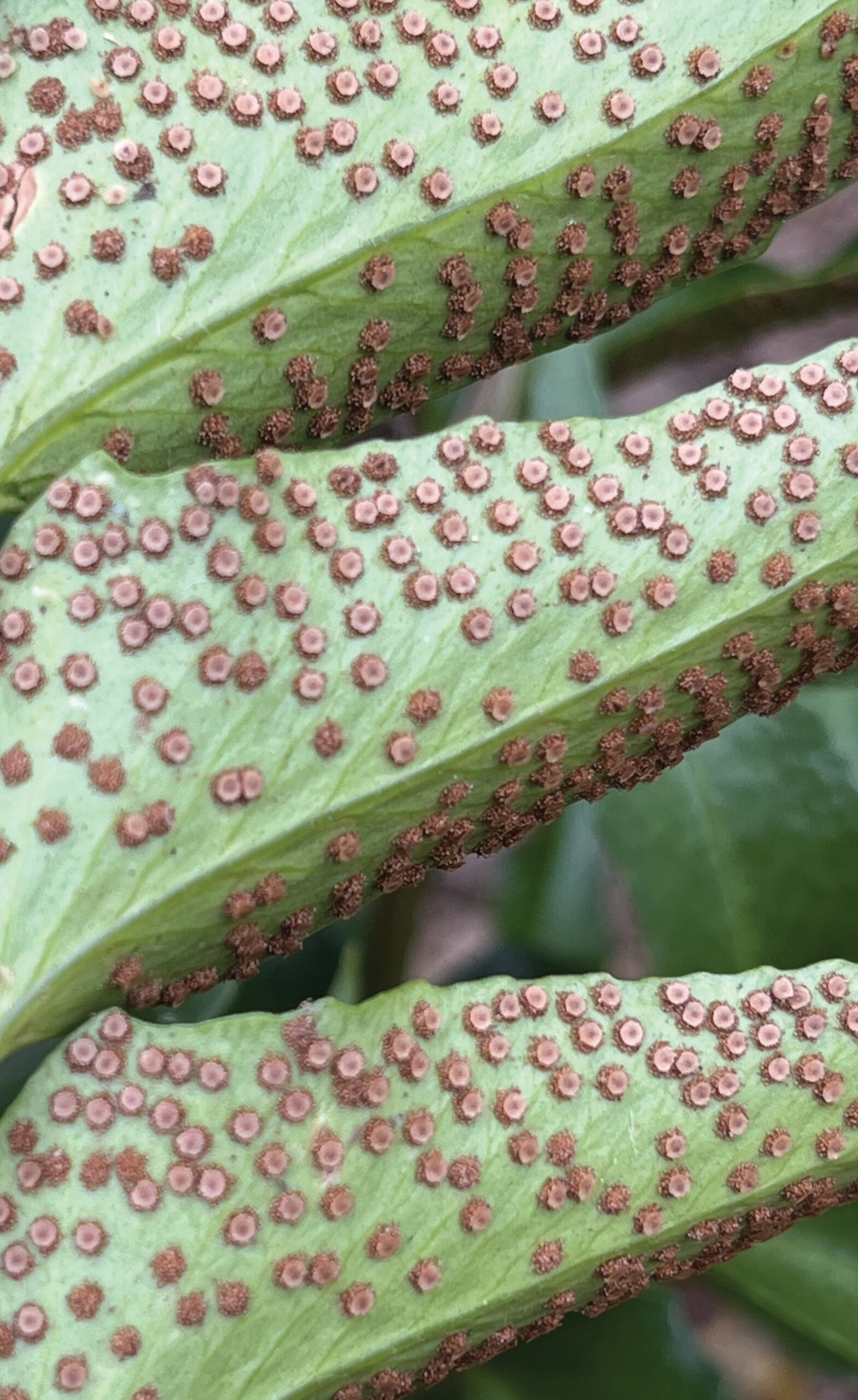
Ferns are not flowering plants, nor do they produce seeds. Rather, they reproduce either vegetatively via a horizontal stem called a rhizome, or they reproduce sexually via spores. Every year, a small number of questions come into the office about “these little bugs or spots on the back of my fern leaves. How do I get rid of them?” Well, those little spots aren’t bugs and you certainly don’t want to remove them from the backs of your fern leaves because there’s more to those little dots than meets the eye. If you look at one of those little dots up close or under magnification, you’ll see that each dot is a cluster of tiny capsules called sporangia (singular: sporangium). Inside each of these tiny capsules are cells, called sporocytes (= spore-producing cells), that undergo meiosis to produce spores. This results in a capsule full of single cells that each have one half the number of chromosomes the original cell had. Spores are what get dispersed from the mother plant. Compare that to seed-producing plants that disperse seeds already equipped with an embryonic new plant ready for a new location. If you add up the number of individual sporangia in each tiny cluster then add up the number of clusters on each leaf, it’s easy to see that one fern can produce hundreds of thousands, if not millions, of dust particle-sized spores. So, the question is if one fern can produce so many spores, why have ferns not taken over the planet? It turns out that spores are not a terribly effective way for plants to produce offspring. A million spores may go flying off in wind currents, but only a few will land in the right area and carry out the next steps of the fern’s lifecycle. The spore must germinate and produce a miniscule plant that’s barely noticeable. This plant is called the gametophyte; it’s the plant that will produce the fern’s sex cells. The spores were produced by the sporophyte; the gametes (sex cells) are produced by the gametophyte. A gigantic gametophyte is about the size of your thumbnail. They tend to be clustered on moist creek banks, the bases of tree trunks, or the brick or mortar foundations of old houses. If you see a fern growing out of a brick at an old house, there’s where a spore landed and produced a gametophyte. Sex cells are produced on the gametophyte via mitosis and when they fuse together a new fern plant is the product. The new plant grows and eventually produces spores and the cycle repeats.
Ferns in the Landscape
Ferns have become staples in gardens and landscapes because their foliage adds color and texture to Boston, Kimberly Queen, and Macho ferns (Nephrolepis exaltata, N. obliterata, and N. biserratta, respectively) plus their hybrids and cultivars have been fixtures on front porches in the South for generations. The ArkLaMiss is still a bit far north for these ferns to not need winter accommodation, but they absolutely love our summers, and as long as they have partial sun to full shade and moist but well-drained potting medium, they will provide shady greenery all summer long. If you want to see Boston ferns growing wild, go down to the Everglades.
Staghorn Ferns (Platycerium sp.) are another example of a tropical fern that loves our summer but hates our winter. Staghorn ferns are epiphytes, meaning they grow on other plants, namely trees, without drawing nutrients from those trees. Most Louisiana gardeners grow Staghorns on a piece of driftwood. The velvety patches on the undersides of some of the leaf lobes are where spores are produced.
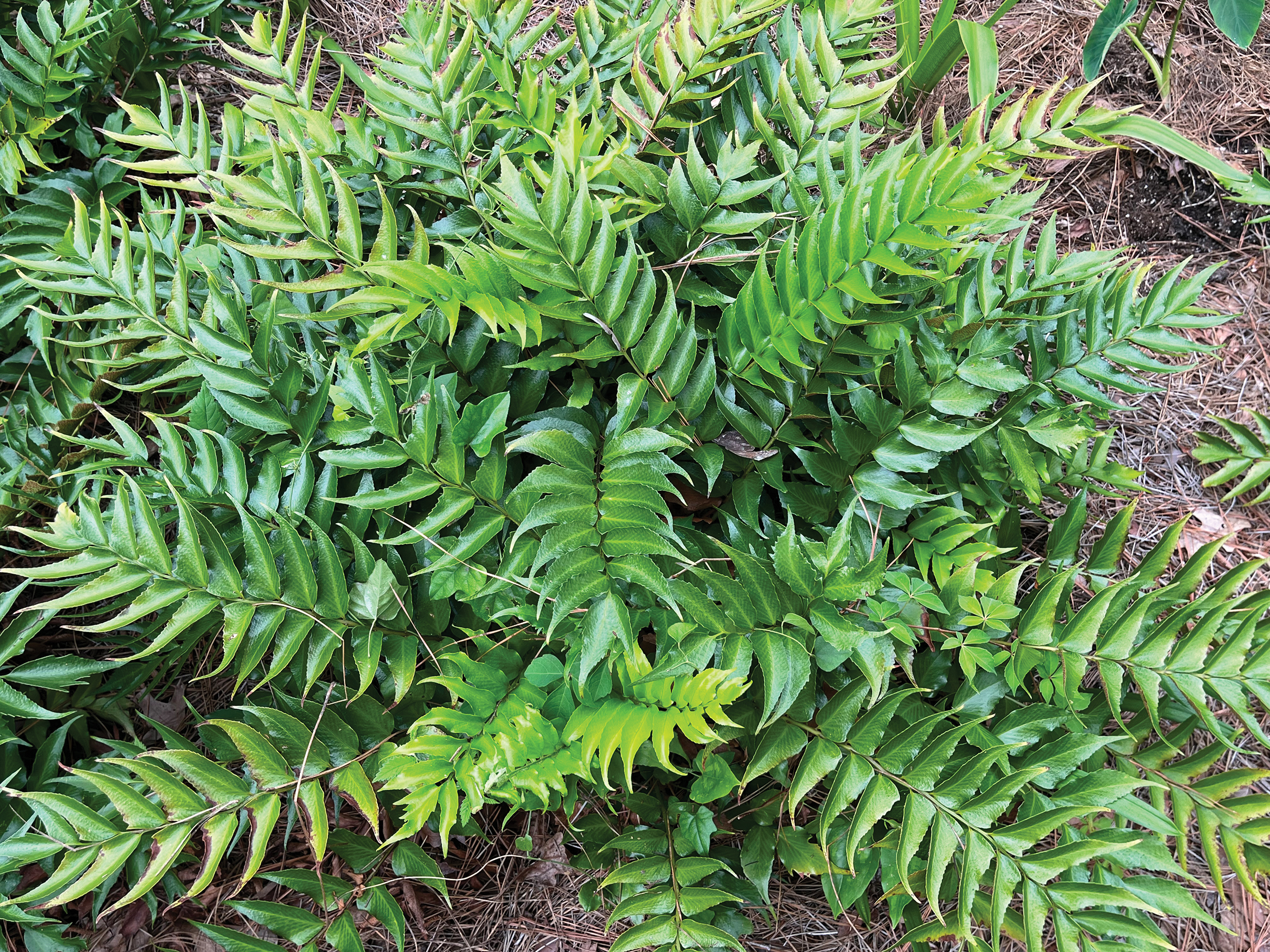
Holly Ferns (Cyrtomium falcataum and C. fortuneii) are common elements in Deep South shade gardens. Their charismatic, glossy green pinnae (leaflets) provide a Holly-like texture, as the name implies, but on a prostrate, low-growing plant instead of a tree or shrub. They also work well in containers for a while and are prolific spore producers. New Holly Ferns often show up not far away from the mother plant.
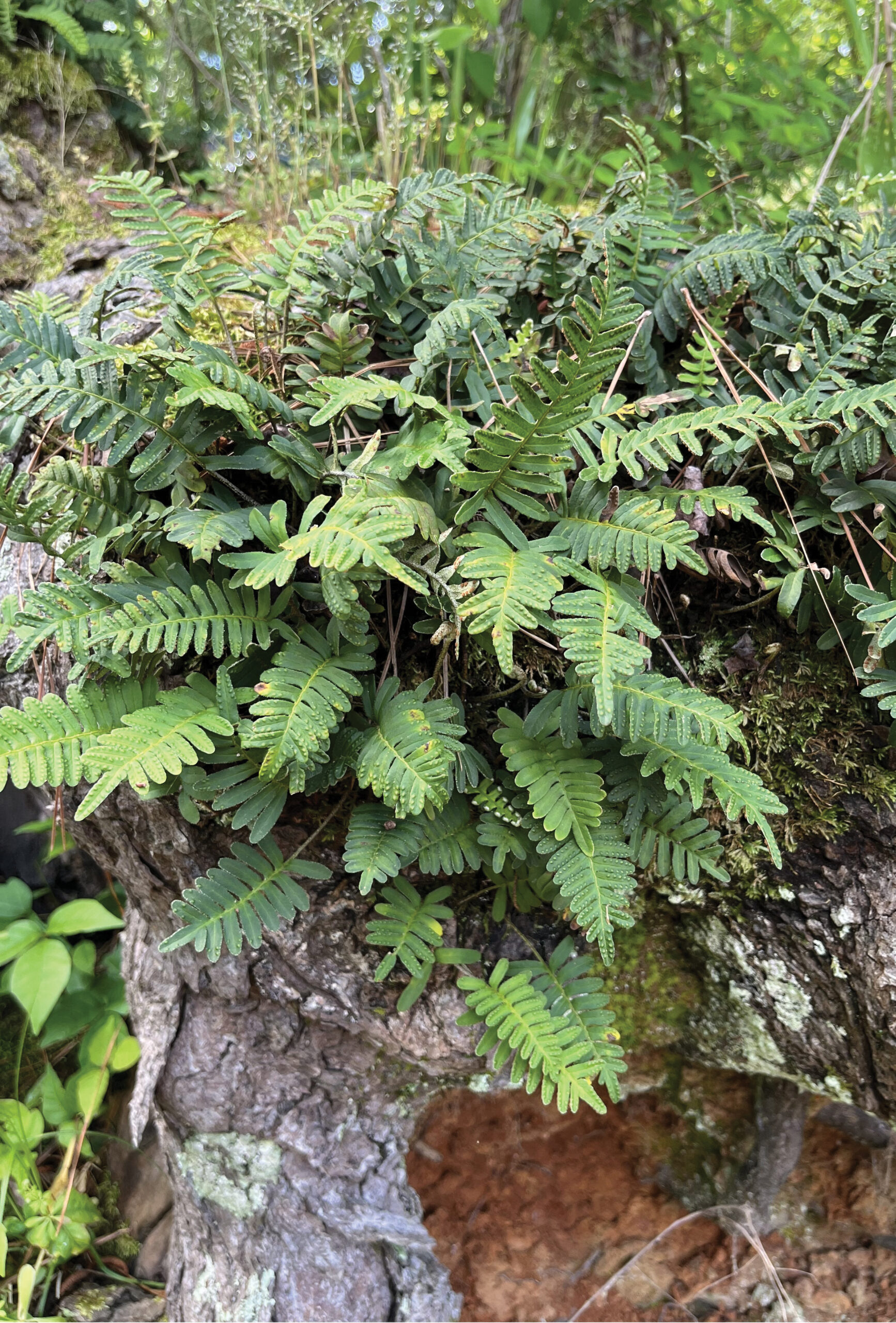
A number of native ferns work very well in Deep South landscapes, and none is more recognizable than Resurrection Fern (Pleopeltis polypodioides) feathering out long, sweeping branches of majestic live oaks. Resurrection Fern is epiphytic and gets its name from metabolically closing up shop in between rain events. Fronds dry out, curl up, and appear dead but they’re very much alive. After a nitrogen-rich rain, they unfurl, green up, and throw spores. Resurrection Fern colonizes several hardwood species and can rarely be found on Eastern Red Cedar.
Christmas Fern (Polystichum acrostichoides) is found in our area, and throughout most of the eastern United States, along creek banks in shaded woodlands. Christmas Fern’s rather low-growing form makes it a great border plant in shade gardens. Fronds from the previous year are often observed lying flat on the ground until they decompose away. Spores are produced only at the tips of some of the current year’s growth.
If there’s a shaded area in your landscape that has drainage issues, you might think about installing ferns that don’t mind wet feet for extended periods. Cinnamon Fern (Osmundastrum cinnamomeum, formerly Osmunda cinnamomea….don’t ask me) is a common inhabitant of low, wet areas, especially along creeks. Cinnamon Ferns are splendid examples of frond dimorphism, meaning the fond that produces the spores looks completely different than the vegetative fronds. Each spring, the spore-producing frond is produced in the very center of the plant and starts off with a greenish color. As spores are formed and as they mature, the fertile frond takes on a rusty-brownish (cinnamon color, as the name suggests) hue until the spores are released and carried away by air currents. The fertile leaf then dies away leaving only green fronds for the rest of the season. Netted Chain Fern (Woodwardia areolata) has a similar habit but is quick to colonize new areas and is often confused with Sensitive Fern (Onoclea sensibilis), which is another dimorphic fern species.
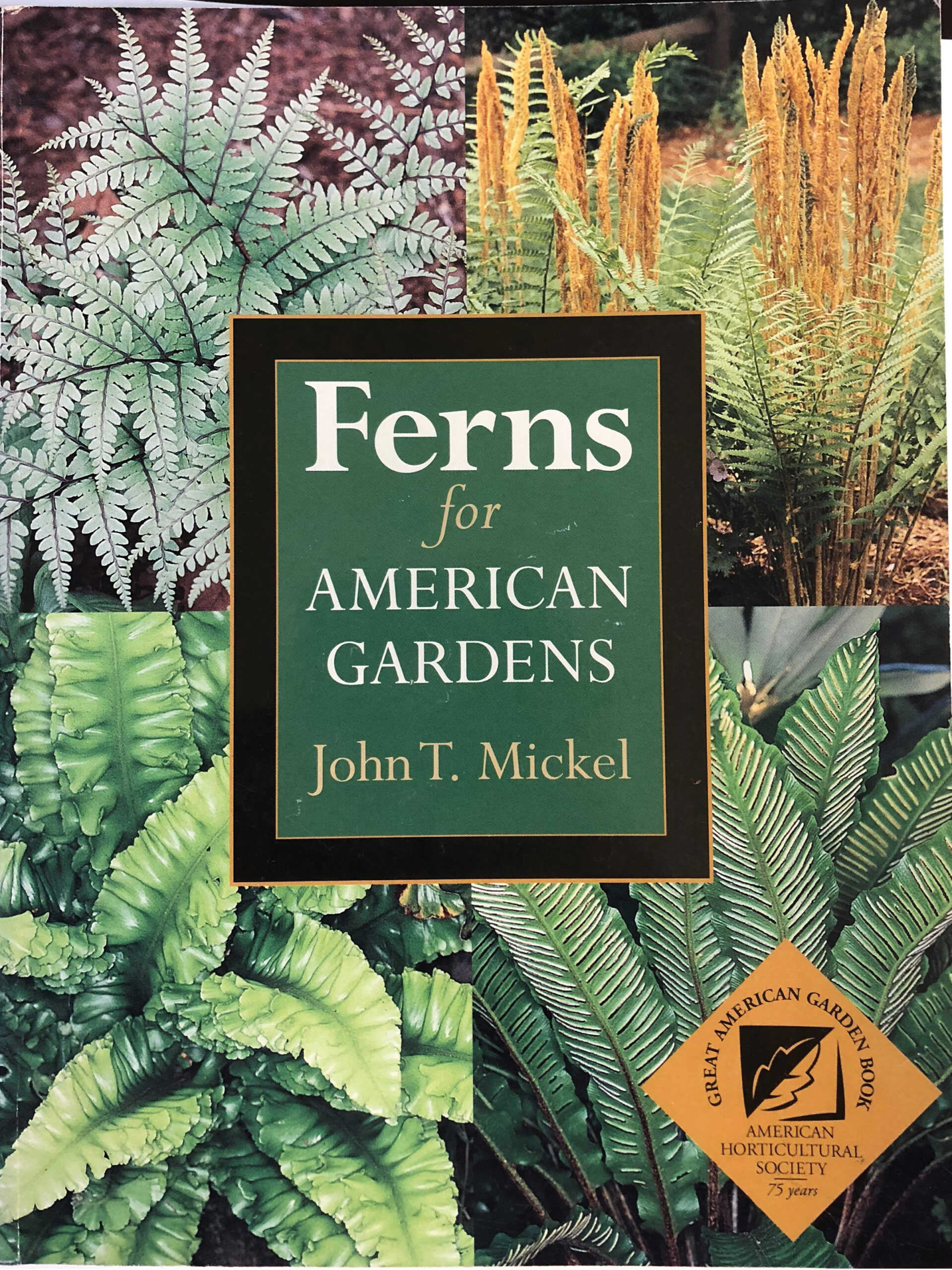
Many more fern species than I can cover here make great additions to perennial beds. I suggest purchasing a copy of Ferns for American Gardens by the late John T. Mickel. Dr. Mickel was Curator of Ferns at the New York Botanical Garden for decades and was a pteridologist (one who studies ferns…now you know) of world renown. I had the pleasure of meeting him in 2004 at the Botanical Society of America meeting in Snowbird, Utah. He even signed my copy of Pteridophytes of Mexico! Pteridologists. Yes, we’re out there!