



In The Garden With Kerry Heafner | Debunking Myths
I love debunking myths. For example, a core group of people still think Andy Griffith based his 1960s sitcom on the small town he grew up in. Not true. In fact, a producer named Sheldon Leonard came up with the show and had to pitch the idea to Griffith twice before he agreed to it. Mayberry was never overtly based on Griffith’s hometown. That show became set in North Carolina only because, during the Thursday table readings, Andy would pencil in the names of people and places familiar to him in his pre-entertainment years, so the dialog sounded more authentic. Yet, despite repeated denials by Griffith and other cast members in interviews, fans of the show still think Mayberry and everything about it was based on Mt. Airy, North Carolina. The resulting economic boost due to tourism helps perpetuate the myth.
Similarly, there’s the notion that mothballs and moth crystals repel snakes. This is a myth with hazards and potential legalities, so let’s look at this.
Mothballs are made of an organic compound called naphthalene. By organic, I mean it’s made of carbon… the chemist’s definition of “organic.” Specifically, naphthalene is made of two rings of carbon atoms, where two of the carbons are shared. As indicated by ending with “…ene,” there are double covalent bonds between alternating carbon atoms. Basically, naphthalene is a double benzene ring. That’s benzene, y’all. A potentially dangerous, organic compound.
Moth crystals, on the other hand, are made of paradichlorobenzene (PDB). Again: benzene. One molecule of PDB is a ring of six carbon atoms with alternating double covalent bonds (a single benzene ring) and chloride groups attached to carbon 1 (at 12:00) and carbon 4 (at 6:00). Moth crystals are sometimes incorporated into cleaning products, and, like mothballs, are used to deter moths, silverfish, and other insects from damaging stored clothes. When I was in graduate school, I used aqueous PDB (which means water saturated with PDB…or was it PDB saturated with water?) to arrest mitotic metaphase in root tip cells so I could count the chromosomes of the plants we were studying. Now, think about that. A few grams of PDB in about two hundred milliliters of distilled water can prevent a cell’s nucleus from dividing properly. That should be alarming.
Yet, there are those of you out there using both mothballs and moth crystals outdoors in your landscapes and gardens because you either heard, or read, or were told by someone they deter snakes. They don’t. You’ve been woefully misinformed.
Snakes do have nostrils and can take in odors though them. But this is not the major way snakes receive and evaluate scents. A snake’s main smeller is different than ours. It uses its forked tongue to detect chemical signals and to determine from which direction the chemical signal is coming. A patch of specialized receptor cells, called a Jacobsen’s Organ (also found in some mammals but not us), located on the roof of the mouth, detects non-volatile, organic compounds and helps the snake determine if the odor is from prey or a predator. Both naphthalene and paradichlorobenzene are extremely volatile chemicals and are not scents snakes interpret as a danger.
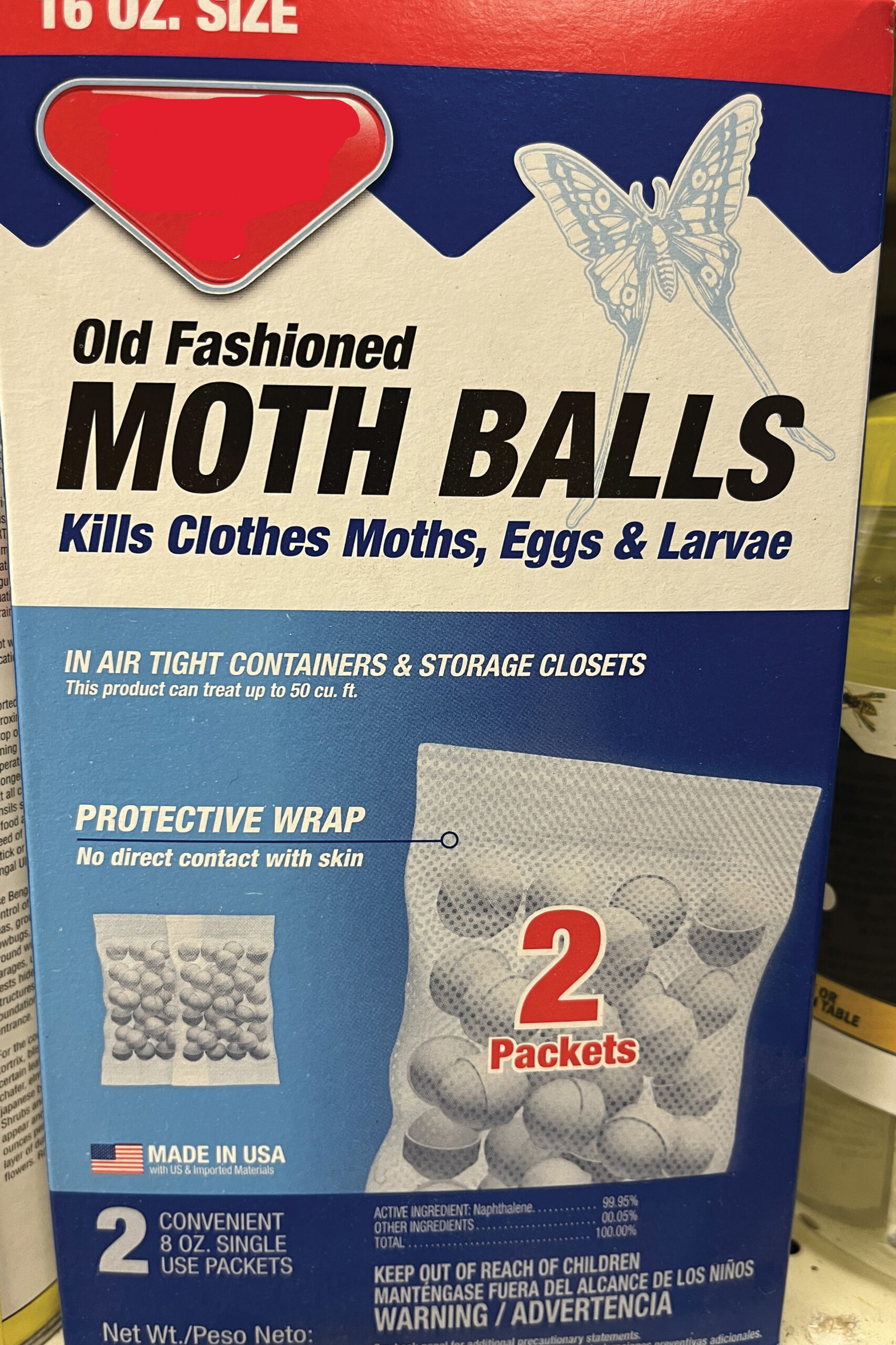
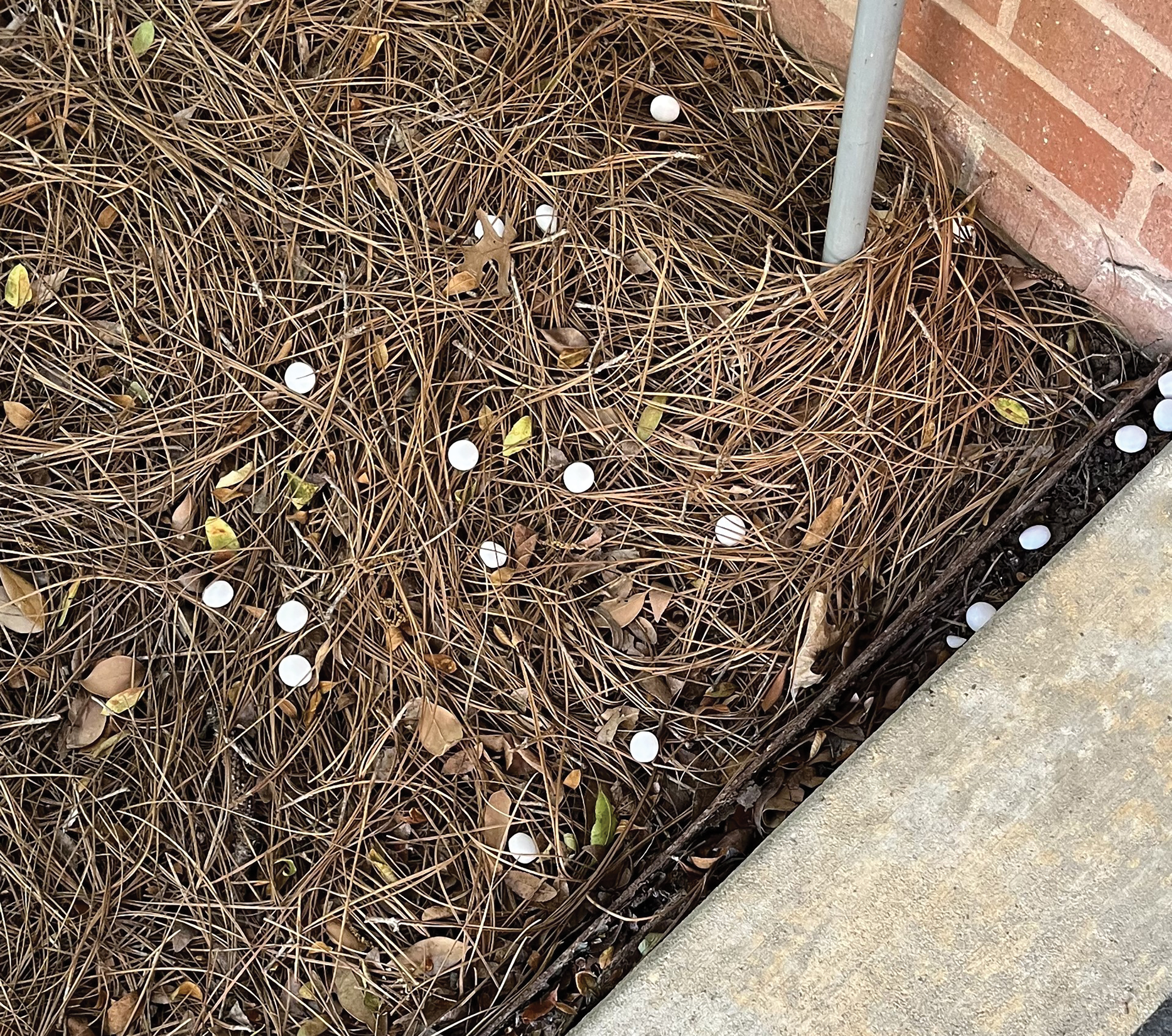
There’s another reason mothballs and moth crystals should not be used outside. They are pesticides that specifically target moths, their larvae, and a few other insects. They’re no different than an insecticide you would purchase from a garden center. They are not labeled for outdoor use. Just because it’s an organic compound does not mean it should be used in gardens. The front of the box says specifically “in airtight containers and storage closets.” And just because being used outdoors isn’t mentioned specifically on the package label doesn’t mean it’s okay to use them outdoors. Quite the opposite. Any insecticide should be used only in a manner that is consistent with the package label. To do otherwise is illegal and can be taken to court. Also, naphthalene and PDB are toxic to animals and humans. I was horrified when I recently saw mothballs scattered on the ground near some shrubbery at a local elementary school and another public building in Monroe. Folks, don’t do this. Naphthalene can leach into ground water and is extremely toxic if ingested, and we all know how little ones want to pick something up and put it in their mouth. Using mothballs this way is dangerous and illegal. And it simply doesn’t work.
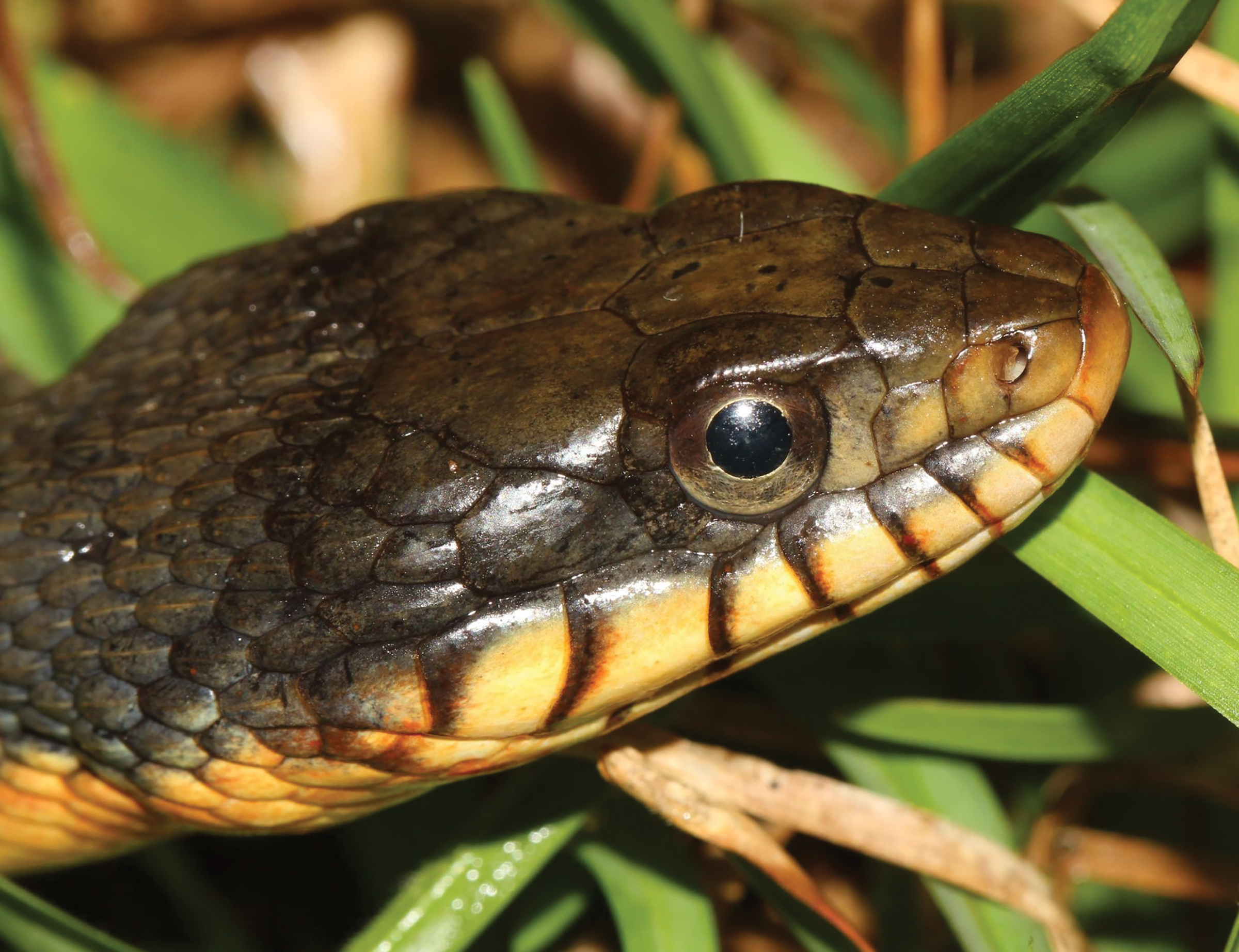
Louisiana is home to forty-seven native snake species. Only seven species are venomous. If you encounter a snake in your garden, there’s a better than average chance it’s nonvenomous. There are a number of species of water snakes that are misidentified as Northern Cottonmouths. They prey on fish and other aquatic life. Snakes are beneficial to have around because they prey on rodents, insects, and even other snakes that we may not want in our gardens and landscapes. Similarly, beneficial Rat Snakes get misidentified as Eastern Copperheads, which are also beneficial but happen to be venomous. The best way to deter snakes from your landscape is to not provide them with either habitat or prey. Keep grass mowed to the recommended height (3 to 4 inches for St. Augustine; 1 to 2 inches for everything else). Regularly take care of burn piles but coincide with favorable weather conditions and notices of parish burn bans. Remove debris piles from your property, too. Snakes like to hide and if given an opportunity, will retreat to cover to avoid confrontation and potential danger. If your property isn’t a suitable habitat, snakes will move on. Our misunderstanding of snakes is approaching a ridiculous level. The truth is, snakes, even venomous ones, pose no real threat to humans unless provoked or surprised. Like any other wild animal, a snake will defend itself if it feels it must. Defensive behavior is mistaken for “aggressive” behavior. I have yet to meet a snake with a Napoleon complex. Humans are another story.
Even as a field botanist in a previous life (meaning years ago), my own encounters with snakes in the wild have been limited. Back in undergrad, our ecology class took a field trip to the Georgia barrier islands. We encountered a Timber Rattlesnake while walking in the surf on Ossabaw Island of all places. It had rafted over from one of the other islands on some tree debris. While working in southern Georgia in 1992, we encountered only one venomous snake all summer, a Dusky Pygmy Rattlesnake. A couple years later, when conducting research in North Carolina for my master’s degree, I encountered another Timber Rattlesnake coiled up under a rock at one of my study sites. Good thing I looked before just blindly sticking my hand under the rock to grab one of the plants I was studying. It was during the heat of the day, and that snake could not have cared less that I was there. It didn’t even rattle. In fact, throughout my time in the Biology Department at Appalachian State back in the early and mid ‘90s, it wasn’t unusual to open a drawer in our lab and find a snake curled up on the pipettes that had escaped Dr. VanDevender’s herpetology lab. No cause for alarm. We just simply yelled down the hall, “Wayne, come get your snake!” And he would, often saying, “I wondered where you went!” to the runaway reptile. To this day, I often wonder if his Bullsnake ever came back.