



In The Garden With Kerry Heafner
February is Black History Month. I’m all about paying tribute to the past even if that means recognizing the abomination of slavery turning out to have a profound impact on the foodways of the southern United States. That impact is felt to this day not only in our kitchens but also in our vegetable gardens. In a twist of irony, our country’s darkest chapter influenced southern horticulture and led to some of our most beloved fare. Okra, watermelons, and field peas (purplehulls and others) have become staples in Deep South gardens. All three crops came to the United States from tropical Africa during the slave trade and stayed. They thrive in our hot, humid summers and can be productive until fall’s first killing frost. And, all three are, in their own right, delicious. Is there anything better than a pot of peas with a chunk of side meat or ham hock simmering on the stove on a cold day? Add a wedge of hot cornbread and that’s a meal. A ripe, juicy watermelon plucked fresh off the vine on a hot August day can simultaneously quinch a thirst and be a sweet, nutritious snack. Okra is delicious fried, dried, stewed, combined with tomatoes, put in gumbo, or straight off the plant. I said what I said! Young, tender okra pods straight off the vine are fine for fresh eating. Try that this year.
This month, I want to focus on okra because there’s an interesting story to tell. Yes, it’s February and too early to plant a summer crop like okra. But, start planning for it now; okra should have a place in every ArkLaMiss vegetable garden. Okra is super easy to grow. Throw a seed down most anywhere and it will germinate! Okra seeds germinate quicker if they’re soaked in tepid water for twenty-four hours prior to sowing. My grandfather soaked his okra seeds in kerosene for three hours. I don’t recommend doing that, but it obviously worked. Then again, many gardeners don’t soak okra seeds at all, and they germinate fine but a little slower. As far as what okra variety to grow, take your pick. There are so many to choose from and you can’t go wrong with any of them. For the last couple of seasons, I’ve been growing a South Louisiana heirloom called ‘Pitre’s Red Bush’ given to me by a seed saver in Elton. Tall, vigorous plants produce until frost. This year, I left the root systems in the ground for added organic matter. The stems were chopped up and added to the compost pile. And, let’s be honest, okra plants are excellent pollinator plants. Being in the hibiscus family, their large flowers add a splash of color to the landscape and attract a host of pollinating insects that benefit other vegetables in the garden and plants in the landscape.
Okra (Abelmoschus esculentus, and probably A. caillei and A. manihot) was brought to the Americas from tropical East Africa during the slave trade and has become a staple on southern tables, especially the Deep South. It arrived in the southeastern United States sometime in the early 1700s and quickly made its way up the eastern seaboard. Of course, antebellum cotton plantations pocked the southern landscape, and northwestern Louisiana was no exception. When the Civil War and slavery ended, some freed slaves chose to remain on the properties they had worked on and sharecrop. They grew some of the same crops that had been cultivated for generations, well into the 1900s, and okra is a good example of this.
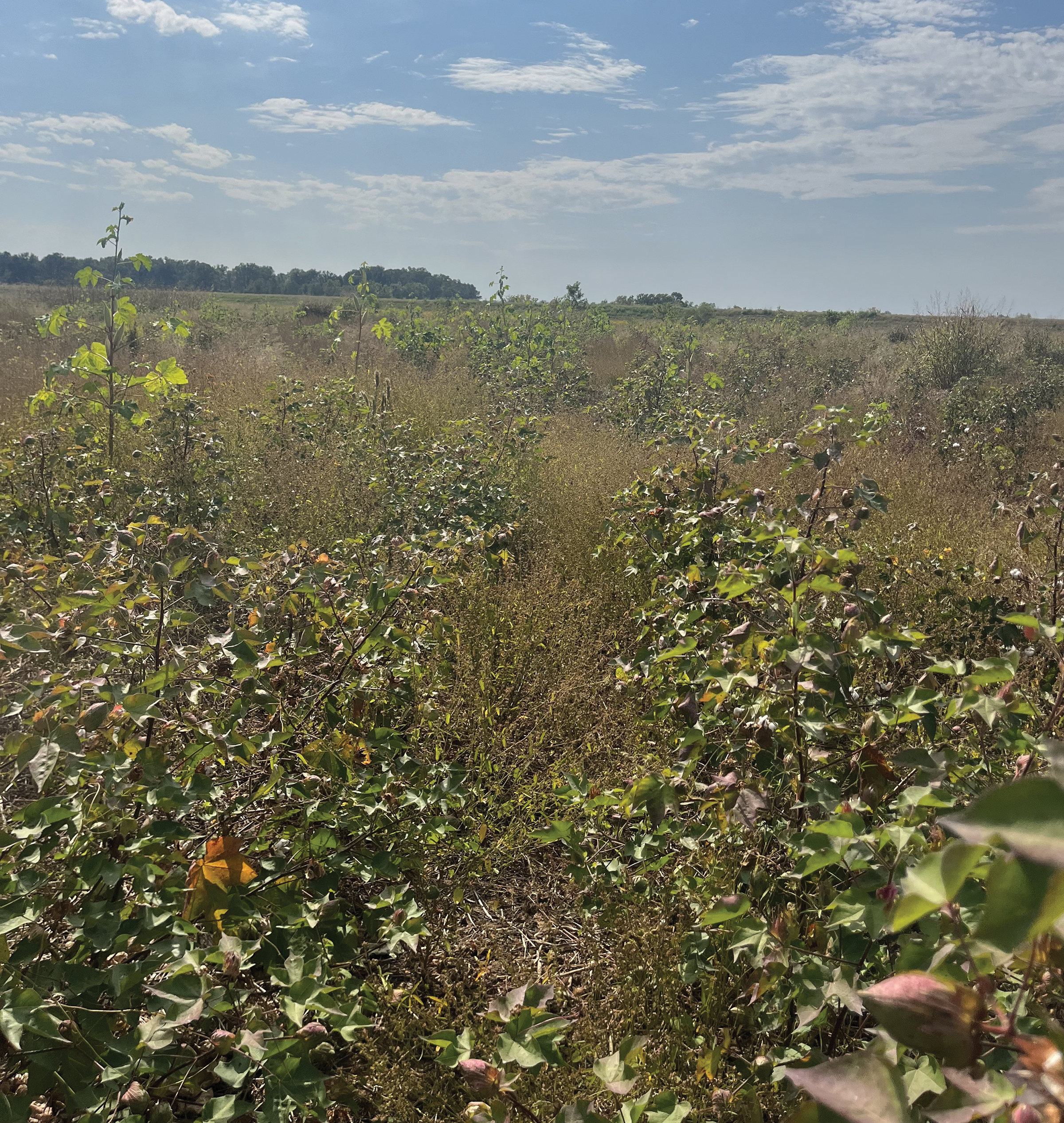
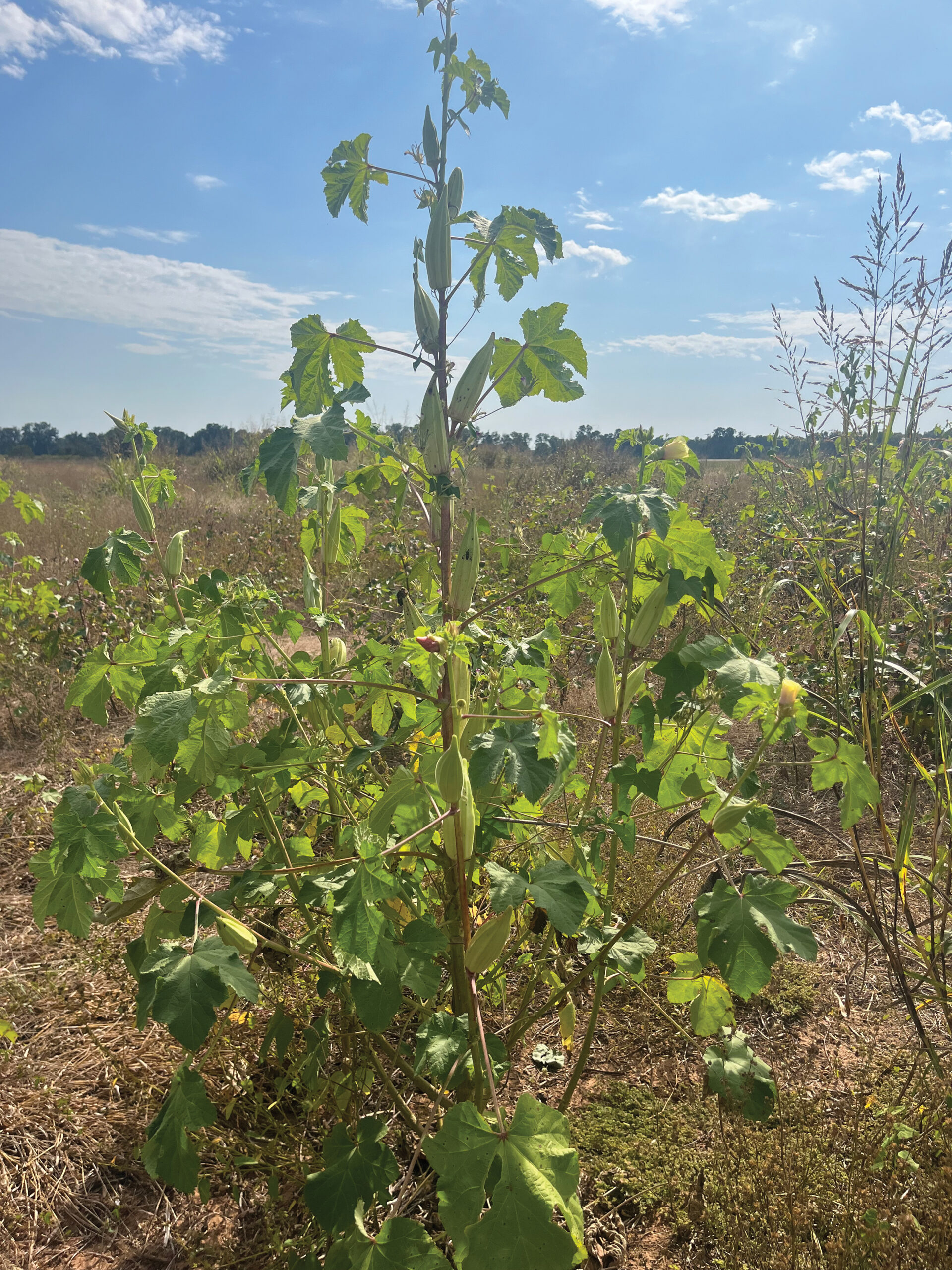
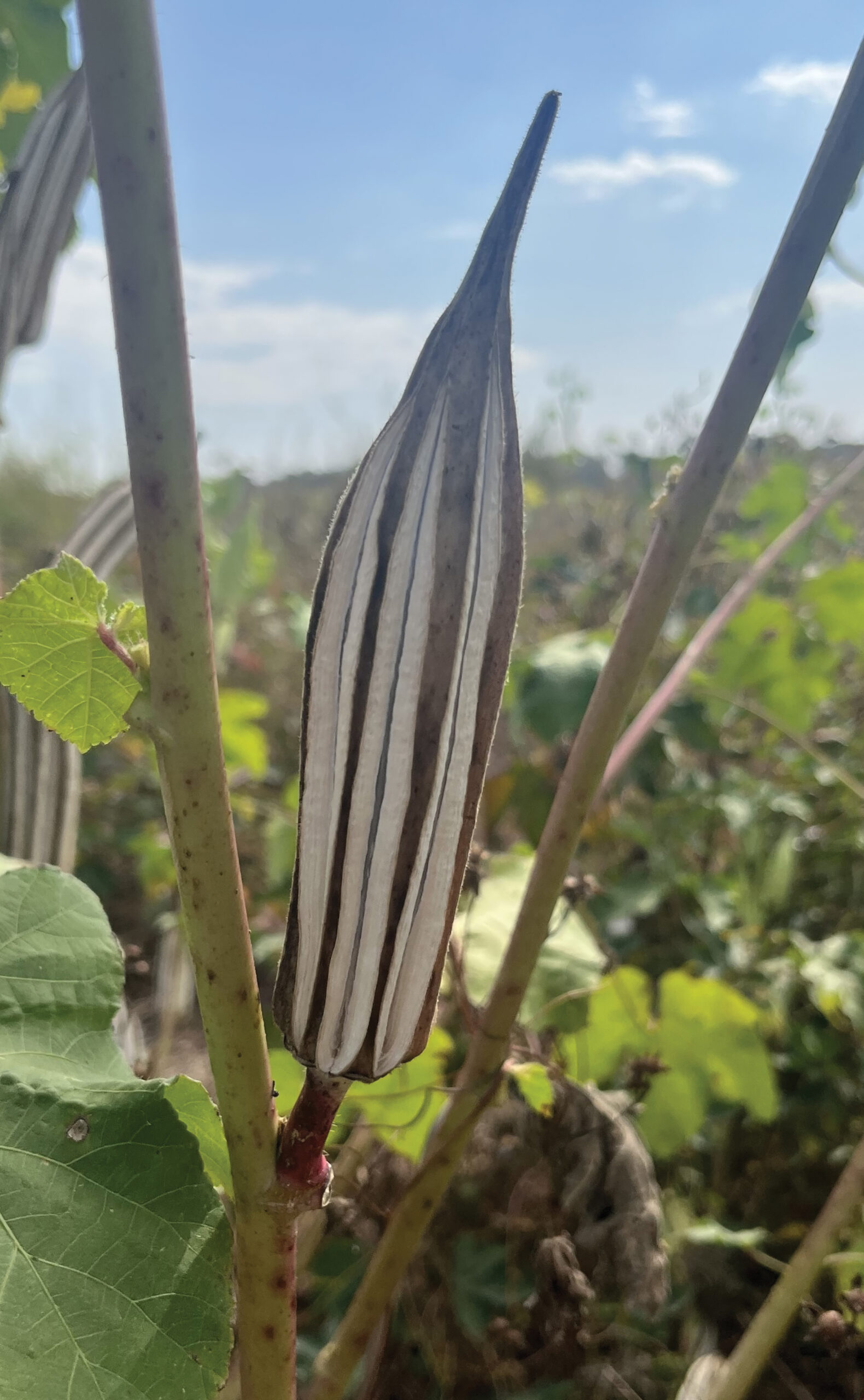
On a warm, sunny Friday back in October, while I was headed to LSU’s Red River Research Station to speak at a homesteaders’ conference, I caught up with my friend and fellow plant nerd Rob McElwee of Coushatta. Rob showed me an old apple tree at a homesite, then took me to an interesting site between Coushatta and Bossier City. The old Ninock Plantation in the Loggy Bayou area of Red River Parish was established in the 1830s by Peabody Atkinson Morse, a relative of Samuel F.B. Morse of Morse Cod noteriety. The original plantation home is long gone, but the old cotton fields are still evident along what is now Highway 71. In certain areas of these old fields, Rob has found several African and native plants that have naturalized and grow as weeds with a host of other plants that were no doubt introduced to this area by slaves. Among them is a landrace of okra that has persisted since the end of sharecropping soon after World War II. At some point, the tenant farmers evidently left some unharvested and the crop basically went feral by building up a seedbank in the soil. It pops up in fields along with a feral cotton (Gossypium sp.), citron melon (Citrullus amarus), an African morning glory (Ipomea cairica), benne or sesame (Sesamum indicum), and an unusual ground cherry (Physalis sp.).
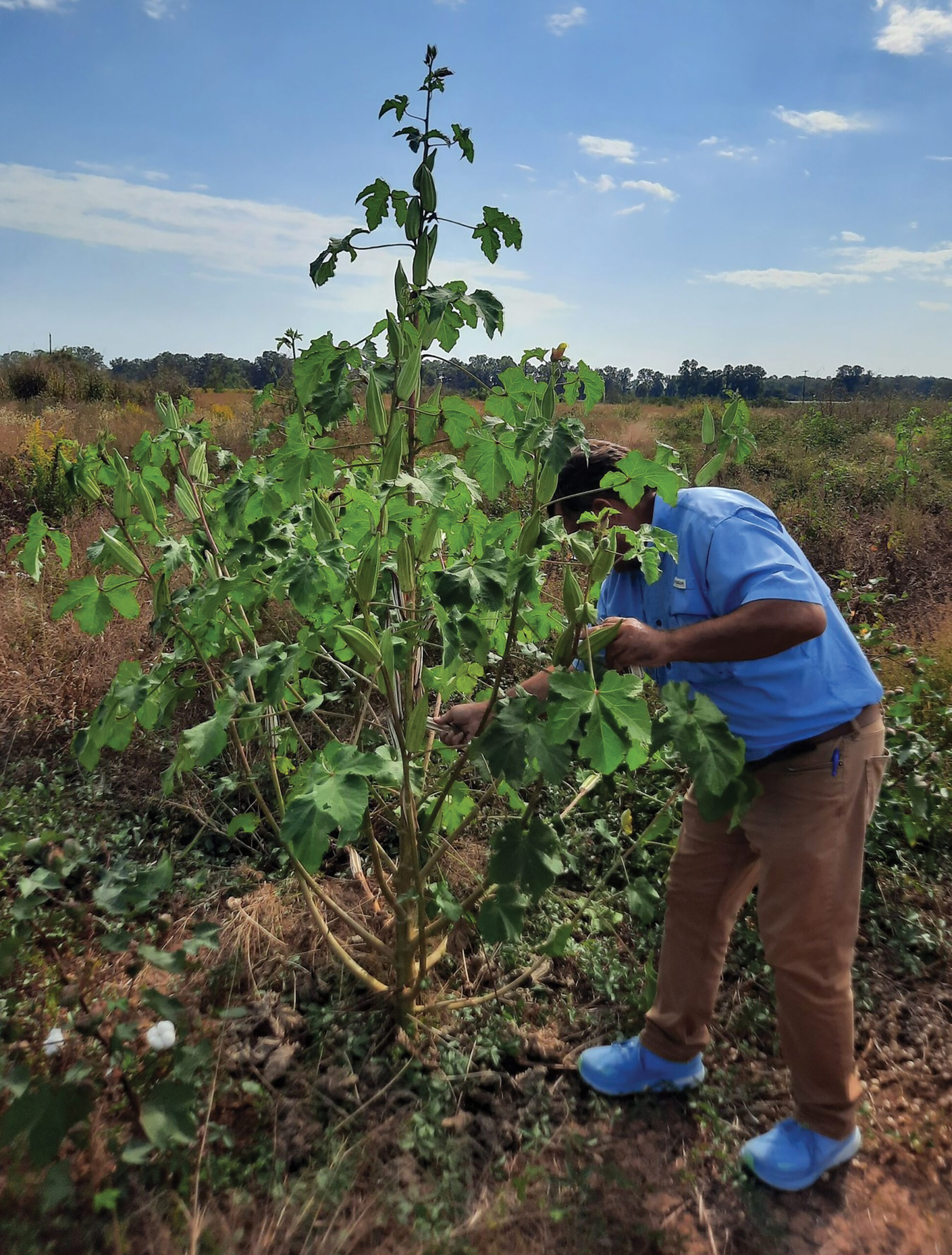
The Ninock okra is a robust plant. It gets fairly tall and bushy. The large pods are fat, pleated, and evidently mature very quickly and must be harvested when young. It seems to be right at home in northern Louisiana. Rob has found feral okras in several other locations in that area, namely in the Harmon community. All of these landraces face extinction due to herbicides and big commodity agriculture if they aren’t preserved. It would be a shame if they went away. They offer us a look into the past, even if that past is mostly unpleasant. Of course, I collected dried pods of the Ninock okra for seeds which I hope to grow out this season for the North Louisiana Seed Preservation Program. This year, I will be moving much of the seed garden to LSU’s Sweet Potato Research Station in Chase, just south of Winnsboro. I’ll keep you updated on the progress of this delicious and interesting crop!