



Historical Impressions | Some People Get Higher Than Others on New Year’s
by Guy Miller, Vice Chair Emeritus, Chennault Aviation and Military Museum
Although most of us wish to spend the New Year celebration with family or friends, some occupations require people on duty who don’t have that choice. First responders, medical and military personnel are obvious exceptions. But they are not the only ones.
The first New Year spent in space was during the Skylab 4 mission. Astronauts Gerry Carr, Ed Gibson and Bill Pogue were six weeks into an 84-day mission when the transition from 1973 to 1974 took place. Prior to Skylab, space missions had been of short duration and none had been scheduled over a New Year holiday.
Overworked and exhausted after six weeks in space, Mission Control agreed to let Skylab’s crew set aside routine chores to be completed when time permitted and have undisturbed meals and time after dinner in the evening. It was not much of a celebration.
Since that first New Year’s Day on Skylab 4, the New Year has been celebrated in space by 116 people from ten countries- America, Russia, Japan, Italy, Holland, Canada, France, Britain, Germany and, in 2023, a Denmark. Seventeen women have spent New Year’s Day in orbit. Twenty-one people have spent two New Year’s in space, four have spent three and Russian cosmonaut Anton Shkaplerov has watched one year turn to the next four times.
The second January 1 in space was spent by cosmonauts aboard the Salyut 6 space station in 1978. Then in 1988, Russians again spent New Year’s Day aboard Mir. From 1978 until 1999 at least two humans were aboard Mir on January 1 including a German astronaut and two Americans.
The dawn of 1998 was troubled by a failure of Mir’s motion control system computer. To reboot the system, the entire station except for the base block and the Kvant-1 astrophysics module was powered down to conserve electricity. When Mir’s second-to-last crew left in August 1999, the station remained unoccupied for the transition into 2000.
Although no one was in space at the dawn of 2000, from 2001 to the present day the International Space Station has been in orbit and it’s long duration missions mean celebrating Christmas and New Year in space has become a normal occurrence.
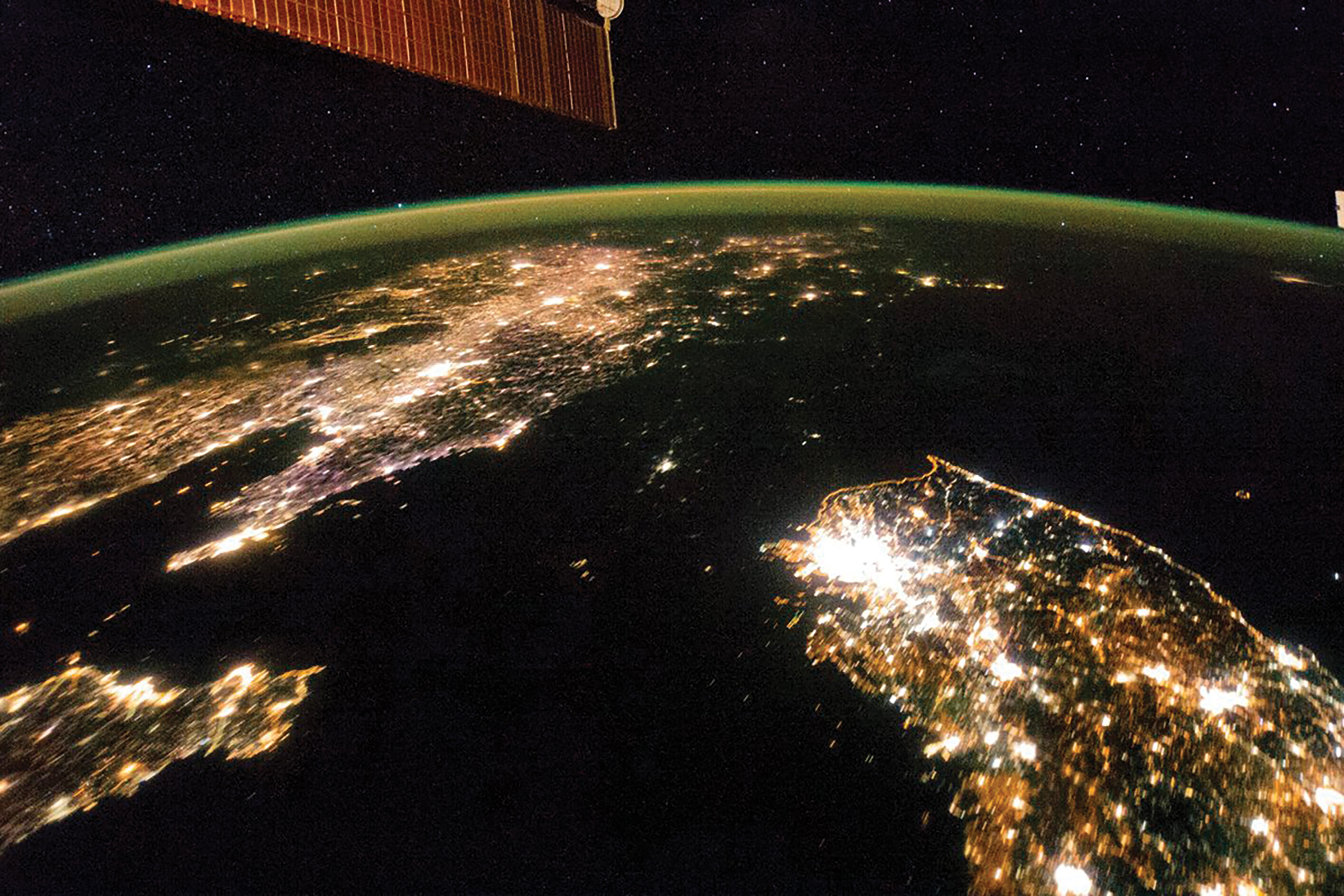
The New Year aboard ISS can in theory be celebrated 16 times because the station makes 16 Earth orbits in a day. Notwithstanding, the ISS crew usually celebrates the New Year according based upon their local time back on Earth. The station runs on Greenwich Mean Time but in spite of their on-board clocks the crew usually exchanges greetings with mission controllers in Houston, Texas at GMT-6 hours and, if cosmonauts are on board, with Moscow at GMT+3 hours.
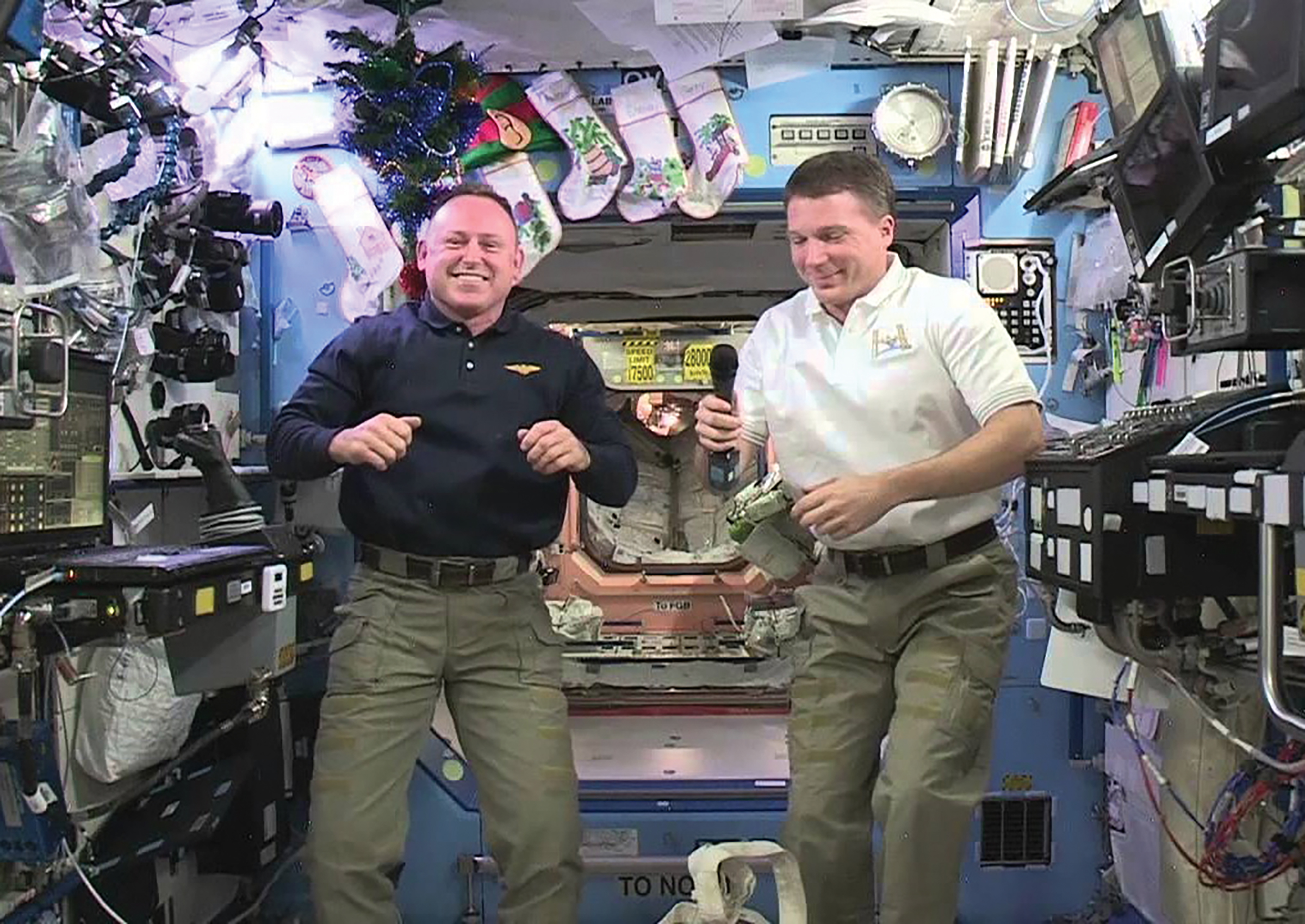
New Year’s Day aboard the ISS is a quiet holiday. “The first day of the New Year,” said one NASA press release, “involved only a few routine maintenance tasks, exercise and time off for the crew.” The astronauts often watch the Earth for a glimpse of fireworks and share hope for a good coming year. “This is a good time,” said astronaut Don Pettit, “to reflect upon where we have all been and where we might want to go.” If possible, the crew communicates with family as well.
In 2001 mission commander Bill Shepherd honored his military background by sharing a poem about his experience aboard the ISS. “In long-standing naval tradition, the first entry in a ship’s log for the New Year is always recorded in prose.” He then talked about about his crew’s journey, “orbiting high above Earth…traveling our destined journey beyond realm of sea voyage or flight…” and because January 1, 2001 marked the official start of the 21st century- “counting the last thousand years done”.
Shepherd thought being in this “new age and place” had the romance and adventure of the past and the scientific and technological possibilities of the future. “On this ship’s deck sits no helm now / Rudder, sheet and rigs long since gone / but here still—a pull to go places / Beyond lines where sky meets the dawn…Though star trackers mark Altair and Vega, same as mariners eyed long ago, we are still as wayfinders of knowledge, seeking new things that mankind should know.”
Every January 1 aboard the ISS to date has had at least two spacefarers circling our planet. Expedition 4 had crewmen Yuri Onufrienko, Carl Walz and Dan Bursch relaxing and talking to family and friends. Expedition 6 crew Ken Bowersox, Nikolai Budarin and Don Pettit (the first American to be in orbit twice for the New Year in 2012) the dawn of 2003 occurred during their official sleep shift.
After the shuttle Columbia’s loss during re-entry, the ISS only had a skeleton staff of two men on rotating six-month tours during the New Year’s of 2004, 2005 and 2006. New Year’s 2007 had three crew members aboard. This doubled to six in New Year 2011. Seven-person operations have been routine since 2021.
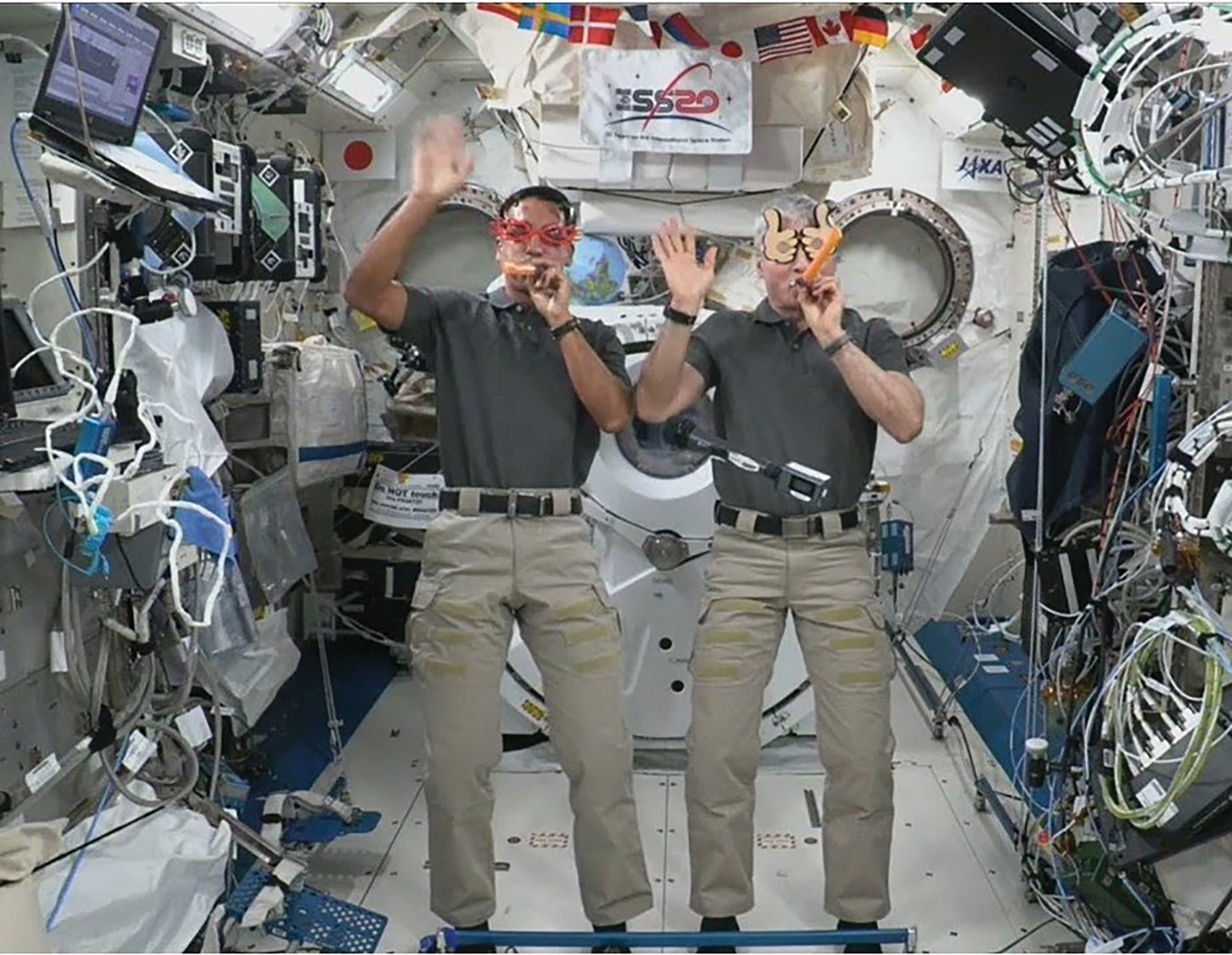
Last New Years Day was the first time four sovereign nations spent a New Year’s together in orbit. Commander Andreas Mogensen was from Denmark, Russia had cosmonauts Oleg Kononenko, Konstantin Borisov and Nikolai Chub, NASA sent Jasmin Moghbeli and Loral O’Hara and Satoshi Furukawa was from Japan.
“During New Year holiday in Japan,” said Furukawa, “it is common that the whole family gets together. People visit the shrine and pray for New Year’s happiness. From the International Space Station, I wish all of you endless happiness and smiles.”